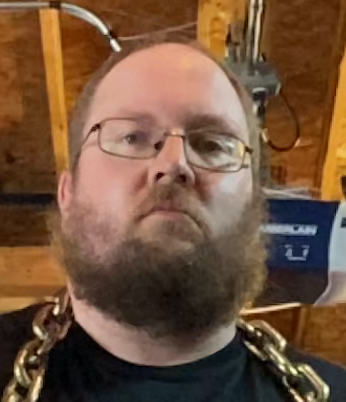
Mark Brown
August 30, 2021
Strength training can be a lonely experience. It requires a lot of internal motivation and a lifestyle defining amount of discipline to get anywhere to close where a lifter wants to go. Coaches in team sports use other humans as supports against the mental and physical wear and tear that intense training in general can bring, never mind training that has very specific goals. For former team sports athletes the “team” aspect of training is ingrained so they might never lose that understanding as they age. What about the people who didn’t play team sports growing up or people whose 2020 was inconsolable brutal isolation? That feeling of going at strength training solo can get equally ingrained. What people who train by themselves, even with the aid of programs designed by professional coaches or athletes, need to understand is that they are leaving both training and results on on the bench, in the squat rack, on the stage or up on the platform.
I would be lying if I said that 2020 wasn’t one of the best years of my life. It was a very productive year for me. I made way more money than I had in any year prior, and the circumstances created by Coronavirus made me shift my strength training in ways that is still benefiting me and will do so for the rest of my life. The combination of increased money, lack of free time, lack of motivation to spend said money on things I don’t use, and the gyms closing made me begin to buy gym equipment and cultivate a “home gym” training thought process. The gym equipment I have spent the money on has led me to more varied training, and a better understanding it in general. It helped me understand the difference between training solo at “home” and solo at a public gym, and how to go bout it.
The training changes all started when the gyms got shut down. Of all the privately owned public spaces, the gyms were the only shut downs that mattered to me. I was a miserable human being because the only real thing I was committed to was taken from me and I didn’t have much recourse to combat it. That was when a long time co-worker, Pete, asked if I wanted to lift with him in his garage. He saw how crazy frustrated it was making me and was feeling similarly. Didn’t take me more than a few second to say yes. He had a good set up. Dumbbells from 20-100 pounds minus 90s, an all-in-one rack, a power bar he’s owned forever, bench and other gym essentials. I didn’t realize it at the the time because this was my first experience with a true training partner but this was going change strength training for me in ways I couldn’t see at the time. Since my oldest brother and women’s basketball coach, Mike, got me into a commercial gym through an ex-player he coached in college 7 or so years ago, I have lifted almost exclusively by myself. Every now and then I would ask a for a spot and developed some friendships with other gym goers, but that’s about it. I would see people training with partners but I was never driven to find one.
I started training in Pete’s garage around April-May 2020 and deferred to him on lifting because he has age and training on me. He said something to the effect of “what I want to do” when he asked what he wanted to do. He was putting his training in my hands. Him saying that laid down a challenge to me, and was not lost on me in the slightest bit. He is more of a powerlifter in approach so I had to think about how to benefit us both. By March of 2020, I had been training long enough and researching enough content by reputable athletes and strength coaches that I pretty good idea of how to train effectively for hypertrophy and strength, but building a program is different challenge altogether. My approach to such challenges is to learn as much as I can and figure out how to do it myself. It’s how I got better at cooking and golf, two things I consider myself decent to good at. That has been proven to me to be the best way that I learn.
I began training with Pete and didn’t really have a set program and it didn’t take long to realize the 4-6 week layoff from lifting had taken a major toll on my lifts. The week prior to the gym shut down I was doing sets of 4-5 reps with 125 pound dumbbells on a flat bench, and I could barely do the 80 pound dumbbells for the same amount of reps 5-6 weeks later. That’s another lesson for another discussion, but it helped me figure out where I was at again. This is when I decided to put the heavy bench press back into to my lifting routine. I hadn’t regularly done bench press despite focusing on chest development for 2 or so years because I didn’t feel safe doing the lift in the commercial gym setting largely because of bench design, and didn’t like to ask for spots. This is when I first started to see the value of having a training partner: having a regular spotter. This might sound like an obvious statement but having a spotter will increase a lifter’s ability to get stronger. The question is how they accomplish this task. I believe that answer comes in multiple facets. The first is that they help complete lifts that might not otherwise be completed. The second is that they can see what the lifter cannot: themselves lifting the bar. The third benefit comes only after training with someone long enough: understanding the partner’s personal lifting tendencies. These are benefits I didn’t see or really understand prior to putting bench press back into the program I was creating on the fly in the garage in April/May of 2020. I did some thinking on it during the summer of 2020 and came to the conclusion that while I had been lifting hard and getting results, there was about 25% I would never be able to get lifting solo. Just being able to finish reps at the end of sets doesn’t sound like much but it adds up very quickly over time, especially since most partial and failed lifts happen at maximal weight and/or effort attempts.
That challenge to come up with a lifting plan for both me and Pete sparked a need to improve much more mentally than physically. I needed to learn how to put together lifts into a cohesive plan to get better, more specific results. That was just the first part of the mental challenge. The second part was being ready to go when the training was planned to happen. That accountability is important in gaining the trust of the training partner to take what is said seriously. The person lifting cannot see themselves lifting, so it is important that the lifter knows he or she can count on his or her partner to see for them for both safety and improvement. Having a training parter helps keep a lifter on that edge they need to be at to improve through offering criticism of technique, and encouragement. This element of mental training is something I had been missing, and it actively made me a better and stronger lifter and give me more motivation to train. Every lifter knows that it is a grinder’s sport, and those are low energy sessions are the ones that are the difference between goals attained or unattained. My training discipline was already strong, but by the middle of 2020 it was borderline unbreakable and was only getting stronger. I missed 3 sessions of my 12 week Summer 2021 power building program, 1 due to my house fighting back when installing a home security system and 2 to total exhaustion. If this is sounding like strength training is a team sport, that’s because it is when it’s at it’s best.
January 2021 started with Pete stopping training for a while due to family Coronavirus complications and injuries. I continued on with it going to the commercial gym for a few months while winter was still set in, and I haven’t lifted with him since. I began to see all the advantages of training with a partner I have listed but didn’t actively seek out someone else to lift with. I made a slight change in my approach to strength training but still had not made an official plan. Somewhere about April and May I began to feel myself hit a plateau on certain lifts and knew I needed to make a change to something more specific in goal setting.
My summer 2021 powerbuilding program I built for myself was easily the heaviest lifting plan I have ever done, and I accomplished the goals I set for myself but I did find myself wanting a training partner for it in spots. I watched a video during summer 2021 on EliteFTS’s Youtube channel and in it Dave Tate, former powerlifter and CEO of EliteFTS, said that the lifter’s job is to lift the bar, not unrack it. That struck me at the time, but it didn’t really hit me until I found myself having difficulty unracking 275 pounds when on bench press and keeping my body in proper position. Since getting my bench press back up to 275 pounds was one of the goals of my summer 2021 program, learning how to bench press better was at the top of the priority list. That entailed getting into proper position under the bar, and pressing my lats into the bench. Unracking maximum weight caused me to get out of my locked in lat position just to get the bar to the point it can be pressed. I have since lowered the j cups on the power rack to find a better way of unracking it, but the best solution is still to find a spotter. What I learned from both that video and personal experience with the bench press showed me a big part of the value of the spotter is at the beginning of the bench press movement, not just at the end as I had previously thought. The devil is truly in the details.
Spotting a bench press or a squat might be the most important thing a training partner does physically but I don’t think that’s the case on the whole. I don’t do many lifts that require a spotter for physical safety’s sake, the way the garage is set up makes it very safe to do maximum weight and/or effort lifts solo, and my intense focus created by isolated single lifestyle are three factors that have allowed me to keep making progress in the face of not having a training partner; however, I know I would be further along if I did. The stay-at-home protocols in various cities of 2020 have led more people to becoming solo lifters, especially those with gym equipment at home. Technologically advanced phones allow for both video that is both very clear and very quick to play back but a video cannot give live feedback the way another human can. Even video streamed via internet to another person can’t help in the same way someone standing just a few feet away can. Lifting, like other sports where form is the difference between success and failure, requires in the moment feedback to help the rate of improvement. Societal pressures and changing social norms are helping people become less socially active than ever before. People need to be around others less to accomplish goals more than I have ever experienced, and I don’t see that as a positive step.
Finding a training partner in 2020 helped me increase my strength training drive, made me physically stronger, and forced me to mentally understand strength training more at a fundamental level than ever before. Those are all things that benefited my progress in 2021. If I had not said yes to Pete’s offer to train in his garage with him, I would not be entertaining the thought of entering powerlifting meets or strongman events in the coming years. There’s no way for me to quantify, not even how much my lifts have physically improved, how much finding a training partner aided my development as a strength athlete. It also showed me how much I had been leaving on the bench and in the squat rack. Don’t take what I have written as a statement of regrets of training prior to 2020 because it is all part of the learning curve and I wouldn’t change a thing about it. If improvement is what a lifter is after then finding a stable training partner is the best way forward.
 Life Through Lifting