Mark Brown

September 13, 2021
Home gyms have always been popular for people who like to train but don’t like the atmosphere of public gym, be it a private gym or a commercial gym. Prior to 2020, I didn’t have access to a private home gym but I soon learned that there quite a bit of difference in strength training after getting it. Having experienced both now, I better understand how to get training accomplished in both settings. Gym training requires being flexible, choosing time wisely and working as a team with other gym members to really make progress in that setting. Those with home gyms don’t have to worry about all of those things, but safety and lack of equipment are things that can hold them back. Both have merit and will remain part of my training, and should be seriously considered if one can afford it.
Time management is a major determinant in how workouts are structured in both long term and day to day training. It forces us as lifters to figure out what we value a lot, a little or not at all. There are so many different ways to train and so many different reasons to train from sport specific to general health that we have to choose exercises that give us the effect we are after in the time we have. I have prioritized strength training in a way that I don’t worry about how long session will physically take, but I can definitely understand someone who has time constraints. This understanding of how much time lifter can devote to training sessions leads to any number of decisions that need to be made and the one at the top of the list is quite logical: “Where will I do the training?” Like with everything in life, it comes down to weighing the pros against the cons.
My main experience with strength training comes from lifting in a commercial gym. I have been a member of what is now Genesis Health Clubs in central Iowa since 2013, and my understanding of how a public gym works has evolved with what I have experienced. Everything changed when I began to primarily train in my friend’s garage starting in Spring 2020. I have a general rule that applies to life: “Your greatest strength is your greatest weakness.” I believe that in large part because what one is great at creates blindspots that can be exploited by those around them. The greatest strength of a public gym is that it is likely to be well stocked with equipment, especially cardio and muscle isolating machines, because those running the facility want to appeal to the broadest possible pool of clients. The problem from a training point of view with this is that a well stocked gym attracts a lot of people who can prevent one from getting done what they want done in a given day. When I was first started training having a lot of people around in the gym didn’t effect my lifting as much because I didn’t have a real plan anyways. As I got more serious and more specific in my goals, having a lot of people around got in the way of planned routine.
This led to what I call the first rule of the gym: Training in a public gym must be adaptable. This sentence can mean a lot of different things so I will specify. Make a plan for the workout, but have substitutions in mind for lifts in case a bench or machine is taken if order of operations is important. If a lifter is set on doing a particular exercise in a session in order, especially compound lifts, then they will simply have to wait if the equipment isn’t available. I have done this. Choosing to do another lift before a main will have consequences for that main movement, for better or worse. A prime example is when I was focusing on chest development 2018-2019 and often chose to do heavy flat dumbbell press before bench pressing because the latter was already in use. The dumbbell press so negatively impacted my bench press in the very short term that I got rid of it altogether from my sessions. That decision had the long term side effect of me having to reacquire the skill in 2020, but I did get good chest development from the dumbbells. Substitutions for accessories is much easier, but like with main lifts, choices have consequences especially if time becomes an issue when training at the gym.
Time management creates the second rule of the gym: Choose training time wisely. This one is pretty obvious but takes a lot of learning through experience to fully understand. This applies to both when one trains and when one trains best physically. The latter effects the former more than vice versa but it could lead to a more crowded gym. It is important to prioritize what matters more. I train primarily in the evening because of my work schedule, but I have also lifted in the morning in the past and found truly no discernible difference. If anything, I have made it to a point in my training that my job acts as a warm up, as it is more or less weighted carries and presses. The bigger factor turned out to be when the crowds started to flow in at the gym. I found that if I was able to get started with my session before 4 pm then I was able to get what I intended done in the intended order for the most part. Between 4 pm and 8 pm, an increasingly crowded gym made it harder to get what I wanted done in the order I wanted it done. As my training has progressed, the order of lifts has become more important because I am more sport specific in my goals. I have graduated from lifting for general health to possibly entering a lifting contest in the coming years.
The third rule of the gym is one I figured out more in the last year than the two above: A public gym is a team effort. This goes beyond just spotting someone on a bench press or a squat. It is a mentality that I don’t see everyone having, including myself, at times. Everyone who is at the gym is there with the purpose of getting better so it makes sense to think of one’s behavior at the gym with that in mind. There are only so many flat benches, adjustable benches, squat racks, etc and there is only so much time one can devote to training. Working in, spotting and asking how many sets are left are all ways people work with each other to get what they need done. The first two things listed are close contact and social distancing was intended to prevent just that. 2020 didn’t eliminate them because stuff still needs to get done in a timely manner. That team effort mentality leads to frustration when selfishness is seen at the gym: benches used for phone or drink rests, people taking excessively long on machines or circuit training without allowing work ins, adjustable benches used for flat presses or flies when a flat bench is available, not racking dumbbells between sets and too many other annoyances to write here. It has also led me to become more aware of my surroundings. In the beginning, I watched what people did to learn exercises to do and I still do that but in the process of doing so I learned how people trained, how many sets they did, when they lifted, and common practices. That all made me a better lifter and better team player at the gym. Safety is a major component of the team atmosphere. The ties that bond everyone at the gym together creates a desire not to see someone get injured there. That leads to advice sharing, helping when seeing something bad is happening and pats on the back when a lift is accomplished. The more people understand they are part of a team effort the better training is for everyone.
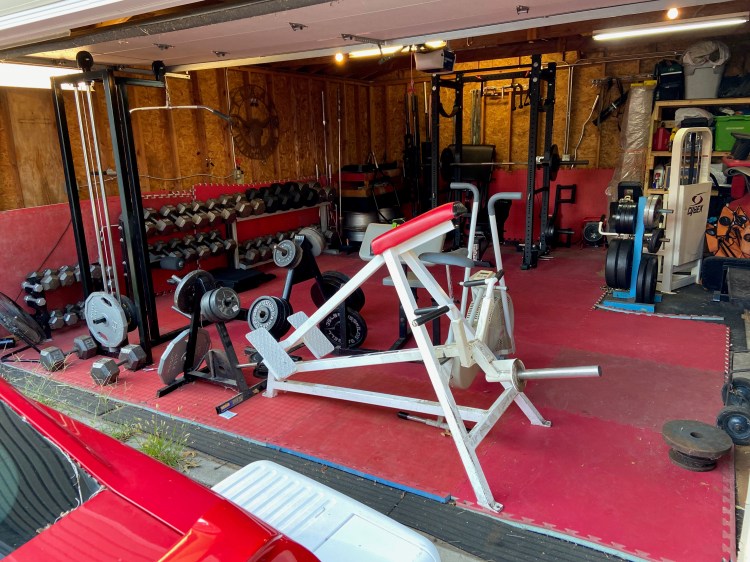
The gym closings in 2020 pushed me to train in a work friend’s garage for the bulk of 2020 by necessity and, later, by choice. It also illuminated those rules I have written about above because they don’t really apply to a home gym setting. As I got deeper into the year and into 2021, I found I planned and focused differently. That deepened the more into powerbuilding I got. I began to see the weaknesses of the commercial gym I was at. I still find tremendous value there, which is why I am still a member, but understanding those weaknesses has made me better. Going from training from at a place that has every conceivable muscle group covered by isolation machines to a place that has a bar, a bench and a rack with a single cable attachment is a stark change in both reality and mentality. I had used both compound movements, almost exclusively with dumbbells, and isolation machines in my training before and now only had the former so I had to fundamentally change how I lifted. I brought back the 3 main lifts from powerlifting back into my program, I didn’t have to worry about people in the way and I lifted with a training partner so the team effort was much more focused.
I made a lot more money in 2020 than I had any prior year so I was able to help the garage gym improve by getting a power rack, various specialized bars, dumbbells, bands and chains. My friend added to it as well with a better bench, a cable machine for pull downs and push downs, a trap bar and other accessories. Most of the bars came after late summer and fall because the run on lifting equipment at the big online stores, but once they arrived I found my training became far more varied than I was doing at the public gym. Each of the bars had a specific purpose and keeps unveiling more ways to train with it. The EliteFTS American Cambered Bar makes cluster sets very easy to do, the Rogue Deadlift Bar has the bend and knurling to help learn competition worthy deadlifts, the Rogue Log is perfect for shoulder and tricep work for people who prefer neutral grip, the Rogue Ohio Power Bar is a great all around powerlifting bar with aggressive knurling, and the EliteFTS SS Yoke Bar is made for squatting heavy without shoulder pressure. All of this equipment makes training for strength and power very easy to do. Chains and bands add resistance to vary the training even more. Training muscle building is harder to accomplish, especially certain muscles like the rear deltoids and hamstrings, because of the lack of isolation equipment. More thought has to go into what compound movements I can do to really make those two muscle groups work.
Safety is planned for differently in a home gym setting. The strength of public gym safety is numbers, and at home the strength of safety comes from equipment. This realization was the start of both more intense training for me and understanding just how unsafe major pieces of equipment at a lot of commercial gyms is. Lifting heavy and to failure is how one progresses on most lifts, but it is especially true on major compound movements like bench press, squat, and overhead press. How does one do these lifts without a consistent spotter? Most free weight equipment I have seen at the various commercial gyms I have gone to leans on spotters for max effort lifts so I just don’t do those lifts with barbells at the the gym. The rack I completed last year, a Rogue RML-390F, allowed me to really push more weight and do better max effort lifts because of the safety pins, straps and spotter arms I have for it. It became very apparent to me that where I trained had a major impact on how I trained when I started to lift back at Genesis for the first 3-4 months of 2021. In the garage, I focused on building strength through the use of barbells in lifts and in the gym I did so with dumbbells largely because I feel they are safer in that environment. It’s not that I go less hard, but barbells and dumbbells don’t have the same effect. When at the gym I also use the isolation machines quite a bit, so in a way I adjust the ratio of the bodybuilding part of powerbuilding to be higher than the powerlifting side of it, especially on upper body training. I’m not entirely sure of the psychology of why the gym makes me do more bodybuilding than I do in the garage but I think it has a lot do with the equipment at hand. That is especially true with legs. I am constantly thinking of new ways to use equipment I have to get more from what I have, but that thought process simply isn’t necessary at the gym.
The time element has never been effected by where I am training. I have always been the guy who is in the gym way too long by most standards. I’m in the 2-3 hour range. In the beginning this was the case because I was doing so many lifts and now it’s because I have added more powerlifting to my programs. Heavy powerlifting causes longer workouts in my case because longer rest between sets is necessary. They are very taxing on the body, especially squats and deadlifts. I don’t believe in taking 10-15 minutes between sets but I am solidly between 5 and 8 minutes between them. This would be truly annoying at a public gym, and that’s why I don’t do it there. Powerlifting and commercial gyms do not go together. I have whittled down the lifts I do on a given day to 5-10 different exercises but dependent on what that exercise is could get as many as 6-8 sets of it. Yet another thing that would be annoying at the gym. This is where the home gym truly shines: The ability to get done what a lifter needs to get done without negatively effecting someone else’s workout.
I love finding the limits of the strength I’ve gained and blowing past them. That means lifting very hard and very heavy. I would not subject any other gym members to the realities of training that includes powerlifting. I will be including gym days in my upcoming plans because it does something that I can’t get from the garage gym. I believe the integration of the two different mentalities is what will take me to the next level, and should be considered by others unless their home gym is incredibly well stocked.
 Life Through Lifting