
Mark Brown
September 26, 2021
Making decisions about what exercises will be included in a lifting program is an essential part of the process of strength training. Those choices get harder to make when goals become more defined and time becomes limited. Learning what exercises are best for a particular lifter can be achieved by watching, reading and doing. I find the last one is the most important. It’s the easiest way to find what works and doesn’t work. Public gyms are made to do exactly this kind of physical education. As a lifter progresses from beginner to intermediate and even further, the lifts in a training program show what they value most. I’m writing today to share what exercises are a part of my program and why they got there.
When a person who is new to physical training joins a gym they might find the gym intimidating. A lot of that comes from a lack of knowledge of what to do and the reasonings behind them. The other reasons why people find gyms intimidating don’t particularly pertain to this essay so I am leaving them aside for now. The Internet makes “book learning” the gym much easier but it truly cannot compete with just getting in there and finding out oneself. Going in without a plan but a desire to get stronger is an extremely important phase for a new lifter. Organically figuring out the benefits and detractors of each lift is essential knowledge to have in the back pocket for later when more formal programming comes into play, especially if one self programs. This process takes years. For me, it took about 5 years and was the direct precursor to developing what I really wanted out of my training. I call this phase the“organic build.” I didn’t know exactly what I was doing but I knew I was getting stronger and was moving in somewhat of a direction. I believe it is important not to skip this step by immediately working on a program, either through a personal trainer or one found on the Internet, upon joining a gym.
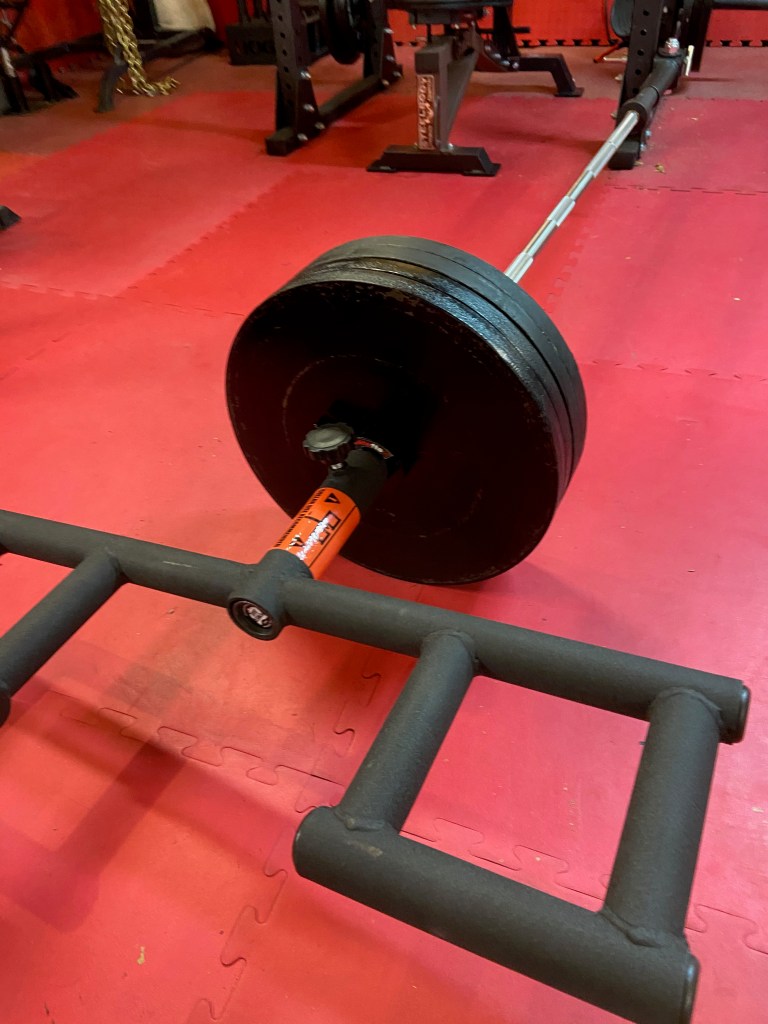
If one goes does a basic search on Google or Youtube, they can find tons of lists of what are the most and least effective exercises for muscle, strength and power development based on both anecdotal or scientific evidence. These lists can be helpful but it is important not to take those lists at face value. There will inevitably be lifts on them aren’t doable for everyone at the current time. They are a useful guide for new lifters so they do hold value so long as the reader or viewer of them understands the biases of the list maker. The best thing to do is go to the gym and try those exercises out and see if they work. One big example of a good lift that doesn’t work for me is a barbell rows. I’ve mentioned this a few times and given a brief explanation in prior essays but I will explain in more detail here. I have seen multiple videos breakdowns for the exercise and I have a general understanding of how to do it effectively. When I physically do it I don’t feel a lot of effect out of it, especially at lower weights. I don’t feel any muscle contraction in my back at weights conducive to hypertrophy or strength training. The only time I feel the muscle working as intended is towards heavier weight but my movement is hindered by the sheer weight of the barbell. They are an effective supplemental exercise for the deadlift, but I can’t physically make them work properly so they are currently out of the rotation. I felt much more activation when I did it with a trap bar, however.
What exercises I do in a given session depends on where I am at. If I am in the garage, I am more likely to do more compound movements. When at the gym, I will take advantage of having a lot of isolation machines around. I find there to be a high value in training both strength and hypertrophy so I make time to get both in during sessions, even if it leans heavily one way. I will start with garage and an explanation why it is part of the plan:
Bench Press – I would say this doesn’t require a lot of explaining why it is part of powerbuilding program but chest press could be done a variety of ways. This is my main chest press movement. During the Summer of 2021, I went down to my chest every Monday and did so with chains on Thursday. Currently, I am using chains on Monday for strength training and using the American Press bar by EliteFTS hypertrophy. I like to press twice a week and I have the equipment just about any variation of bench press I like. I very much like Banded Bench Press, but I haven’t done it solo yet because it is very, very difficult.
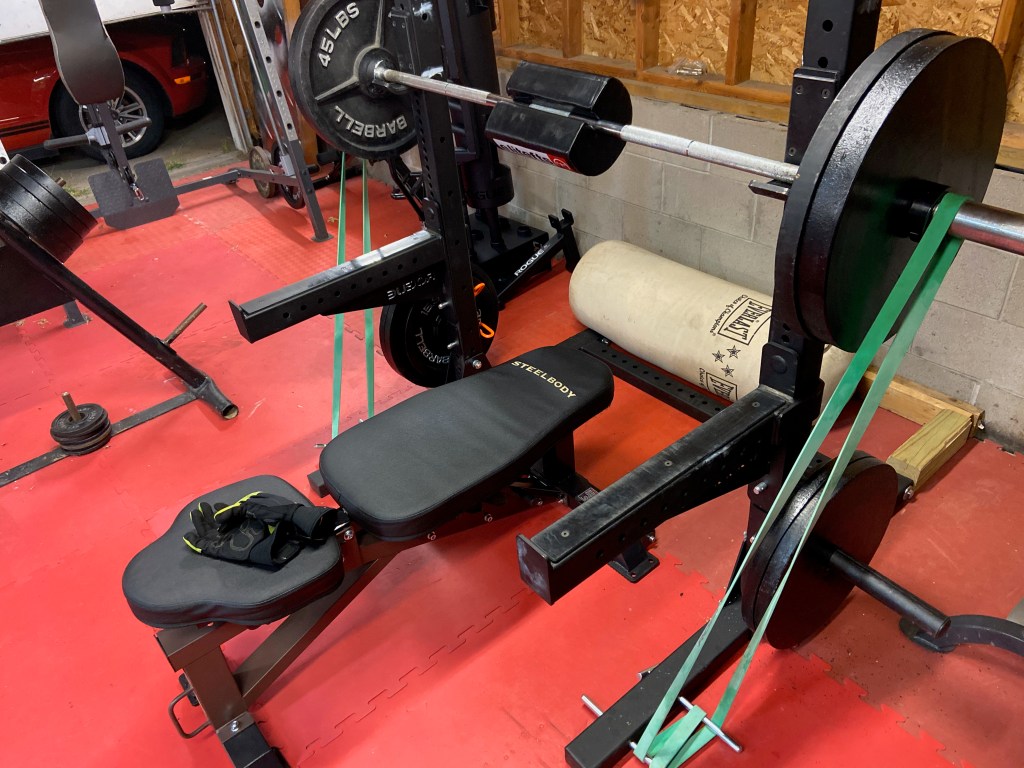
Dumbbell Press – One of my main supplemental exercises, whether flat, incline, or overhead. I like training with dumbbells because each arm has to perform on its own. In the past, I have used it as a main lift.
Deadlift/block pulls – Deadlifts are ever present in my plans. It is my best lift out of the three powerlifting mains. I use to pull from the floor a lot more than I do currently. I started doing rack pulls last year when my Rogue RML-390 was a squat stand, and that continued into this past summer before the deadlift mats from EliteFTS arrived in August. I’ve seen videos about the difference between block pulls and rack pulls, especially using deadlift bars, but not been able to do the former. The difference in height from my rack pull position to block pull position was about 4 inches lower. That made it a lot more difficult. I find a lot of value in pulling from the elevated position.
Squats – A little obvious because I don’t have equipment to really go after legs without doing them. I do, however, have 3 different bars for doing squats: a Rogue Ohio Power Bar, a Safety Squat Yoke Bar from EliteFTS and a Rogue Cambered Bar. The last one I got about a month and change ago. Squats with a straight bar puts quite a bit of strain on my shoulders and I sometime have difficulty getting into the best position on them. I do much more low bar squat and high bar so the Cambered bar is very helpful and gives a radically different feel. The Yoke bar makes many different kind of squat movements possible. I have recently learned about Hatfield Squats that use handles on the rack for an upper body leverage position. Really opened up the possibilities to leg training in the garage.
Banded Rack Pulls – This variation of pull is one of my very favorite because it is so effective. I have Rogue Monster Bands in 70 pound and 100 pound sizes and they make this lift very difficult. I found these last year messing around in the garage and felt their value immediately. This year I really wanted to focus on the last half of the deadlift and thought this would be a good supplement. I feel my entire back activating when I do this lift. Moreover, it helps train the lockout because both proper form and max effort must be used to achieve lockout using the bands.
Seated Overhead Press – I do these with both dumbbells and the American Cambered Bar.. The latter is easier to do because of the ability to place the bar in front rack position without having to move it through physical effort. I prefer a much more neutral hand position for overhead pressing. I do most of barbell press from a pinned position for safety reasons, but it also forces me to push up without the benefit of loading the muscle first. Dumbbell overhead press will always have the disadvantage of having to get to the front rack position until I get the attachment to the power rack that allows me to rest the dumbbell in that position.
Log Clean and Press – Standing overhead press is important to me but I am not a big fan of doing it with a barbell. This particular implement, the log, I found from watching Strongman competitions and found I very much like it. The clean is vastly different from a Weightlifting movement, and sometimes I even feel like I am doing more of a curl than a clean. This has done a lot for both strength and muscular development in my shoulders all around.
Viking Press – I do this with an attachment piece from EliteFTS in correlation with a Landmine from Rogue Fitness on my Rogue power rack. I know I just name dropped fitness brands but I feel it is important to be as honest as I can be with what equipment I am using. I got the attachment earlier this year and brought it into my program more when I realized how useful it was. It is a very complex movement. First, a deadlift and a continental clean to get into front rack position; second, once in position a press movement overhead and slightly forward in the concentric followed by what is essentially a lat pull in the eccentric. It is highly effective upper back training because I feel all of the muscles in that area firing, especially at the bottom position of the lat pull.
Tricep Pushdowns – The staple of tricep arm shaping has always been part of my plans. I did only pyramid style ones for the longest time until last year when I found the benefit of flat pronated grip pushdowns. I found they produce a better carryover to the bench press.
EZ Curl Bar curls – Bigger biceps can really come from a lot of curls. Strength based movements like deadlifts and other pulls employ the biceps more so than triceps but because they don’t isolate the movement, they doesn’t grow. If I was more purely a powerlifter, I wouldn’t do them as much if at all.
T Bar Rows – I do these because it allows me to hit lats at different angles than an overhead pull does. If my buddy didn’t have a T Bar Row I might not do this as often. This is part movement and part accessibility.
Rolling Tricep Extensions – I discovered this one recently from a video EliteFTS founder Dave Tate showed Jujimufu and Joey Szatsmary in a video about tricep training. I don’t often add in exercises I see from Youtube videos because some are ridiculous. This movement is easier to do than a JM Press for me. I fully endorse adding it to a program.
Most of these lifts listed above are strength based compound movements. These have had time tested results in my time lifting primarily in the garage. I have written before that lifting in a gym turns me into a different lifter. My program shades towards hypertrophy there because of the availability of isolation machines and my desire for bigger, denser muscles. The following list is the machines and exercises at the gym I take most advantage of:
Leg Press – The machine in the gym I miss the most. It is a major supplemental lift that I can overload. The selectorized seated machine leg press machine makes doing calf raises very easy to do very quickly.
Leg Extensions – I could have put this in the above section because it is the one piece of isolation equipment I do have, but this is easier. I typically do this quite heavy but I have recently started doing less weight and for a longer length of time at the top. This lift can be quite intense so I use it often as a burnout exercise.
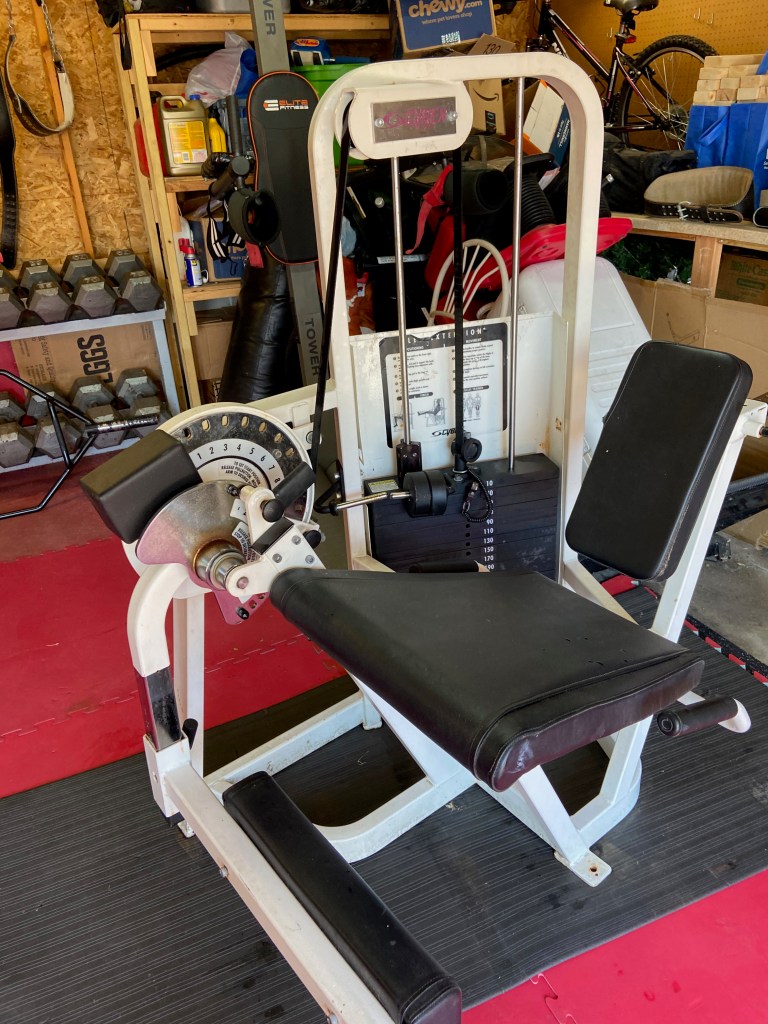
Leg Curl – I cannot do this lift in the garage very well. I don’t have the equipment. I have tried figuring out ways to do it but it’s just about impossible to mimic. I typically do this as a unilateral lift standing rather than prone, but I have done both. I just prefer standing.
Sled Push – I would love to own a sled for pushing and pulling but I can’t justify spending the money on it right now. I have space in my house to do it but not the plates. When I do get the chance to do it, I take it because it’s a very different feeling moving heavy weight dynamically as opposed to in a static way, like a deadlift or squat. Most of the work ends up being done with the legs but it does put the full body to the test.
Chest Press Machine – This is the machine I use to burnout with when doing chest at the gym. I don’t have to worry about bar path or anything. Just push till I can’t push anymore.
Hammer Strength Iso-Lateral Chest – My commercial gym has 3 variations of this: Wide, regular, and incline. I tend to use the first and the third one mostly. Of those, I prefer wide to get more of my chest. It also tends to be the busiest one. It is an accessory lift that I can overload and I find those lifts to be the most productive.
Plate Loaded Preacher Curl – When I don’t feel like loading a bar or just want something different, like a very inner grip curl, preacher curl machines are very useful. I prefer the plate loaded version to the selectorized versions because I feel more in control of the weight used.
Cable Crossovers – This is the biggest upper body thing I miss from the gym. I cannot do these in my garage set up because I don’t have two cables. I have tried to these with one cable and found other exercises, close grip bench press and close grip dumbbell press specifically, work better. For hypertrophy, it’s hard to beat cable crossovers.
Side Lateral Raises – I do these in the garage but with dumbbells and an unloaded ez curl bar but the advantage the machine for this has is that I can overload it and get my work in. The side deltoid is very particular in the movement required to activate it and that machine does it very well.
Chest/Read Deltoid Fly – Another lift that can be done with dumbbells. The machine just makes the movement easier to do with heavier weight. It’s a different kind of weight, but more weight all the same.
If this looks like a lot of exercises, it isn’t. My lifting plan hits every muscle group twice a week and is broken down like a bodybuilding plan is. Strength development is what really makes me happy though so I deliberately work on that more. I am always looking out for new lifts that can be helpful gain mass and get me stronger and that won’t change.
 Life Through Lifting