Equipment Review and Thoughts
Mark Brown

April 21, 2022
This specialty bar is the one that I miss the most when it becomes too cold to lift in the garage during winter. It is a bar that I believe every public gym should have available to lifters because it’s that effective. I cannot recommend this bar enough to those who own home gyms. Today I will explain why that is and how I have made the American Cambered Bar one of the centerpieces of my garage program, which is the one I like doing best.
To show where this bar shines in the gym, I need to explain a something important about the bench press lift. A straight bar bench press is a lift that increases the skill of straight bar bench pressing rather than develop the muscles involved in the lift. What this cambered bar does is helps turn the bench press movement into one that prioritizes muscular development. That makes a straight bar bench press a lift optional for people aren’t powerlifting or who only care about muscular development. What I find most interesting about this bar is how much I can feel my pectoral muscles working when I press with it at warm-up weights. I don’t get that feeling when bench pressing with a straight bar. That alone tells me the American Cambered Bar is ideal for hypertrophy based training and the straight bar isn’t.
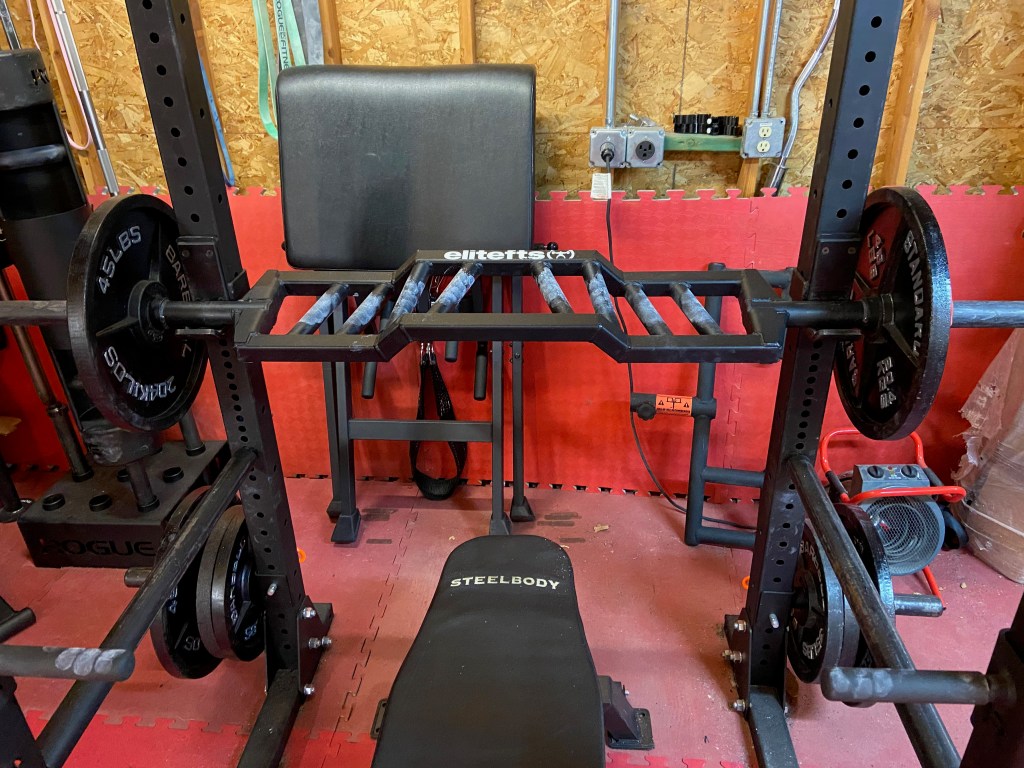
The bar achieves that feeling in the muscles by turning the grip the lifter uses to an almost neutral position. That is the hand position that is used in dumbbell presses in my experience. As a result, the pressing movement feels like a dumbbell press to me. The primary difference between a dumbbell press and the cambered bar press is where the weight physically is. The weight of a cambered bar press being plates loaded 12 or so inches outside the placement of the hands makes it a harder lift, when compared to a dumbbell press. To demonstrate this, I can dumbbell press 110 pound dumbbells 8-11 times during a set at the start of a session and only about 4-5 reps of 218 pound cambered bar press sets. That offset weight placement forces the muscles involved in the lift to work together in a much more cohesive way to get the rep done. That’s why I can feel the muscles, especially the pectorals, working even at lower weights.
That brings us to something I find exceedingly fascinating about the bar. This bar is an ego killer. When I first got the bar my training partner, Pete, and I didn’t know what we were feeling when pressed with it. We thought we were just going to lift with it like it was a straight bar. How wrong we were. I understand why we were wrong now, which I just explained above. It took awhile to get there though. For lifters new to using this bar, it will take some time to really get a handle on where the weight actually is. That will depress the weight lifted for a fair amount of time. I’ve had the bar since September (or so) of 2020 and am only really now hitting my stride with the bar.
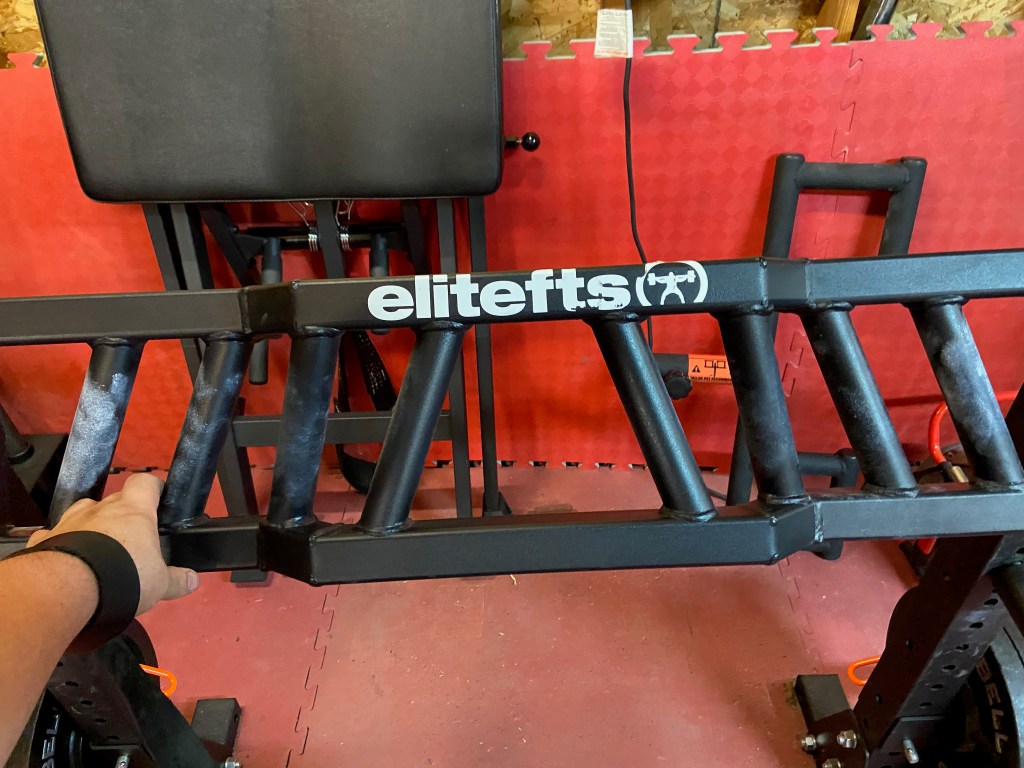
Now, let’s talk about those grips that make this bar unique. I’m probably burying the lead by putting this so far down but whatever. The bar features 4 sets of grips. The easiest way I can explain this is to the say they are at the places on the bar a lifter is most likely to grip a straight bar for a regular bench press. The outside grip is where a competition bench press grip would be, the next one further in is just inside where the knurling breaks on a power bar, the third one in is where a narrow grip bench press would be done and the the inner most grip is where my hands would be if I pushed two dumbbells together then pressed. That wide variety of hand placement is what makes this bar a must have for any gym, especially one with limited equipment. Moving between the grips emphasizes different aspects of the press. Moving the hands towards the outer ones involves more of the lats to the point where a press using the outer most grip feels like a press and a row at the same time. Move the hands to the inside grips and the triceps become emphasized, especially because of the 2 inch camber in the middle 12-14 inches of the bar. This bar is designed to be bar used for supplemental pressing movements and it does that very, very well.
I have hinted at this bar being ideal for hypertrophy so far but let me explain why that is in more detail. Feeling the muscles fire at lower weights allows a lifter to get a lot of muscular development done at weights well below max intensity. Hypertrophy work is all about recruiting all of the muscles in a given group to get the reps done. This is typically accomplished by working in sets of about 8-20 reps. That requires the weight used on lifts to be well below maximum. One way of getting the work in without a high time investment is to superset lifts. Starting the the next set immediately, or almost so, after the first set is a good way to save time and force the body to keep working past fatigue, which makes the muscles work more and harder to get the lift done. If the bar producing the effect on muscles I have indicated already with just the use of one of the grip sets wasn’t enough to show its usefulness for hypertrophy, then super set the presses with each of the grips together. I don’t even need to move to do it, either. Seriously, this bar is ideal for building a stronger, more muscular chest. I’m going to keep repeating this.
The almost neutral grips lessen tension on the shoulders and rotator cuffs. This is one of the other positive features of the bar. The pronated grip, marked by holding the bar double overhand, places a higher amount of stress on the a lifter’s shoulder joint and rotator cuffs than neutral or semi pronated grip grip. Bench press with a straight bar heavy enough for long enough and a lifter will definitely feel some level of progressive soreness in the shoulder and even in the bicep tendon as a result. This has happened to me many, many times in both shoulders. The alleviated shoulder stress makes this a bar to press with for people with shoulder issues. Shoulder stress is lessened even further if a lifter flips the bar over to a semi supinated grip. I feel the benefit of the semi pronated grip when I overhead press with it. Where the grips are also make it a very good supplemental choice for log press, a signature Strongman competition event.
There a few other things that need to be said before I move onto the next phase of this review. The American Cambered Bar doesn’t really promote grinding through reps. The bar is really good at letting lifters know when they should stop. I’ve been stopped cold on a number of occasions because I had exhausted my strength. There’s a secondary reason why the bar doesn’t promote grinding reps out. It is because the design of the bar makes spotting it very different than a straight bar. Spotting the cambered bar well means pulling up gripping one of the sets of handles like a row. On a straight bar, a spotter can help the lifter grind out a final rep by just nudging the bar past the sticking point. This typically happens at the point where the bench press gets to the tricep extension part of it. With this bar, it’s so big and the hands are so far under it that there’s no real way to help the lifter in the way I described with straight bar. The lack of knurling on the grips doesn’t bother me, but I can see why it could some lifters who are used to it. Just get some chalk and it’s all good. That’s the closest I’m going to come to a criticism of the bar. Every design choice has benefits and detractors.
I would like to take some more time here to share a bit of how I use this bar in a program. I’ve already made some allusions to it earlier in this piece. This bar has a ton of uses that includes rows, semi-neutral grip curls, and more but I mainly use it as a press bar. When I first got this bar in 2020, I employed a lot of super sets to failure. This is when I learned a lot of what I wrote above this paragraph. I look back now and laugh a little bit because the numbers of reps in those supersets were kind of nuts and ultimately not that helpful. Research and Development is always messy.
I added bench press back into my regular program shortly after lifting with Pete in April of 2020 after a year and half of only using dumbbells to press. It has become a lift that I most definitely care about because I have a lot of programming currently dedicated to it. My “garage gym conjugate”, so to speak, has evolved since September 2021 to be 75% powerlifting, 15% hypertrophy and 10% Strongman. I still value muscular development a lot but it’s not the main thing I am after so this bar is my main and supplemental lifts on my second chest/shoulder day in the garage. I have seen a lot of progress in weight pushed and muscular development over the last year and a half. That’s why I have always held this bar in such high regard.
I have my programming much more dialed in than I did even last year. I adopted powerlifting principles in the way I approach lifting sessions. My use of this bar in said programming is a reflection of that learning process. Last fall, I started working in low rep sets and have doubled down on that this year. Currently I work in sets of 3. If I do more than 3 reps, then I am doing multiple sets without a break. My goal is to work with weights that an only be completed 3-6 times unless I am specifically doing hypertrophy work. I have learned that finding the magic number for weight to be in that rep range has made the American Cambered Bar even more useful. Those supersets I mentioned earlier have become more impactful than I realized they could be. Lifting for strength development with the cambered bar has only helped improve the properties that naturally make it great for hypertrophy. I definitely do enough sets to make up for the fact I’m not working in the 8-20 rep range. Regarding shoulders, I can tell it’s had a positive effect on my log press.
I’m going to re-iterate one more time that this bar should be in every gym. I got it 2 years ago when it was around $285. It’s one of the best purchases I have made for the gym without question. At the time of this post that price has risen to $315, which I think it still a good price for it. This bar is made for hypertrophy but does strength development very well. It will help your bench press directly. It will help your deadlift and squat by helping develop upper back strength. Just get it. You won’t be disappointed.
 Life Through Lifting