
Mark Brown
August 4, 2022
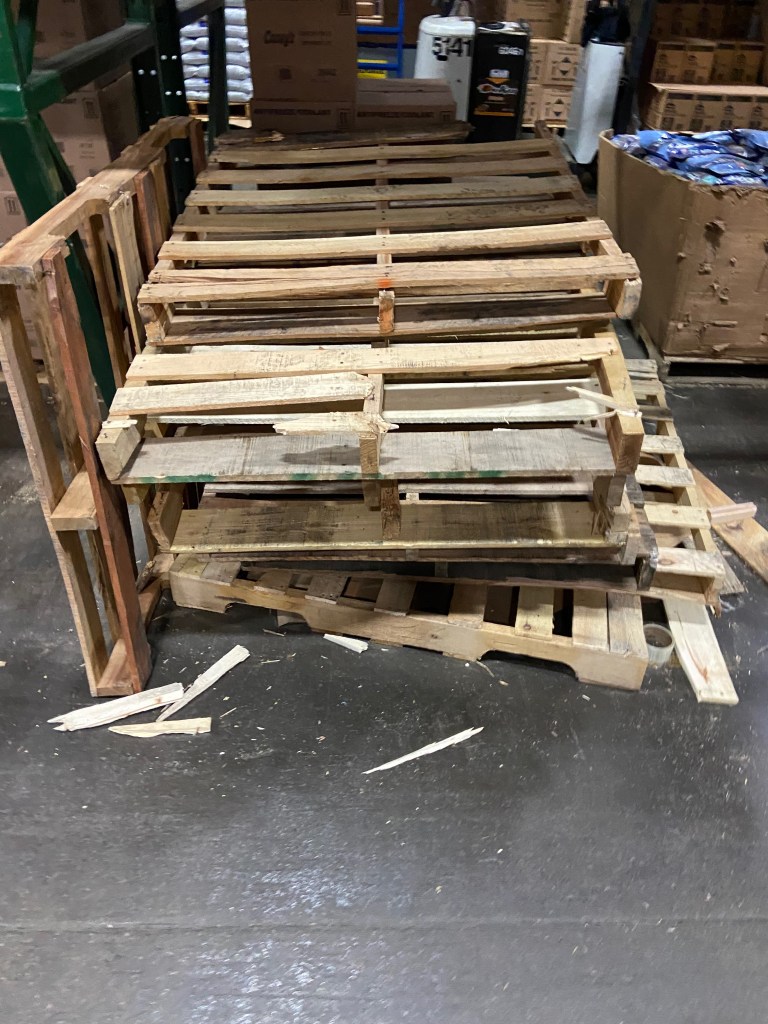
Every day I walk into work and see an absolute disaster that requires a massive clean up before I can start what I need to get done. It is a clean up that lasts a few hours and requires me to accomplish my task while continuously cleaning because the shift that preceded me doesn’t do much to make it easy to organize without a lot of physical effort. The biggest thing about it that bothers me is that I can almost never act at peak efficiency. I’m working on 5 distinct goals and 4 of them actively get in the way of the 1 that is the higher priority. It’s frustrating but I can’t do much about it, so I work through it as quickly as I can. It all runs smoothly in the end because I make it happen but the lack of organization is just unnecessary. I don’t mind because it all just becomes fuel for my inner fire. I take a serious amount of pride in being able to overcome what is put in my way. That part of my being that goes to the garage/gym also comes with me to work.
Being well organized is one of the biggest keys to the success of any venture, both large and small. It always seems like multiple problems need to be solved at the same time whether we are at home or at work. The best way to get to all of them is to do everything in our power to be doing only the task that is the highest priority on the list. I understand that is far easier said than done. Today I will illuminate some steps in the organization process in several areas and put forward some ideas to help get that done.
The title phrase of this essay wasn’t said by me originally. Alton Brown used it on his show Good Eats quite a bit. I have written about the effect that show has had on my cooking in the past so it shouldn’t come to anyone’s surprise that this phrase would come up. The phrase I had come up with in my head while at work getting through the mess in my work area is “Organization is king.” I think both statements are correct in that they both state the importance of organization in both reality and conceptualization. Brown’s phrasing gives a better descriptor as to what being well organized gives the the person who is, well, better organized than someone who isn’t: Freedom. The ability to stay on task is something that should never be taken lightly by anyone. Getting behind on tasks is one of the easiest things to do. It can just happen on its own, seemingly. The only way to counter wrong decisions and bad luck is to constantly play the game from ahead, so as to take the brunt of the hit and keep going at the same speed. Once again, much easier said than done but it is possible as long as someone’s list of priorities isn’t all over the place, physically or mentally. Everything in someone’s life must be accounted for when attempting to find better organization.
Organization, for the most part, is the lead consequence of planning. The reason for this is that plans have to account for resource accessibility and acquiring when discussing goals and tasks. This is the time and place where people put those resources where they need to be to help the goals and tasks that I just mentioned. Resources here refers to everything from people, stuff, buildings, cars, etc. Everything is a resource. Theoretically, the time and energy in the planning phase should lead to the best possible efficiency towards completing the tasks that complete the stated goals. We know there are a lot of things that get in the way of that. Bad or no communication is the highest on that list, of course. Resources lost leads to wasted time trying to find them. Whether they are lost or found, the negative impact can be felt all around. For businesses, there’s always a fiscal cost to bad organization. If it keeps trending the wrong direction, the company itself could be at risk of failure. Not having enough of specific resources is another reason for low efficiency. People are usually the issue in this case, though stuff, storage and space could easily cause problems. Having enough hands in all the places they are needed is essential to being good as one can be at getting the task completed. Money complicates this because one of the stated goals of any business is to make a profit. That cannot be done with a “whatever it takes” mentality. Lines in the sand have to be drawn and the people who are put in position to do the jobs have to do their task to the best of their ability or better.
Most people in the world have more than one task or goal to accomplish at the same time. This is true for both work life and home life, even if they are mostly separate. Priorities change situationally based on circumstances like time and other people’s priorities. That’s what makes life challenging. Priorities are always bouncing off each other for supremacy at the top of the list. This is what I meant when I talked about dreams being in competition with each other during The Road to Discipline. Tasks on priority lists aren’t any different from dreams in this regard. Everything below number 1 on the list is a distraction, no matter how big or small. The best way to get to a point where someone is only working on number 1, sans the recurring daily tasks, is to eliminate them altogether. Sometimes this requires someone else doing their part to help one do that. Other times the planner themselves will have to figure out how to do it. This is the big challenge of being single. Forging relationships have always been a key for personal and professional development throughout human history for this very reason.
This is where I came back to Alton Brown when the topic of organization gets brought up both out loud and inside my own brain. Good Eats was a show that was all about showing the process of that which the episode was about. There was more food science in the show than just about any other on television at the time. Brown helped the viewer understand more about where the stuff that was being eaten came from and why it needed to be cooked the way it was. There were more than a few catchphrases and pop culture references that repeated through the lifetime of the series. These Good Eats colloquialisms are better understood when one knows a bit more about Brown himself. Before Good Eats, he directed commercials then attended a culinary school because he loved cooking. I can attest that organization in the kitchen really is important to getting a good meal completed. I am 1,000% sure that proper organization was pounded into into his brain by both directing commercials and at culinary school. So when he brings up the french cooking concept of a “mis en place,” the value of proper organization is shown in the light it should be. Mis en place literally translates to English as “put in place.” The thought behind the words is that cooks should have all of their ingredients prepared before they start putting heat to anything. It allows them the freedom to be able to only work on the dish they are cooking instead of being distracted by prepping more ingredients. In a home setting, this can be somewhat forgiven, but definitely not anything above that. What the chef is doing here when properly getting his or her mis en place in order is eliminating tasks completely so there is only 1 of them on the priority list at any one time. When I take this concept and expand it the rest of life, it still holds up to everything.
When I apply organization to strength training, a lot of the thought processes that go into creating a mis en place are fundamentally the same. A lifter past the introductory phase is best served when they are following a program. It helps push the lifter in a specific direction, even if it is just general strength growth. One of the best ways to organize lifting sessions is to think out the lifts themselves using both experience and information from trustworthy sources to categorize them. This will help speed up the learning curve a bit because certain things will stand out over time. By that, I mean years. I’ve written about the session structure of main lift-supplemental lift-accessory lift before so I won’t repeat it here other than to say it is a useful way to categorize and organize any number of lifting sessions. However, it’s not the only piece of the puzzle. Main lifts tend to be technical lifts because they are competition lifts, but that’s not always the case. So, in addition to what I wrote above a lifter should divide lifts into technical lift, strength development, muscular development, and explosive movement categories. There’s possibly some other ones but those 4 definitely help a lifter fill out a lifting session plan. I firmly believe in the 3 week wave strategy. That is when a a lifter changes main lift movements every 3 weeks to help build every lift up over the space of years. What organizing and categorizing does is allows the lifter the freedom of quickly forming a program that adapts to changes inside and outside the gym. This will save a lot of time and quicken the learning process. There’s just as much figuring out what not to do as there is what to do in strength training.
I feel that I should expand on categories of lifts I wrote above. Technical lifts are exercises that are technique driven over all other aspects. What that means is that being technically and mechanically more effective is what the lifter needs to be focusing on rather than how much they can lift. Training these lifts tends to make a lifter better at doing them over being translatable to other exercises. Bench press, straight bar squats, and straight bar deadlifts examples of them. Any major compound movement with a straight barbell is going to qualify. Strength development movements, which are usually supplemental lifts, are designed to focus on increasing the weight or load a lifter can handle when doing those technical lifts, if talking strictly powerlifting. Strongman is a different beast. Muscular development lifts prioritize building the body over becoming better at the lift or getting stronger. In order to do that, a lifter has to be exceedingly deliberate in how they lift, what lifts they choose to do, in what order they do them, and how far they take a set. Going well past failure is the standard effort given level for people who want visually appealing muscles. These lifts are still important for people who care more about the lifts because it does have a positive impact, though. Explosive movements refers to any exercise that is effectively all about power and rate of force. The Weightlifting trio (split jerk, clean and jerk, snatch) is just the start. Box jumps, power cleans, and some Strongman events are all examples. Note that all of these lifts are highly technical in nature but the defining feature of them is their explosiveness.
What one is doing when categorizing the lifts is effectively brainstorming. I know, I know. It’s a radical concept that I just created right now writing this. All jokes aside, brainstorming really needs its own space. If someone tries to do it on the fly, they will run into problems that stem from the work that has already been done but no longer holds benefit to a new plan or goal. Constantly working is how one gets ahead and stays that way. I can’t deny that. Brainstorming while producing work is just inefficient. I would never advocate turning off one’s brain in work or its private time equivalent. This concept also shows its value in long term planning. Long term goals just don’t get achieved without brainstorming unless an absurd amount of luck is involved.
Getting organized allows us to become free to take the next step in whatever plan we developed for improvement. It needs to be treated with the same respect as getting work done. The freedom is gives is both necessary and empowering because it provides a clearer vision for future steps. When proper organization isn’t care for, it usually lets everyone know around them very loudly. That’s normally in the form of a huge mess that takes hours or days clean up.
 Life Through Lifting