Lessons Experienced Over The Past 2 Years

Mark Brown
January 12, 2023
I started lifting in high school for baseball in my senior year of high school then stopped for reasons that I there is no real explanation for. When I started doing it again in 2013, I worked out through a commercial gym chain called Aspen Athletic Clubs. They are still around but many of them in the Des Moines area were purchased by Genesis Health Clubs a few years ago. The gym where I did my lifting was one of such locations. I learned a lot of lessons training in the first location and the second, which was literally just down the street.The gym closed down, like everything else public related through March and April here in Iowa, and I was forced to move in a different direction with my lifting. Strength training is a serious hobby for me. I don’t ever see myself competing in any powerlifting or strongman but I would never say it’s an impossibility. Thus, I need to keep my grind going if that ever becomes a reality in any meaningful way.
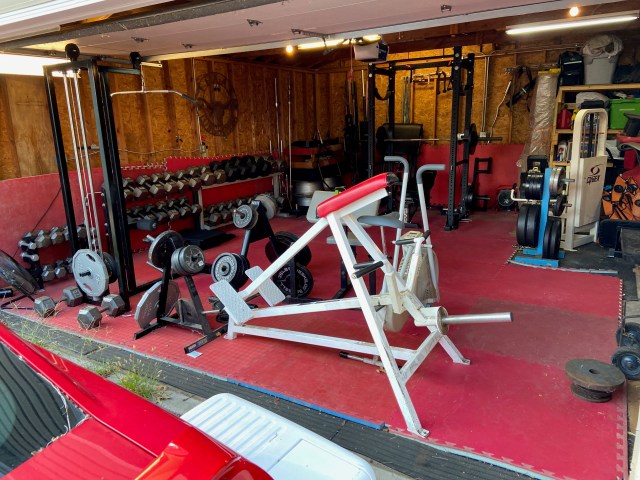
The movement away from a commercial gym atmosphere led me to lift with a buddy, whose name is Pete, from work who had put together enough equipment to really get a solid lifting session in. He’s older than I am by 12 years and has been at it for far longer than me. We get on well because we’re both certified gym bros who actually take it seriously. The lessons I learned from lifting in the garage he rents have come in different forms. My ability to plan a program, how to physically lift, and how to structure my life around what needs done has improved greatly from working in the garage compared to what I had at Genesis. I would never diss Genesis so don’t take this statement that way. I am still a member of the chain because I do need it as a secondary and it is a good place to get lifting done. This essay, executed over several blog entries, will focus in on what I learned in building the garage into the home gym that it is. These are not listed by rank of importance, by the way.
Lesson 1: Is it necessary?
This is the first question anyone thinking of creating a home gym should ask themselves. Yes, not owning one’s own equipment means that any lifter is effectively renting it from the company who owns the gym. This is not a terrible arrangement for most people who lift. Memberships can seem and be expensive but buying the amount of equipment necessary to really build a multifaceted home gym is in the thousands of dollars. It is a serious upfront monetary cost. Some items can be gotten for nothing, close to it or quite cheap but it may require driving long ways to get the equipment or specific vehicles to pick it up. Old tractor tires or larger construction vehicle tires are great pieces of equipment for a strongman focused gym, for example. The tire may be free or cheap but there will be a cost to picking it up and bringing it home. More on the expenses later.
A second factor involves the lifter’s discipline, strategy and goals. New lifters don’t need to be building home gyms for any reason other than there’s no other options available. The biggest challenge new lifters face is the getting into a regular rhythm and develop that discipline that is necessary to make progress. Public strength training and commercial gyms are made to help people get those 2 challenges started and begin the learning process that comes with lifting. That knowledge is what will be the primary aid the developing lifter uses when deciding what equipment is necessary should it reach that point.
Home gyms are attractive to experienced lifters because the base of knowledge has been built at a gym somewhere. It comes in many forms. They have learned what equipment they need to accomplish the goals they are after. That kind of information is only learned by years of strength training. They know the kind of grind it takes to get there and the distractions that inherently exist when a lot of other people are trying to the same thing in the same area. Having lifted primarily in a commercial gym from 2013 to 2020, I can confirm getting stuff done can be quite difficult. A public gym isn’t just a place to get stronger but functions the same way a local bar does. It can be very annoying but doesn’t become necessary grounds for spending money to create a home gym oasis until it starts to actually interfere with hitting the goals. Being really committed to the goal is necessary because there’s a lot of good gym equipment sitting around in homes bought in 2020 that barely gets used now. The equipment is only worth getting if it is going to be used for its intended purpose primarily.
Commercial gyms have the worst reputations as far as the behavior of other lifters goes. They see the greatest mix of new/experienced, young/old, committed/uncommitted, etc lifters when compared to public gyms that focus on strength and power development. Strongman centric gyms would also fall under the latter’s wing. I haven’t ever stepped in a CrossFit gym because I have never been particularly interested in that style of training so I will not speak to the culture of them. Home gyms speak to lifters who don’t see the value of being part of a public gym culture. I still see value to there because I can watch other people lift and maybe see something I haven’t before. Of course, I have the garage gym available to me and do the vast majority of my training in it but I do consider it very much a luxury.
I know there are non-training reasons for developing a private space to get to work needed done. I’m not the person to tell that a 30-45 minute drive is too long to go to get to the gym because it takes about 25 minutes to get to either the garage or the Merle Hay Genesis from my house. I can understand the desire to build a home gym in a person who actively needs to stay at home more often. Covid has freaked out a lot of people. Just the idea of being around other people in a confined space has taken on a difference level of risk since March of 2020. Some people feel safer lifting at home. While I don’t freak out over such concerns, I can completely understand them.
Lesson 2: Lifting plans determine equipment.
As loyal readers will have no doubt noticed quite a bit of time of this blog has been devoted to programming. That wasn’t intentional, but it shows how valuable planning has become to me. This year’s training has showed me how important planning really is when it comes to making physical and mental progress in the gym. This lesson comes in 2 different parts regarding planning. First, there is the plan for the lifting that aimed to be done in the home gym then there is the planning involved in the equipment inside said gym. Knowing what the goal of the strength training to be done in the gym really helps when determining what equipment the lifters needs in it. This is’t exactly a major revelation. It is much more striking in the moment when a lifter realizes what they really want or need to do but they don’t have the equipment to actually do it. Equipment, or the lack thereof, provides a limiting factor for any plan. There are always roundabout methods of getting something accomplished, but they may not be as effective or efficient as desired.
It isn’t absolutely necessary to have a specific program in mind when putting together plans for the equipment needed for a home gym but it does really help. Just understanding the general direction the boat is going is enough to at least get started. Unless a person has a big up front budget, it will take time to assemble the whole vision in their head. Each strength sport has equipment for it that is essential and/or mandatory. That needs to be accounted for if the goal is actually competing seriously. Some equipment will cross over, but sport specific stuff with determine what kind of gym it is. Strongman is a strength sport that requires competitors improve with equipment that will be at shows and sees benefits from traditional strength training and powerlifting. Weightlifting just requires an olympic or combo bar, bumper plates and a very sturdy floor. The last thing cannot be overlooked. The safest way for a lifter to deal with weight overhead after a press, jerk, or snatch has been completed is to drop the bar in front on a flat, dead surface at least a foot in front of them. One can bring the bar back down to the front rack position then reversing the clean process but it is less safe and more taxing on the body. It is also far less noisy than dropping the barbell in front, so there it is that for those who care. Bodybuilding involves more specific movements because individual muscles or muscle groups, big or small, are the actual targets of the lifting not the equipment. It’s a big ask for a home gym.
What’s most important to understand is that shifts in goals will lead to a shift in programming. That means there’s a good possibility that there will become a need for new or different equipment for the gym. Improving it with new pieces of equipment is to be expected. However, having a program or lifting plan in place will help create a disciplined structure to the purchases made for the home gym. There are a lot of companies out there that sell a lot of really good equipment out there. The problem is that not all of it is particularly useful to every lifter. Knowing what will best work in the next phase of development requires research so as to not waste financial resources on a piece of equipment. With that said, what is a “waste of resources” at the moment will not always stay that way. The Safety Squat Yoke Bar from EliteFTS is a great example of that. I wasn’t able to use the bar regularly until about a year after I got it because I wasn’t strong enough. It has since become an invaluable part of my lifting program. The other thing to remember is that boredom is the great enemy of every lifter. New equipment scratches an itch that seduces anyone with any sense of curiosity. A lifter also has to do their due diligence to find out how best that something works, as well.
Having a plan or program prior to putting together a home gym with help drive the monetary resources to where they need to go the most. This is true even for people for whom budget isn’t an issue. Distractions are a dime a dozen in the world of gym equipment. Having a disciplined structure in place helps minimize the effect of those distractions.
 Life Through Lifting