
Whole or Ground

Mark Brown
March 8, 2023
Black pepper is the spice I used the most in cooking. It is only rivaled by kosher salt in terms of overall use. The combination of freshly ground black peppercorns and kosher salt creates a dynamic flavor that offers just the right level of heat for what I cook, especially the proteins I eat the most. I started buying whole spices from a dedicated spice store around 2009-10 and it really marks a serious change in my approach to cooking. Black peppercorns were at the top of the list of spices I was most interested in getting. There are a few different lessons I have learned about it over the years since becoming more serious about cooking. I’m sure some of the information in this essay will appear to be obvious or very well known but it is important to say regardless. Stay with me and I hope I can illuminate some things about it.
Spices are better when toasted and/or freshly ground. I don’t tend to do the former, though I have been often told from shows I watch on television I should. Black pepper is no exception to this process. The oils in the whole peppercorn are volatile, which explains why store-bought ground or pepper that was ground a few weeks ago can taste a bit stale. Toasting the peppercorns will intensify the flavor but doubles down on the volatility. For Indian curries or Mexican moles, this is a required step. However, it isn’t for everyday use, which is why I don’t do it.
Freshly ground black pepper, especially from quality dedicated spice stores or specialty markets, is a vastly different animal than traditional grocery stores. The flavor of it is far more intense because of the oils I talked about above. Different peppercorn varieties have different levels oils in them. The varieties also shown other varying characteristics as well. The size of the peppercorns themselves can be possible determinant for what is done with them. In my experience, store-bought peppercorns are too small to run through hand cranked pepper mills. Bigger varieties like India Tellicherry peppercorns, or ones that are even bigger, work very well in them. Pepper mills are designed to crack peppercorns into large chunks, rather than somewhat regular sized grinds and dust. I have one around my house but I rarely use it because I don’t cook meals where large chunks of black pepper are necessary.
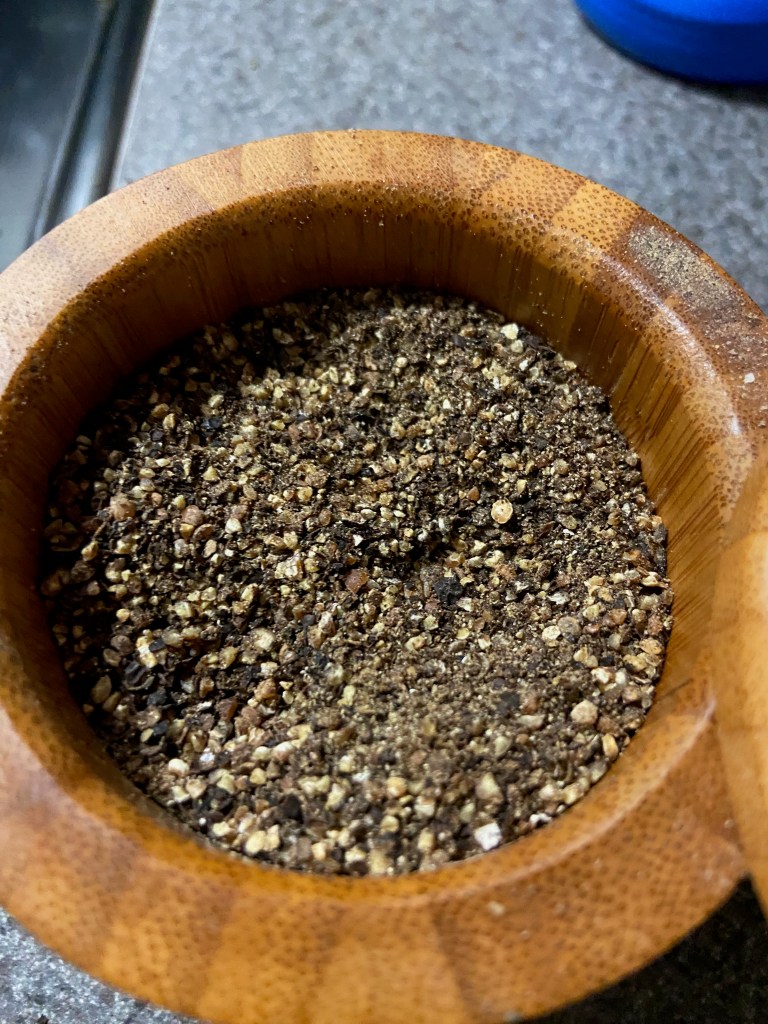
Grinding spices is no different than grinding coffee. They are done with literally the same machine. I wouldn’t advise grinding coffee and spices in the same machine unless a cook wants the flavors to bleed into each other. A possibility, yes, but unlikely. Spice/coffee grinders come in different styles. Cheaper versions use blades to to the grinding. The spinning blades effectively cut the beans or spices to get to the desired “grind.” It is very much like the way food processors do with larger items. Burr grinders use stones in place of spinning blades. The result is a fairly irregular grind with both larger particles of pepper and a fair amount of pepper dust. It’s not all that different from the tea that is found in the bags bought at grocery stores in that way. The main difference between cheaper burr grinders and expensive ones is how loud they are in operation. I can confirm that “low end” burr grinders are really, really freaking loud. Like “competing with a television at full blast” loud. I’m single, live alone and don’t use the machine very often so it’s just the cost of doing business to me. For others, the loudness may be less desirable. Just know grinders that produce a lower audible sound cost considerably more. When I bought mine years ago, it was $50 or so. When I looked them up years later for my oldest brother, I noticed the quieter ones were $100 or so. I can’t imagine the cost has gone down in that time.
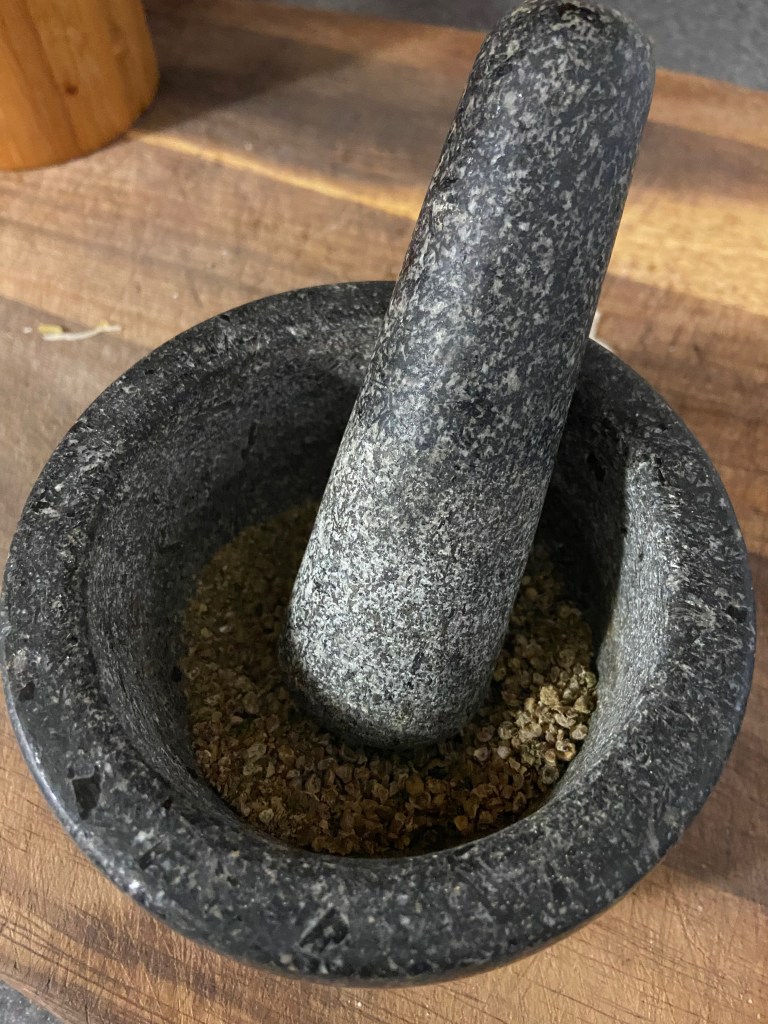
A different grinding option is a mortar and pestle. It is an ancient technology, so to speak. Basically, a mortar and pestle is a manually powered burr grinder. The mortar part is the bowl. It can be made out of just about anything heavy but stones like marble or granite are more traditional. The pestle is a piece of stone held in the hand, usually cylindrical in shape that is tapered on one end, and is used to first pound whatever is in the mortar physically against the walls of it. Four rougher grinds, just this pounding motion is likely necessary to achieve it. Finer grinds will require the cook to keep the fat end of the pestle against the bowl and grind the spices or whatever is in it until it gets to the desired state. It can be a time consuming process but it is the far more traditional way of grinding anything, It is used in every major food culture. Pounding spices into a grind produces a very different texture than cutting it does. This matters in some cases and not others. Mortar and pestles also do better with spices that are physically softer. Black peppercorns are very time consuming to break down this way. It’ll happen but it will be much longer than necessary because black peppercorns are very hard. I’ve used this older way to grind with cumin seeds and green peppercorn for much better results.
Whole black peppercorns are used as is for brines, marinades, pickling spices and dry cures for meats and vegetables. They don’t need to be broken down because most of what I just mentioned can take anywhere from 8 hours to 2 weeks or more to get the desired effect. I have employed a dry cure on a brisket for 5 weeks multiple times to make pastrami. The key to using whole peppercorns is understanding that all liquids, even water, are best at diffusing flavors from what is in them. That takes more time to complete. That makes dry cures, which are also known as dry brines, much more optimal for quick infusions of flavor, especially when paired with a Food Saver bag or like product. Some liquids will are better diffusers than others. Water is decent at it, but higher proof alcohol and vinegar, which used to be alcohol, are best. Vodka is my liquor or choice when I do liquid diffusions because it is so neutral in flavor.
Black pepper’s flavor is very strong. It can very easily dominate other spices and flavors from the food being seasoned itself. As a result, it can be a polarizing spice. Lighter flavored meats like chicken and leaner cuts of pork, which have been gaining popularity in diets over the last 30 years, are easy to over season with black pepper. I did it last week. I just ground some peppercorns in my burr grinder then used the grinds about as fast as I could on some boneless skinless chicken thighs. The only thing I could taste was that black pepper fire that makes people not like it. Beef’s natural big flavor stands up quite well the black pepper. There’s a reason why steak au poivre, French for steak in a black peppercorn sauce, is a classic French dish. Also, black pepper really sings on brisket, whether as pastrami, corned beef or freshly smoked. The reason for that is brisket takes so long to cook that the oils in the pepper grinds really have a chance to fully flavor the end product. Black pepper is a dominant spice in just about every Texas style brisket rub I have ever seen.
The main things I have learned from developing my own personal tasting palette and profile is buying from dedicated spice shops really helps attain a quality black peppercorn. I get mine from Penzey’s Spices. They used to have a physical store location here in Des Moines. It has since closed and I get them through he mail now. It costs me around $18 for a 13 ounce bag, Second, the size of the peppercorns matters a lot. Getting peppercorns that can actually be cracked in proper pepper mills is pretty essential because is opens all doors in the kitchen. Third, understanding what equipment to get for grinding is just an important as the 2 things I just mentioned. That leads to figuring out what coarseness setting to strive for when using the machine or mortar and pestle. The grinder I use has about 18 settings. I use a very coarse grind setting for pepper I use in every day cooking and a very fine grind for working into my house seasoning, which is very close to a traditional taco or blackening spice. I tend to grind enough pepper for about 3-4 weeks unless there’s a big roast in that time period. There’s no reason to grind pepper beyond that timeline. There really is a big difference from store-bought fine grind black pepper and what is fresh ground in house. My oldest brother mentioned it to me last year. He wondered why my black pepper was so much more pronounced than his. I highly encourage people to take spice grinding into their own hands. It’s so worth it.
 Life Through Lifting