Be patient with produce

Mark Brown
March 30, 2023
Grocery stores are good at stocking most everything a person needs and/or wants. Meat, vegetables, fruit, snacks, baked goods, spices, medicine, cleaning supplies, and other items are all things found in a well stocked grocery store. Bigger chain grocery stores will have all of that while smaller chains might specialize in just carrying food. Some of that is to maximize the space. In Iowa, some of the dominant grocery store chains are Hy-Vee and Fareway. I am not counting Wal-Mart or Target in this category because they are different for the most part. Discount membership club stores like Costco and Sam’s Club are very much like Wal-Mart but many times greater in scale. When I was selling jams, salsas, bread, etc I maintained a Costco membership to get fruit and other items I needed for a better price on them. When dealing with fruit in the scale I needed, that was incredibly important. I learned something during that time, from about 2010-14, that changed the way I look at buying fruit.
The major lesson I learned was that I needed to have patience with certain fruits I was making jams, jellies, preserves, sauces and salsas with. I needed to let them ripen. Ripe is the state produce gets in when the starches in them have converted to sugars. This lesson came as a result of learning from both experience and a source I trusted, Alton Brown. On one of the episodes of Good Eats, he pointed out that the fruits and vegetables available at grocery stores was based more on looks than ripeness. This matters quite a bit when dealing with certain widely available fruits and vegetables, much more the former than the latter. He used tomatoes as his example. A tomato that is firm and red is the best bet for the grocery store to sell it. Tomatoes are a fruit, botanically, that ripens after it is picked for the most part. I once pulled about 800 Roma tomatoes off about 8 plants years ago from a friend’s garden at the end of October. All of them were green, but ready to get the process started. It took them a couple weeks of just sitting on a table to get it done. That signature red color of most tomatoes is not the best sign of ripeness. Achieving it can be done with just a bit or time and exposing them to certain gases. It’s one would use to hasten the ripening process once the produce is back home. Tomatoes are a great example to use because the red blush can be quite deceiving.
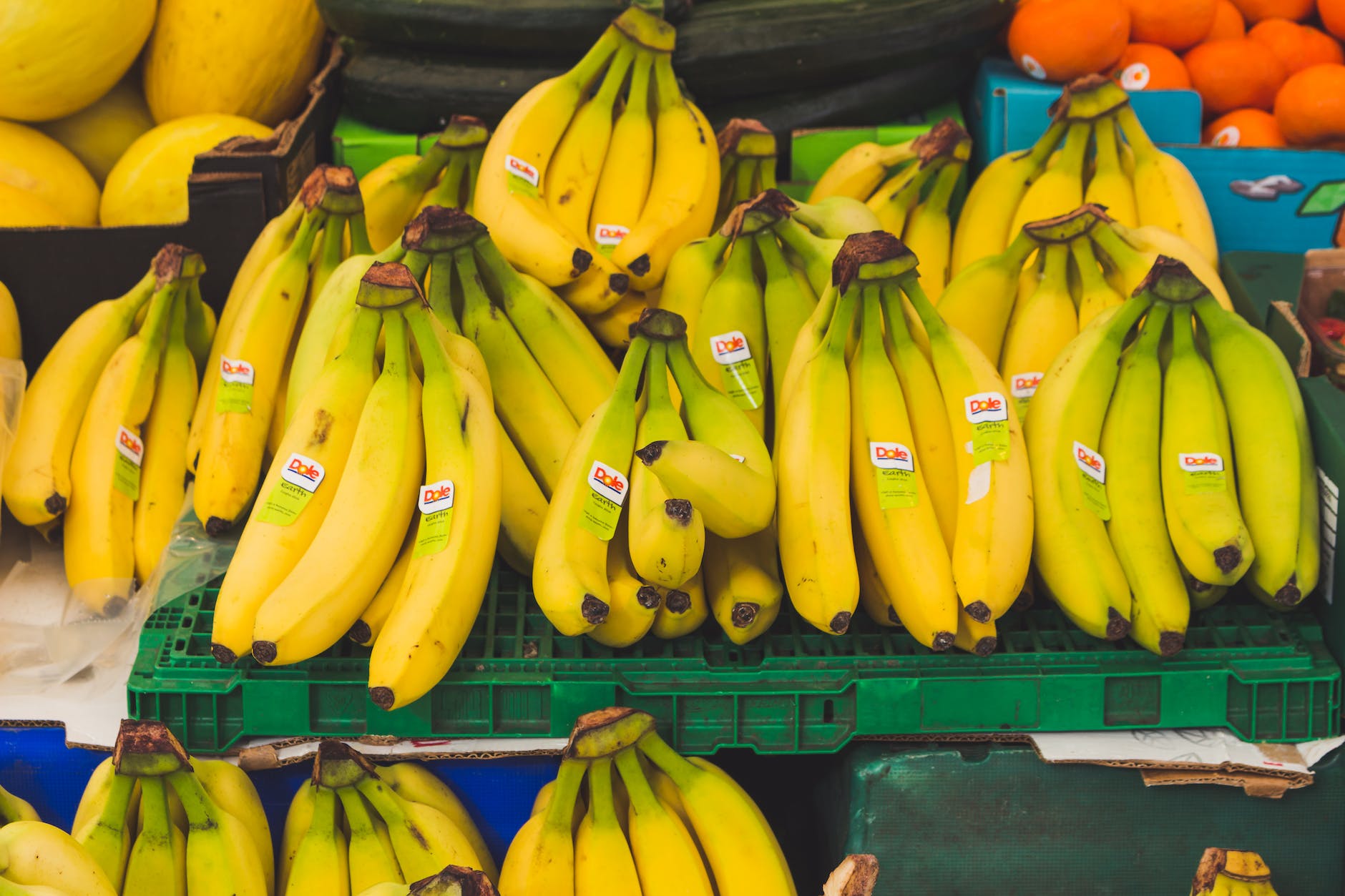
There are more than a few examples of fruits and vegetables that grocery stores sell far before they are ready to be consumed at their best. Peaches, melons, bananas and pineapples are just a few. The first two don’t help anyone visually very well. With peaches, feeling them will be enough to tell when they are ready to be eaten or used for culinary purposes. Firm with a little bit of give when squeezed is a good benchmark. I still have no idea when melons are actually ripe. Pineapples and bananas will show anyone paying even remote attention to them when they are ripe. Both of these fruits mystify me a bit because I see people eating them before they are even close to fully ripened, both in person and on tv by professional chefs. I’ve known for a long time that the darker bananas make better banana bread because my parents have made it for as long as I can remember. In my younger years, I never understood the reason why. I also understand why grocery stores choose to sell bananas when they are severely under-ripened, which is marked by their unblemished green or yellow color. I’ve eaten bananas at this stage of ripeness. They don’t really taste like anything. It’s only when they soften and the peel begins to take on quite a few dark spots that they begin to take on any flavor. If anyone eats a banana before this happens then complains it doesn’t take like anything, it’s on them.
I very rarely see pineapples being used when actually ripe on television. Maybe chefs think they are sweet enough while still visible green. I disagree with them. I don’t tend to enjoy the flavor of pineapples so I don’t get them a lot. What’s particularly interesting to me about them is the way they are often sold in grocery stores. Like bananas, peaches, melons and tomatoes, they are sold mostly in a severely under-ripened state. Like bananas, the fruit lets everyone know just how severely so they are by being mostly dark green. Seeing some yellow or orange on one will make me audibly laugh with a comment to myself or something like “Hey, this one is actually kind of close to being ready!” They are definitely sweet enough to be eaten, maybe not enjoyed, in this stage, but they get even better if someone just waits a couple of weeks. Yes, I said “weeks.” Over the period of 2 weeks, if not aided by gases, the pineapple will show it is ripening by the exterior becoming yellow, orange, red-orange then brown in that order. The entire thing doesn’t change colors as it ages. In this way, it is like a mango. Other changes to the exterior will manifest themselves. The fronds, the leaves at that top, will slowly begin to wilt over that time. That is more evidence that the fruit is converting the starches into sugars. This is when sugar content is at it’s max or very close to it. I will only eat pineapple when it is this ripe.
I first experienced how long pineapples take to ripen when I did my first batch of pineapple salsa 10-12 years ago. I was in the prime of my canning phase. I was very active in creating canned jams, jellies, preserves, salsas and sauces. There were some that I only made once and have just kept in my back pocket, so to speak, for future producing. I believed, and still do, that pineapple salsa should be hot because helps balance out the sweet of the the fruit. Salsas are no different than any other kind of sauce. Balance of flavor should be the ultimate goal, even if one aspect of it heightened. I also used pineapples in place of tomatoes. The second time I made pineapple salsa is when I truly learned the most from the process. I got about 9 pineapples from Costco and let them all ripen about as fully as possible. I combined that with about 3 pounds of unseeded jalapeños, 3/4 of a pound of unseeded serrano peppers, 5-6 red bell peppers, a lot of garlic, 4-5 large onions, salt, black pepper and cumin seeds and roasted it all in 2 large aluminum roasting pans. I learned that pineapple juice will eat non-stick coating from the the first attempt. I blended it with a stick blender until relatively smooth, then canned 29 jars of it. It took me 11 hours from prep to final jars canned. This was memorable because I stayed up the night before a vendor show to make it.
I tell this recipe/story to show how important letting pineapples ripen is. The salsa I just wrote about turned out really, really freaking hot. One of the hottest salsas or sauces I’ve ever made. It was even hotter than my habanero sauce I made around that time, and it had 100 of the little devils in a batch that made 25 half pint jars. I’d made traditional tomato based salsas quite a few times by that point. I was even good at making a hot salsa that took about 8-10 seconds to get there. I killed my ability to make taste mild salsa at one point during 2011-13 because of how much hot stuff I was making. The heat in this second pineapple salsa hit much faster and hotter than any tomato based salsa I’d made. The first batch was also quite hot. I suspect there are enzymes or something in pineapples that helps capsaicin spike when pairs with peppers. I haven’t really made any since so I have never really put any effort into figuring out why. Not using the pineapples until they were fully ripened was the most important part of the prep phase. I’m convinced if I would have used them when they were less sweet that the salsa wouldn’t have had the punch it had. That’s how I learned why I needed to let them ripen. I just don’t understand why I don’t see it on tv with professional chefs more often. Maybe I’m the crazy one.
Perhaps pictures will help some…
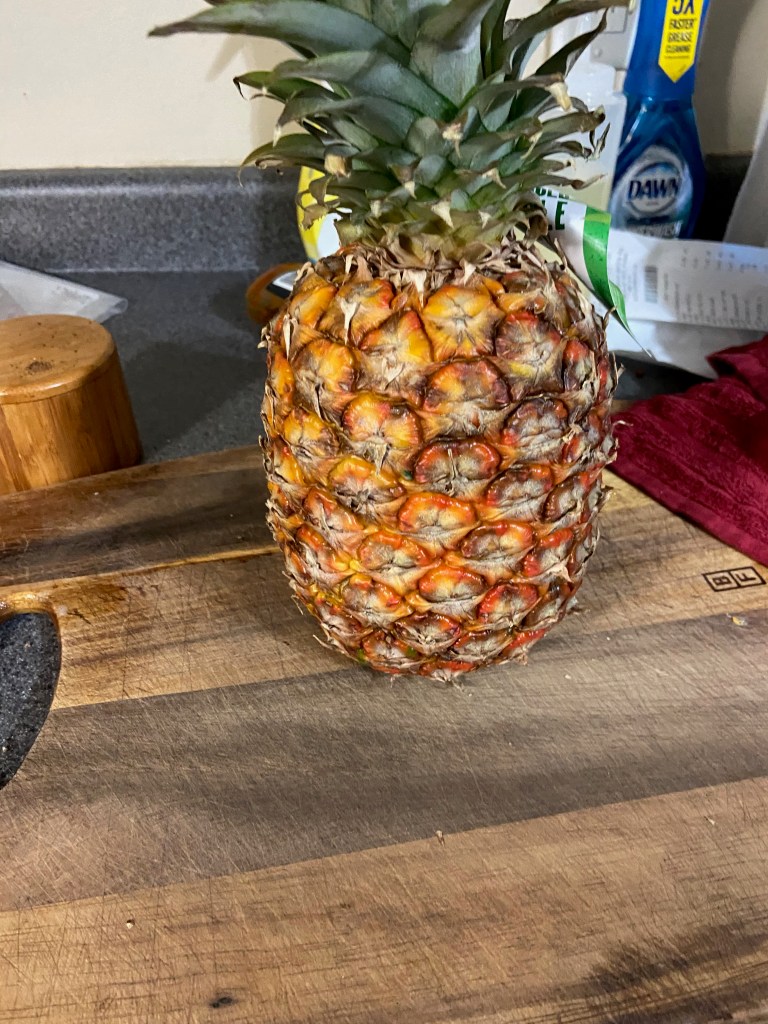
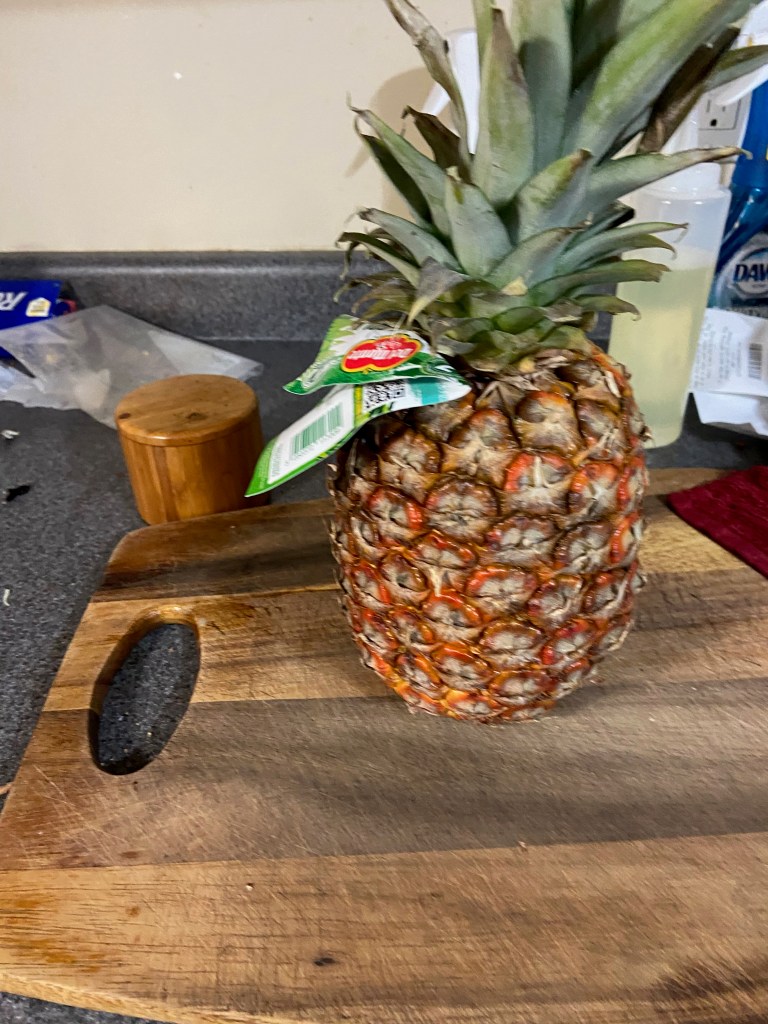
Purchased on Sunday February 26, 2023 already starting to turn yellow. These two pictures were taken on March 3rd. The pineapple had been sitting out on my countertop all week. Could I have hastened this process by putting it in a paper bag with a banana in it? Yes, but I wasn’t in a hurry. Notice the different colors on the fruit and how green the fronds are.


These pictures were taken March 7th. I actually cut it up shortly after taking them. Notice how brown the exterior is. The pineapple was perfectly good under it. It was quite soft and very easy to cut, even the core. The fronds on the bottom photo were very wilted. This is what a pineapple looks like at peak ripeness or very close.
 Life Through Lifting
Leave a comment