EliteFTS Safety Squat Yoke Bar

A Review and Thoughts
Mark Brown

April 14, 2022

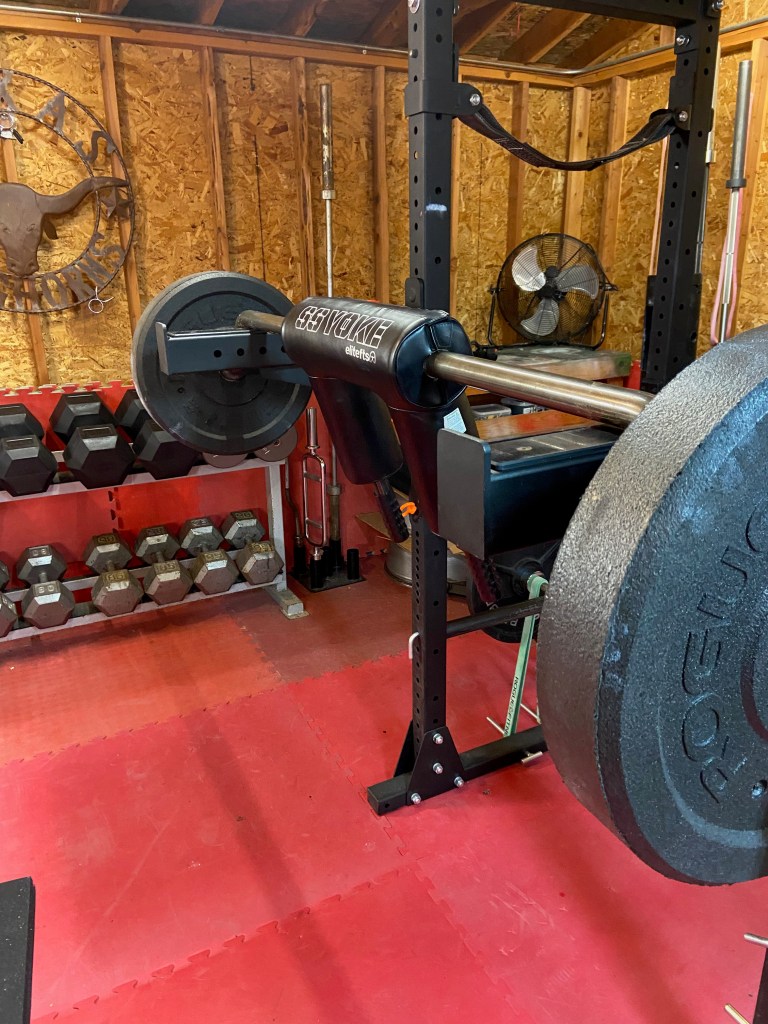
This isn’t my typical type of blog entry but I thought enough time has elapsed since I bought the equipment for the garage. One of the specialty bars I bought earliest was the Safety Squat Yoke Bar by EliteFTS. I had heard what people said and watched plenty of videos of it used so I decided to make it one of the priority bars to acquire back in 2020. It is truly helpful and an intriguing specialty barbell. I am quite happy that I purchased it and I have learned quite a few things from using it in my lifting over the space of nearly 2 years. This entry will act as my thoughts on it specifically and as a product review. If you are looking for a standardized star system or a thumbs up, you won’t find it here because equipment is always at best a “it depends” situation.

The first thing to I want to say is how different a squatting experience it was the first time I got under this bar. I was very familiar with straight bar squats by 2020 because I had been lifting since 2013. My reason for getting the yoke bar was to use it my primary squat bar because of the tension I felt in my left shoulder and left bicep tendon when I straight bar squatted over the years. It was, and still is, advertised as a bar used by people who have shoulder and rotator cuff issues to continue squatting. In my experience, the product more than delivers on its advertising.

The first time I got under the bar in September 2020 I realized that wasn’t going to be able to make it my primary squat bar for a long time. This bar has 2 elements that make it a difficult bar to squat with for those new to it: 1) A high learning curve and 2) higher strength requirement. The second is the major reason why I wasn’t ready to squat with yoke bar regularly immediately after I bought it. The bar places more direct stress on the upper back and neck area than a straight bar does during a squat. What that means for lifters is there is a baseline strength in the upper back needed to make this bar part of a lifting program. The slight camber in the bar also makes squatting more difficult by adjusting where the weight physically is in relation to the body. The principle of keeping the weight over the legs still very much applies when doing the movement with this bar. The 2 inch camber combined with the direct stress on the upper back makes for a more difficult squat overall.

I knew after that first night using it that I wasn’t strong enough in my upper, middle and lower back. I didn’t use the bar again for most of 2020 as a result. I also knew I would have start using the bar at some point to break in the pad that makes up the part of the bar that actually touches the body, even if I wasn’t strong enough to really squat with it. The pad starts out quite hard and unforgiving. It took a few months to really start breaking in. This is due to the fact that the padding on the bar is quintuple the thickness and much more dense than normal squat bar pads as well as it was only used once a week if that. The padding at the start is a very real impediment that a lifter new to this bar will have to overcome.

To say I learned that this bar is one I would have to work into using is an understatement. The biggest hurdle to overcome was upper back strength. I know in 2020 this was a major weak point because I have heard from a number of people who have noticed the change in my upper body in general since. When I got back to the garage in June of 2021, I committed to using the bar every week for at least one variation of squat. That helped break in the pad and got me to learn proper stance/foot placement. Committing to using the bar forced me to focus programming on upper back development to help me become able to use the bar regularly. Overhead presses that start at the collarbone to a fully locked out position, lat pulls, viking press, barbell rows, t-bar rows, cable rows, and even deadlifts themselves have all become part of my regular programming since June of 2021 to increase upper back strength. Developing that muscle group is essential for squat and deadlift improvement but mandatory for using this bar for its intended purpose. I cannot stress that enough.
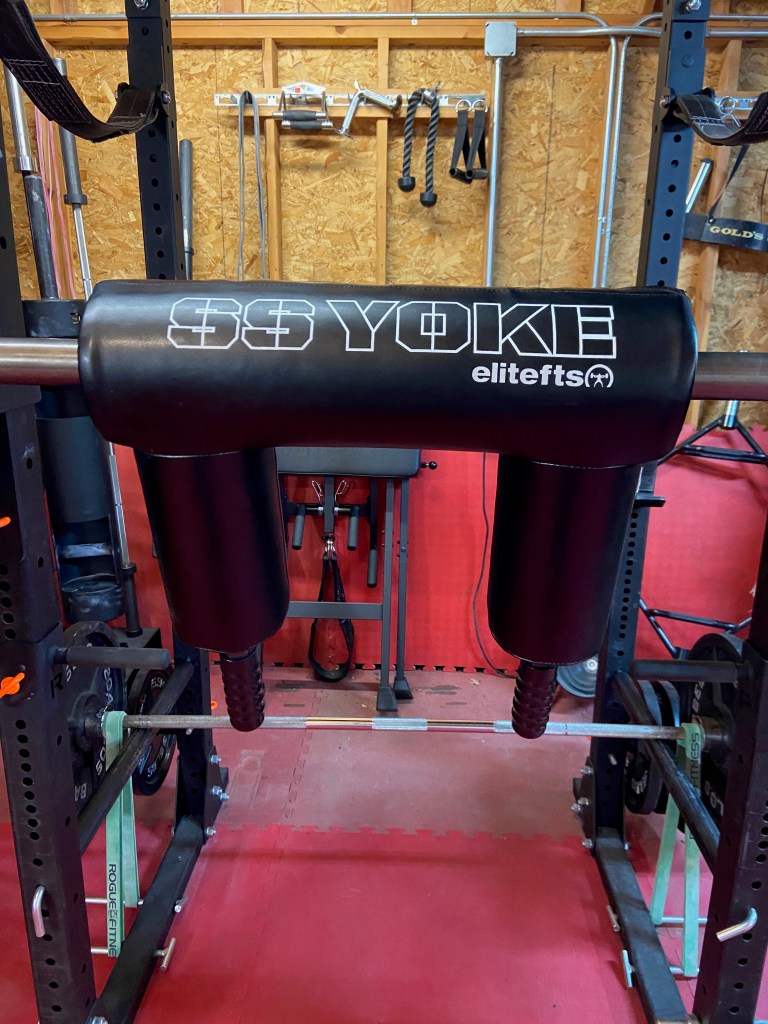
The same design feature that puts all the pressure of the weight on the upper back and neck area allows the bar to stay there without being actively held there by the lifter’s hands. That makes squat variations much easier to pull off. When I got the handles for my power rack I found more uses for the yoke bar. By using the handles for external stabilization I could focus all of my energy and effort on my quads similar to the way a hack squat machine works. This variation is known as a Hatfield Squat. I normally go down to a box down when doing these “assisted” hatfield type squats. What makes them especially helpful is the way I can overload the lift beyond a weight I would not be able to lift without that external stabilization. That is incredibly useful in the absence of hack squat and leg press machines.
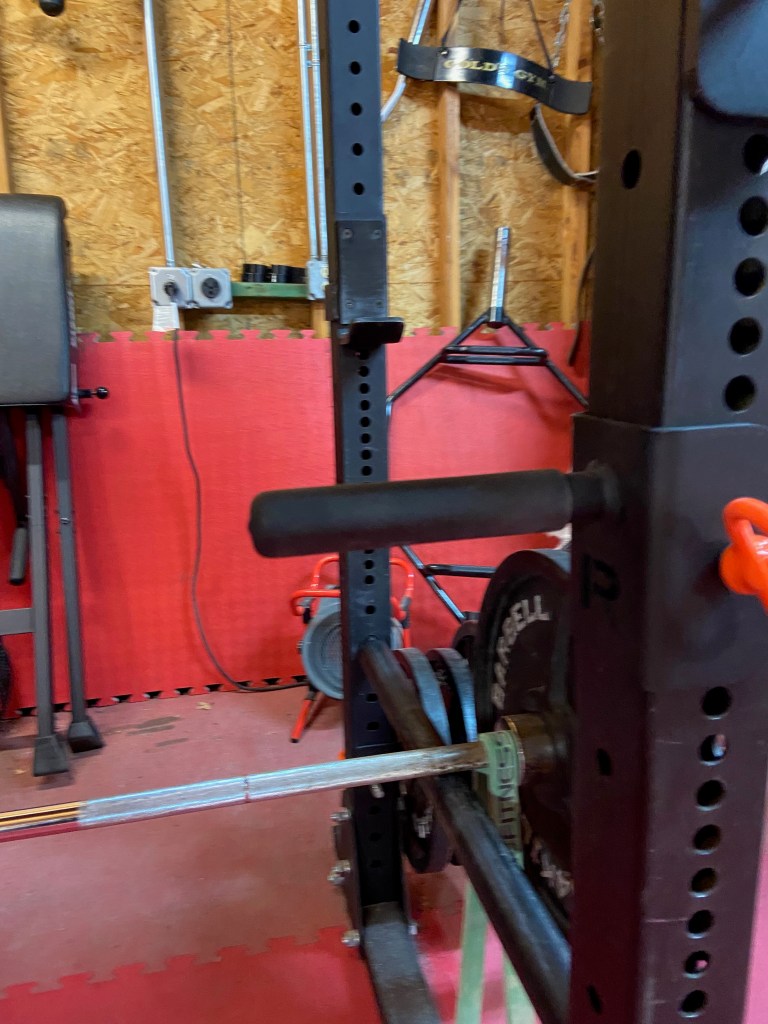
The yoke bar also has uses that go beyond squats but I will leave that to this pseudo-commercial by the company that makes it:

I fully recommend this bar. It has been super durable and it has helped my squat overall, especially when paired with the handles on my power rack. It is a bar with a significant strength wall and steep learning curve to overcome so don’t expect to be able get right under it and go like a straight bar. At the time of this post, it is retailing at $445 (with $0 domestic shipping) so it isn’t cheap, but is in line with the specialty bar market. Currently, I lift about 80-85% of my straight bar 1RM when I use the yoke bar. This bar will help upper back development, which is essential for all 3 main powerlifting lifts, so it definitely has a place in any powerlifting gym, commercialized or garage.

Squats, Again!

Part 2: Keeping Everything In Line

Mark Brown

April 12, 2022

The last time I did a squat centric entry was at time when my squat was probably the least ascendant of my 3 main lifts. That has changed recently because of the focus that I have put on improving the lift, though unconscious of it at the time, and a cue I picked up on during training in February that helped my form allow me to get more work done. That cue is what the bulk of this entry will be about because it’s the most important reason for the increase. I’ve stated before I’m no expert on squatting but I think it’s important to pass on what I felt helped really push that lift higher.

To start I think it’s best if I go through the non-form related squat things I did to help increase squat over the period of January through early March 2022 at the gym. In addition to the main lift low bar and high bar straight bar squats I did, I emphasized upper back and hamstring development. I did that through barbell rows, barbell good mornings, and single leg leg curls after the traditional deadlifts that followed my main low bar squat lift on Mondays. On Fridays, I used sumo deadlift after my main high bar squat movement and followed that with cable rows, prone leg curls, adductor and abductor machines. I also found that my shoulder presses, especially standing overhead presses, were really helping upper back strength because of the way I always lifted from my collarbone all the way to the lock out position overhead every time. Traditional deadlift and leg press helped keep developing the quadriceps as well, of course. It didn’t hit me as to why the effort level to complete the previous weeks squat weights was decreasing. Each week it seemed like it wasn’t as max effort as the week before. The moment crystallized when I squatted 405 pounds for the first time since November 2021 with under max effort on March 8.

March 21, 2022 was the first time using my cambered bar to squat since October or November 2021. A cambered bar squat places the weight slightly in front of the body and at the waist when doing the lift. The first couple sets I was back on my heels and the reps really weren’t good. I was off balance. It wasn’t until I started on my set at 355 that I leaned forward slightly to put the weight in line with my quadriceps and I found my position was a lot stronger. I produced better quality reps after that. I start there when writing about form because that cue was one I had realized weeks before in the gym in February. I can’t give an exact squat session that I give credit to for it. I noticed that I was in my most powerful position was the the straight bar I was using to squat with was directly over my legs. That allowed me to perform the lift as best I could given the weight on my shoulders. More importantly, I was able to do 12-16 3 rep sets in the 90% 1RM range without undue back strain. In effect, by squatting with the load directly over my legs I was both stronger and in a safer position even though I was lifting near max intensity twice a week.

Is any of that an epiphany to me? No. Even though I have squatted twice a week since fall of 2020, that internal reminder hasn’t always gone off. In many ways, it’s the most important thing when dealing with a squat, especially because gravity has a big say in whatever happens. The cue was brought even more to front of my mind while performing standing overhead press with a barbell. Completing that lift with the bar even slightly in front of me made that task much harder. I thought about that a minute and applied that to a squat rep and it helps everything make sense. I was able to go back to those squats I did in February where everything was in line and it all clicked in my head.

What makes this realization more interesting is that it helps me understand squatting better on the whole. There are tons of ways to do barbell squats with a straight bar and each has a specific reason why one would do them. Understanding them will help someone program the right squat for them or a client. Seeing where the bar is over the legs on the various squat options helps a lifter get what the point of the lift is and how to get there. Low bar squats produce more action from hamstring and glutei at the bottom end than a high bar squat. When seeing, or in my case feeling, the difference it really made me concentrate on keeping my legs under the bar. The difference doesn’t visually look like much but the feeling is quite stark. Front squats have always been trouble for me in part because my front rack position is very wide. To keep the bar over the legs in a front squat, one must have a much more vertical back position. To make that happen the knees move first and the hips follow, a reverse from either of the back squats I mentioned prior. The movement is a killer quad centric squat and is a must do for Weightlifters because clean and jerk and snatch all come from the front rack position. I have difficulty keeping the bar over my legs when performing a front squat. To put it in perspective, my 1RM for a low bar squat is 415 pounds and I don’t trust myself to do 185 pounds on front squat. The same thing applies for zercher squats because they are also done from the front.

When squatting a lifter is always dealing with the twin factors of weight and gravity. If a lifter’s position is good and the bar is where it needs to be but the weight is too much or close to it, it’s possible to complete the lift. The lift may look and/or feel off but it got done then racked properly. Any complications from completing said lift come from the load being too great to be done 100% properly. If a lifter’s bar position is compromised for some reason, then they will be dealing with both of them at the same time. That is a losing proposition almost every time. The primary reason for that is that gravity enhances the feeling of the weight on the body. There are tons of videos on Youtube that involve squat fails. The primary type of squat fail that I see in those videos is when the bar position drifts towards the knees. Those clips usually end with someone having the bar hit them on the back of the head as their body hits the floor ass end up. This failure is what happens when the bar being in front of the legs meets a weight that is too heavy for legs the push up. There are a few other factors that make this kind of failure catastrophic but those don’t have anything to do with bar alignment or weight. The other negative consequences are the damage done to the central nervous system (CNS), spine and/or muscles by completing the lift with that kind of rep. Those kinds of pain can linger for a lifetime in the worst case scenario. Rounding the back on squats and deadlifts isn’t always terrible but I don’t particularly advise doing it a lot. Letting the bar drift backward without support can have the a lot of the same damage if a lifter tries to save the lift. More often than not the lifter just looks silly for trying to defy gravity. Easiest thing to do in those cases is to go down to the safety pins slowly if in a power rack or let it go if out in the open. If the lifter in this case doesn’t do either of those solutions, they will end up going ass up like the others. Front squats are the safest in regards to failure because the way out of a failed lift is to simply drop the bar while making sure the lifter’s legs are out of the way.

The overarching point of this entry is that the weight on the bar is enough to overcome on its own. There is no need to add the force multiplier effect of gravity on that weight. Keeping the weight in line with the legs on the way down to the hole ensures that the lifter is in the strongest possible leverage position and removes gravity from the lift for the most part. Since the vast majority of lifters will only use a straight bar, that means the the bar and plates needs to be over the the quadriceps. The biggest reason for the development of my squat over the first couple months of 2022 has been because I was about to do tons of reps, 858 total with vast majority of them at above 75% as of Week 11, without doing too much wear and tear to my back because I was more aware of my bar position.

2022 Week 14 Training Log

April 4 – April 10, 2022

Mark Brown

April 10, 2022

Monday
Scheduled Day Off – Recovery

Tuesday
Chain Press, to Chest – 135 x 6, 225 x 6, 225 w/chain x 3, x 3; 245 w/chain x 3, x 3, x 3 x 3; 255 w/chain x 2, x 2
Pin Press – 225 x 3, x 3, x 3, x 3; 235 x 3, x 3, x 3, x 3
Narrow Grip Incline Press – 225 x 3, x 3, x 3 x 3; 235 x 3, x 3, x 3, x 3
Log Press – 131 x 6, 141 x 3, x 3, x 3; 151 x 3, x 3, x 3
Flat Dumbbell Press – 100 x 10, 110 x 7, 115 x 4
Seated Overhead Dumbbell Press – 55 x 12, 60 x 10, 65 x 8

Wednesday
Reverse Hyper – 0 x 10, 20 x 12, 50 x 12
Cambered Bar Box Squat – 175 x 6, 245 x 6, 355 x 3, x 3, x 3, x 3; 275 x 3, x 3, x 3, x 3
Banded Rack Pulls – 135 w/70 lb bands x 6, 185 w/70s x 6, 225 w/70s x 6, 245 w/70s x 6, 245 w/100 lb bands x 3, x 3; 265 w/100s x 3, x 3
Leg Extensions – 110 x 12, 150 x 10, 170 x 10
Barbell Rows, American Press Bar – 128 x 8, 128 x 8, 128 x 8

Thursday
Tricep Pushdown, Pyramid – 50 x 12, 57.5 x 10, 65 x 12, 72.5 x 12, 80 x 10, 87.5 x 10
Cable Curls – 42.5 x 12, 50 x 12, 57.5 x 10, 65 x 10
Straight Arm Lat Pulldown – 65 x 12, 72.5 x 12, 80 x 10, 87.5 x 8
Skullcrushers – 55 x 12, 65 x 12, 75 x 10, 85 x 8
EZ Curl Curls, Superset with Skullcrushers – 55 x 10, 65 x 10, 75 x 8, 85 x 8
Lat Pulldown, MAG Grip – 85 x 15, 100 x 15, 120 x 12, 140 x 12, 160 x 10
Preacher Curls, EZ Curl Bar – 55 x 10, 85 x 10, x 10, x 10
Tricep Extension, Machine – 90 x 12, 100 x 10, 110 x 10, 120 x 8

Friday
Schedule Day Off – Recovery

Saturday
Chest Press, APB Superset Widest Grips – 128 x 6 (x 6), 218 x 3, (x 3), x 3 (x 3), x 3 (x 3), x 3 (x 3); 228 x 3 (x 3), x 3 (x 3), x 3 (x 3), x 3 (x 3)
Chest Press, APB Narrow Grip – 178 x 6, x 6
Seated Overhead Press, APB – 128 x 6, 138 x 6, 148 x 1, x 1

Sunday
High Bar Squat 135 x 6, 225 x 6, 315 x 3, x 3; 345 x 3, x 3, x 3; 365 x 3, x 3, x 3
Sumo Deadlift – x 3, x 3, x 3, x 3, x 3, x 3,
Leg Press – 658 x 12, 748 x 12, 838 x 12, 928 x 10
Cable Rows – 35 x 12, 42.5 x 12, 50 x 12, 60 x 12, 70 x 12
Prone Leg Curls – 65 x 12, 80 x 12, 95 x 12, 110 x 8
Calf raises – 100kg x 40, 120kg x 30, 140kg x 15, 160kg x 15
Adduction 295 x 30, x 15, x 10, x 10
Abduction – 295 x 10, x 10, x 10

Steps/Miles
Monday – 19,766 steps, 10.0 miles. Tuesday – 24,633 steps, 12.3 miles. Wednesday – 25,036 steps, 12.4 miles. Thursday – 26,908 steps, 13.5 miles. Friday – 23,769 steps, 12.0 miles. Saturday – 9,816 steps, 5.2 miles. Sunday – 4,085 steps, 1.9 miles. Total – 134,013 steps, 67.3 miles.

Notes

Saturday’s session stands out because I watched golf on that day instead of getting my session in as intended. Instead of skipping it, I got it in about 8:30 at night. Took me little over a an hour to get the pressing in. I decided to just get in hard pressing session with the American press bar that was quick and to the point so it didn’t disrupt this coming week. I also straight up failed overhead press at 148 Saturday. It surprised me. I suspect that my going directly up to 218 on my first presses of the night might have had something to do with it.

Leg Press

Part 1: Reasons for Caution

Mark Brown

April 7, 2022

I would be remiss if I didn’t point towards some of the dangers of the lift and the machine. In my opinion, most plate loaded leg presses are safe unless something is broken on it. The leg press machine that I am familiar with (at the Merle Hay Genesis) has enough space between the foot platform and the seat in the case of a failed lift. Might get a bit uncomfortable but that’s what a lifter gets when they fail a lift. All of that said, I wouldn’t want to be in the seat for a total failure from the top of the lift. I know how many plates I normally on the machine, and I don’t feel like ever testing the safety of nearly 1,000 pounds falling fast on the machine.

There are a few dangers involving the lift. The first is a hyperextension of the knee at the top of the lift when the legs are fully extended. The knees flex backwards rather than flex upward in the direction knees are supposed to go. On a leg press, that usually happens when a lifter fully locks out and straightens their legs completely after the completion of the concentric phase but doesn’t move their knees out of the way before beginning the eccentric phase back down to the bottom of the lift. A lifter will know what is happening immediately because a knee buckling produces a very specific pain signal to the brain. I’ve felt it a few times and panicked for half a second every time it has happened. The best way to avoid hyperextending the knee on a leg press is to never fully lock out. The results of hyperextending on a leg press can get downright horrific. I’m not going to hyperlink to a video of it happening on this entry. If you want to do it, that’s all you.

A second one is more minor than that. As stated above the seat is designed to take the load of the weight of the platform structure to be pushed, but that is compromised if the lifter isn’t seated with their back pressed flat right up against the seat. A lifter should never feel a leg press in their lower back. That means an existing back injury could become exacerbated by improperly sitting in the leg press seat. I’m fairly confident in saying that it would not cause a back injury though. A third danger is more human error than anything else. Using too much weight than can be handled well will put undue stress on the knee joint. Using a lot of weight also makes it imperative that a lifter never locks out at the top because heavier the weight is at the top the faster it wants to fall, and sometimes the knee doesn’t move out of the way fast enough. Every time I have felt my knees buckling on a leg press lift, it has been at 800-900 pounds.

One more thing to keep in mind when leg pressing is the stress level one’s feet are feeling. The feet are the body part in direct contact with the pressing platform. The health of the feet is therefore paramount to this lift in the same way hands are to a deadlift. Pressing a lot of weight and squatting can have quite a negative impact on how feet feel and react. My feet are never in perfect health. I feel it most when I start to move from a seated position, especially when wearing my heeled lifting shoes. I don’t think I need to state how important foot health is because it’s fairly obvious. If a lifter’s feet or knees aren’t feeling great or in a good deal of pain, then leg press should probably not be on the menu until they don’t hurt.

Leg Pressing is a safe way to get leg strength and development for those serious about both moving weight and/or just looking better naked. It’s been a major part of my leg days for years now and why I lift at the gym that I do. There isn’t much of a skill barrier, unlike with squat. It isn’t necessary for strength and muscular development but if it’s there I recommend using it. Just remember to never fully lock out at the top of the lift, make sure to relax the knees before beginning the eccentric phase, keep the back pressed into the seat, be wary of foot/knee condition, and understand what weight/rep ranges are necessary to get the progress desired.

The Leg Press

Part 1: Why and How

Mark Brown

April 5, 2022

The leg press can be a polarizing piece of gym equipment. It’s one of the best tools for lifters to get both strength and muscular development from one machine. It’s also one of the easiest ways for lifters to get in their own way through not keeping their ego in check. It’s been a major part of my leg development plan since I’ve been at the gym and one of my primary reasons for maintaining a gym membership over the last 2 years. It’s that important to me. The movement is fairly simple but to really help lifters out there understand why it’s part of a program to begin with I want to really dive into what makes it effective. This conversation cannot be held without comparisons to squats and deadlifts because of the nature of those movements and their importance.

For starters, a plate loaded leg press is a machine where plates are loaded on a connected to a platform that a lifter presses with their feet like they do a bar during a bench press. The lifter is seated at an angle looking up at the platform. Once the mechanism keeps the platform in place is unlocked, the legs take the load and the legs perform the presses. The placement of the plates on the machine means a lifter has to deal with both the weight and gravity when doing the lift. That places the leverage in a similar place to a squat but the two lifts are vastly different. The primary source of difference is that a leg press is externally supported and a squat is internally supported. Internal stability is when the body is used to support itself during a lift. This forces the entire body to handle the weight of whatever lift is being done. External stability is when a lifter uses other means to support the body. That could be belts, wraps, sleeves or, in the case of a leg press machine, a seat. What the seat does it that it allows the lifter to concentrate the load almost fully on the quadriceps, quite possibly the strongest muscle group in the human body, through absorbing the force of the load of weight and gravity on the back. That causes the quads to become the muscle group to be most isolated by the movement. One can change the forces involved by foot placement on the platform on to increase hamstring and glute involvement by placing them higher and wider on the pressing platform.

That external stability is what allows a lifter to leg press many times more than they can squat in a single rep. Depending on a lifter’s set and rep scheme, that can add up to tens of thousands of pounds difference when total workload is calculated. The easiest way I can show this is to use workload calculations from the first 2+ months of 2022:

Week 1: Low Bar Squat – 8,475 pounds; High Bar Squat – 8,560; Leg Press – 29,436.
Week 2: LBS – 8,445; HBS – 8,560; LP – 34,402.
Week 3: LBS – 10,830; HBS – 8,580, LP – 33,266
Week 4: LBS – 10,570; HBS – 10,120; LP – 30,870
Week 5: LBS – 10,800; HBS – 8,280; LP – 30,150
Week 6: LBS – 12,395; HBS – 14,080; LP – 32,080
Week 7: LBS – 14,080; HBS – 14,730; LP – 36,208
Week 8: LBS – 15,180; HBS – 15,950; LP -36,208
Week 9: LBS – 16,270; HBS – 14,730; LP – 38,064
High bar squat and leg press were performed during the same session.

Even when my low bar squat and high bar squat sessions are added up, which were done on Mondays and Fridays over the space of January and February 2022 respectively, those workload totals don’t really come close to the total weight lifted on leg press during that time frame. Furthermore, when I consider the fact that the vast majority of my squat lifts in this time frame, especially weeks 6-9, were done at 80% 1RM (345 pounds or above) for low reps compared to the near 1000 pound reps for 10-15 per set, it tells me how much more work can be done on a leg press than by squat. That is large part of why Sam Brown, a strongman competitor and coach who can be heard at EliteFTS’s Dave Tate’s Table Talk Podcast, asks “Do you actually want to learn how to squat or just look better naked?” when it comes to teaching people how to squat. He adds “there’s a leg press for that” in regards to just wanting to look better naked. A lifter can get strong, muscular legs doing leg press alone. Those numbers tell me that unequivocally.

When I add programming into the discussion, everything about the leg press kind of changes. Squats and deadlifts are major parts of any powerlifting or strength forward program, including weightlifting. They are both leg dominant lifts that require a lot of internal stability to complete, especially at higher loads. Both of them are leg presses at their core as well. Only differences are the leverage positions involved. The load to be moved is simply located in different spots, which makes the lifts different, even if both are hip hinge movements. When I realized that I was just using the floor as my anchor point to help move the load it hit me that I was doing a leg press. I first noticed it with deadlifts a couple years ago. The feeling my legs had when pulling the bar up past my knees to lock out screamed “leg press!” at me. Squats took a while longer for it to dawn on me. As a result, leg press has become a very important supplemental exercise because of the amount of workload that can be done with the lift to strengthen both lifts through improved stability, as shown above. I’ve even come up with ways to mimic the feeling leg presses give me in the garage. The lift has also helped me understand leverage better on this these two lifts by relating the way pushing nearly 1,000 pounds on the machine feels comparative to pushing all of my bodyweight and the load on my shoulders or hands into the floor to move my body. For squatters and deadlifters, leg press is almost mandatory.

Where the lift fits into a program really depends on what the goals of program are. If its goal is development of the squat and deadlift, then a leg press will firmly be a supplemental or accessory lift. I usually squat, deadlift then leg press to really get after my upper legs. I tend to lean towards supplemental rather than the accessory. I want to put as much weight on the machine as I can. I don’t see a point in doing any load I can’t do at least mostly full 8 reps of. This is a lift that one can easily get both strength and muscular development simultaneously. For a person who is more concentrating on hypertrophy, it is very useful as a main lift because of the way it mainly isolates the quadricep while allowing for bigger loads. It’s the only lift that can really say that about. I would also note that squatting after heavy leg press sets may cause some safety concerns. This is for people who want to prioritize strength development but maintain the skill of squatting. It’s similar to the way I felt in 2018-19 when I noticed that heavy dumbbell press sets murdered my ability to bench press significant weight safely because they exhausted my pectoral and tricep muscles. I was legitimately worried that the bar would come back down my chest or neck. A heavy leg press could produce a similar situation with a squat. Failed deadlifts can be dropped without much repercussion. Failed squats are another thing altogether because where the load is in relation to the body. Tiring the quads out to high level on the leg press could result in causing a lifter to fail a squat, probably at the bottom. A lot of bad things can happen in that position.

The leg press machine does the job it is designed to do well, but those things do come with a cost. Doing such heavy presses on the machine can cause some soreness in the knees because of the way the knees bear the weight of the load like a squat. Ideally, a lifter would like to the load isolate entirely on the muscle, not the joint, but that’s just not how the body works. Leg presses get an undeserved reputation for “wrecking” or “destroying” knees, in my opinion. Lifts on the machine that are done at loads well above what the lifter can handle, which usually means low reps or very partial reps, are more the culprit in those knee cases. Partial reps aren’t terrible on a leg press, because that’s part of what the machine was designed to do in the first place. Doing partial reps or limited range of motion lifts is an essential part of any strength training program.

Another part of the polarizing nature of the machine is something that I mentioned in the above paragraph. The lift isn’t a technique driven movement, although there are ways of making it do different things. It is purely about training the legs to push as much weight as they can. A more technical term those reading this might have heard for this is “output.” That makes the lift easy for someone to use the lift as a barometer for how powerful their legs are. It takes a lot of discipline to keep from venturing into the “ego lifting” territory on leg press. It’s very easy for a lifter to see how many full plates they can put on the machine and press after successful heavy sets. I fell into the trap once around 2018 when I decided to see just how much I could push. I found my answer: 1,158 pounds for 4 reps. I felt so stupid after doing it and think it’s even dumber now. The primary reason for that feeling is that I ask myself what the benefit of that particular lift was. I can’t come up with anything besides it making me feel super strong, aka inflating my ego. Belief is amongst the most important tools for lifters, but artificially boosting it will only hinder progress and increase the chance of injury. The leg press just happens to be one of the easiest machines to ego lift on in the gym because it is such a purpose driven machine. As a result, some people just look at the lift as a way that other lifters use to draw attention to themselves. In some cases, they aren’t not be wrong.

Come back for part 2 Thursday when I go over some of the potential dangers involved with the lift.

2022 Week 13 Training Log

March 28, 2022 – April 3, 2022

April 3, 2022

Monday
Unscheduled Day Off – Recovery

Tuesday
Two Board Press, Shoulder Saver – 135 x 6, 265 x 3, x 3, x 3, x 3; 275 x 3, x 3, x 3, x 3; 285 x 3, x 3; 295 x 3
Pin Press – 225 x 3, x 3, x 3, x 3; 235 x 3, x 3, x 3, x 3
Narrow Grip Incline Press – 205 x 6, x 6; 225 x 3, x 3, x 3, x 3
Log Press – 121 x 6, 141 x 3, x 3, x 3, x 3; 151 x 3, x 3
Flat Dumbbell Press – 100 x 10 110 x 7, 115 x 4
Seated Overhead Dumbbell Press – 50 x 12, 55 x 10, 60 x 8, 65 x 7

Wednesday
Box Squat – 155 x 6, 245 x 6, 295 x 6, x 6; 315 x 3, x 3, x 3, 3
Assisted Box Squat – 345 x 3, x 3, x 6; 365 x 6, 365 x 6
Calf Raise, BodyWeight Not Included – 345 x 12, x 10; 365 x 10
Block Pulls – 345 x 3, x 3; 365 x 3, x 3; 385 x 3, x 3; 40-5 x 3, x 3; 415 x 3
Barbell Rows – 135 x 8, x 8, x 8, x 8

Thursday
Tricep Pushdowns, Pronated Grip – 50 x 12, 57.5 x 12, 65 x 12, 72.5 x 12, 80 x 10, 87.5 x 10
Cable Curls, Two Handed – 42.5 x 12, 50 x 12, 57.5 x 12, 65 x 10
Seated Overhead Tricep Press – 45 x 12, 55 x 12, 65 x 12, 75 x 10
EZ Curl Curls, Superset with Tricep Press – 45 x 12, 55 x 12, 65 x 10, 75 x 10
Lat Pulldown – 85 x 12, 100 x 12, 120 x 12, 140 x 10
Rolling Tricep Press – 25 x 10, 30 x 10
Preacher Curl, Dumbbells R(L) – 35 x 10 (x 12), 40 x 10 (x 10), 45 x 10 (x 10)
Tricep Extension, Machine – 90 x 10, 110 x 10, 120 x 10
Straight Arm Lat Pulldown – 72. 5 x 10, 80 x 8

Friday
Scheduled Day Off – Recovery

Saturday
Chest Press, American Press Bar Superset Outer Grips – 128 x 6, 198 x 6, 218 x 6, x 3, x 3; 228 x 3, x 3; 238 x 3
Chest Press, American Press Bar Narrow Grip – 178 x 3, x 3; 198 x 3, x 3, x 3, x 3; 208 x 3, x 3
Seated Overhead Press, APB 3rd Grip – 128 x 6, 138 x 6’ 148 x 3, x 3; 158 x 1, 148 x 3, x 3
Viking Press – 140 x 15, 170 x 12, 195 x 10, 195 w/ 30 lb chain x 10
Floor Press – 225 x 3, x 3, x 3, x 3; 245 x 3, x 3, x 3, x 3

Sunday
High Bar Squat – 135 x 6, 225 x 6, 345 x 3, x 3; 365 x 3, x 3, x 3, x 3; 315 x 6
Sumo Deadlift – 315 x 3, x 3, x 3, x 3, x 3, x 3
Leg Press – 658 x 15, 748 x 12, 838 x 12, 928 x 12
Cable Rows – 35 x 15, 42.5 x 12, 50 x 12, 60 x 12, 70 x 12
Prone Leg Curls – 65 x 12, 80 x 12, 95 x 12, 110 x 8
Calf Raises 110 kg x 40, 120kg x 30, 140 x 20
Adduction – 295 x 15, x 15, x 15, x 15, x 15

Step/Miles
Monday – 23,731 steps, 12.1 miles. Tuesday – 25,519 steps, 12.6 miles. Wednesday – 21,667 steps, 10.8 miles. Thursday – 23,606 steps, 11.9 steps. Friday – 23,247, 11.6. Saturday – 9,968 steps, 5.2 miles. Sunday – 6,331 steps, 3.1 miles. Total – 134,069 steps, 67.3 miles.

Notes

Not a lot to report here this week. Lifting both days of the weekend is a bit of a change but worthwhile to keep me busy for at least a few hours during the weekend. I’m not sure how long that trend will continue because of golf starting back up this month.

Spring Plan 2022

Mark Brown

March 31, 2022

The time I spent in the gym this past winter, though not quite over here in Iowa, definitely did the job I wanted it to do. It even surprised me in certain ways. I didn’t expect my squat to increase in overall strength like it did. I also learned how to better craft a lifting program and recognize what levels of load I should be doing to increase strength. The last part has already come in handy during weeks I started lifting back in the garage, which is started week 11. I know my targets and I know how to get there. This is how I will do that.

Going back to the garage to lift means all of my specialty bars come back intro play. That is both exciting and challenging because all of those pieces do something in particular very well. Working them all into one cohesive plan isn’t as easy as it sounds. I found through my training last fall that lifting progressively heavier into strength and peak phases eats into my ability to do every lift I want to do. It’s one thing to have the availability to do something, but quite another if it doesn’t align with what needs to be done. Training with only dumbbells and straight bars for the first 9 weeks of 2022 made me appreciate straight bars more. I know I have stated in the past that having 6 specialty bars made me see how limited a gym, especially a commercial one, is but I learned that by doing a very select variety of lifts a straight bar was all I needed. I will not let that lesson go away for a 10 months. The squat bars themselves represent a challenge all to themselves, especially when skill work is necessary on both the safety squat yoke bar and the cambered bar.

The best part of training in the garage is I can arrange my training week in a way that makes the most of my time. During the winter I moved legs/back to Monday/Friday and chest/shoulders to Wednesday/weekend. The primary reason for that is to avoid the days where chest was the primary muscle group done by the other lifters. I snuck some isolation work in on Tuesdays to work some hypertrophy on arms and lats. It was a good set up and I got the lifts in how I wanted to get them done, which is the biggest challenge of the commercial gym. However, I noticed the effect of doing isolation work on my arms, specifically triceps, that impacted my Wednesday session. I have never minded sessions being extra hard because of fatigue because working into fatigue a major part of what I do. I understood by the end of February 2022 that an arm day before a press day is ultimately not ideal. That means the change I am making to my spring plan is to move chest/shoulders back to Monday or Tuesday/Friday and legs/back over to Wednesday or Thursday/weekend. That day arrangement is much more ideal. I do very much like doing legs after working because I’m much warmer and I do genuinely feel much more ready to squat and deadlift after 20,000 steps.

Now that we know a daily schedule of lifting and rest, the lifting itself is going to continue mostly along the lines of what I did last fall with some minor tweaks here and there. I have learned quite a bit in that time and it would be idiotic not implement changes. The plan is to work in 2-3 week waves on the main movements. Those main movements are likely to be but not limited to the following: Two board press with the shoulder saver pad, chain and/or banded press, box squats, free cambered squats, banded pulls and block pulls. I found these lifts to be exceedingly useful for developing strength. I got a proper adjustable box for using last December so it will be slightly different from using the bench last year. The feeling is quite different. The main for my second chest/shoulder day will be just a regular chest press with the American press bar. I can already see that bar pushing me higher and harder with my current workload centric programming of sets and reps. The bar is a killer. The weekend leg/back day will be back in the gym primarily because of the leg press and I want to maintain the skill of a straight bar squat.

The supplemental lifts is where the program does the most changing from the gym to the garage. I found the narrow grip bench press to be so helpful last fall that it’s just part of the plan from now on. The specialty bars really show their value here in the supplemental lifts. Standing overhead press will be replaced with a log press, Arnold press will be replaced by seated overhead press with the American press bar, pin presses become much easier to dial in, and viking press enters the program. If I can figure out how to do a JM press well, then it will also get in there on Tuesdays. The cambered bar can also be used for bench press as well if I feel like going that direction. I will be utilizing all of the specialty bars that I own in some form or another.

Accessories will change some through the addition of equipment that I only keep in the garage. The “grenade chain” I got from EliteFTS last year is a tricep pulldown that isn’t like anything else that I do. It is 3 connected steel grenade shape balls. Each one produces a slightly different result. It truly is a fascinating piece of equipment. At some point I will end up getting a neutral or almost neutral grip lat pulldown bar. Pete’s preacher bench is steeper than the gym’s so I take full advantage of that. It is my primary bicep builder in the garage.

In the weeks I have been back in the garage, week 11-13 at the time of this posting, I’ve made good strides in consistently hitting sets of 3 on main and supplemental lifts. I believe it is definitely possible to put 10 pounds on my bench press max by the end of the 12-16 week block. I’d like to see my max go from 295 to 315 by the end of the year. I have pulled 405 and 415 pounds from deadlift mats stacked 3 inches off the floor in successive weeks. The signs for strength and muscular development are pretty high from early indication.

Winter Training Takeaways

Mark Brown

March 29, 2022

The first two months of 2022 were too cold to train in the garage. A big surprise in Iowa, I know. I spent 2021 from January to the middle of May and learned some valuable lessons from that time. Those were mostly things not to do. Instead of doing a recap of this years winter training, which while technically over has seen me already transition back to the garage for 3-4 days of lifting, I will just share some lessons learned from the gym these past 2+ months. I figured since my goals for the winter program were so general and vague that it would be pointless to make a detailed account of them. I did observe some things in my training that will be beneficial in the future or that were definitely worth noting for later discussion.

The first involves a better understanding of programming and how a focused program could be done about as efficiently at possible. It just required arranging the lifting days in a way that didn’t coincide with what I knew other people were doing. That knowledge came through learning it as I went this past winter and from past cycles. Not scheduling leg press on days where people are doing legs and not on days where a lot of bench pressing is going on is just an example of the learned gym knowledge to which I’m referring. I’ve mentioned this a couple of times already in other posts so if someone wants more specifics of this, I have a specific entry about it.

The second is a lift I’ve known about but never done before. Ever. I do a lot of pressing in my sessions. I’ve listened to podcasts and other media talk about floor presses but never added them to any program. I decided that January and February would be a good time to learn them as a supplemental. The first couple weeks were rough but I got it dialed in in and it became one of my go to supplemental lifts. I discovered the lift really emphasized pectoral muscular development in a way that other presses didn’t because the way the triceps are never allowed to fully get into the lift. That allows it to be an ideal lift to do for just getting as much work done as possible. The concept is the same for doing leg press after squats or deadlift. It’s also a pretty safe lift. I failed a few reps and just required a small amount of squirming to get out from under the bar. I really recommend the lift.

I’ve deadlifted a lot over the last 2 years and done lots of varieties of heavy pulls from the floor, blocks, pins or safety straps. This winter was my first experiment with sumo deadlifts. I’ve been aware of them but always passed on them. I even passed over them for the first couple weeks in lieu of trap bar deadlifts, which has always felt like a front squat to me. I gave them a try in January as a stand in for my block pulls I normally do because I thought that by bringing myself closer to the bar I could mimic the block pulls. I found over the weeks that sumo deadlifts really emphasized my hamstrings and glutei. That wasn’t unexpected. What did surprise me was that there was definitely more back involved in the sumo than other variations I’ve done. A lot of that comes from my hands being placed inside my feet right on the inner edge of the knurling. The resulting pull required more effort for me to complete the lift. I noticed the feeling in my back was up the middle of my back, rather than wider. I couldn’t deadlift as much using sumo as I could traditional and that’s fine because it’s a secondary deadlift movement under my program. I also saw a lot of other people doing it as well.

Overhead pressing with a barbell has never been one of my favorite movements. A lot of that comes from my front rack position being so wide. In the garage, I do standing overhead press with a log. I didn’t have that option at the gym so I decided to put a barbell overhead press into my program as the replacement for the log. I didn’t have high hopes because of how much I disliked it. While I am not a complete convert, I did see quite a bit of value in it over the last couple months. I was able to increase strength in my shoulders and the lift itself to just below my log press max. From that perspective, the carry over to the log was high. That has been proven in my weeks of log pressing lately. The other value I saw in was the way it helped upper back development. I’ve watched a lot of people do the lift since the new year and the vast majority of them had a very limited range of motion, mostly starting and stopping at forehead level. I found that going from my collarbone to fully locked out over my head really forced my upper back to do more work. It also required me to be more conscious of bar placement above my head at lock out. I rarely failed lifts, but I observed physically how much less power I had if the bar was ever so slightly in front of me instead of directly over my head. One of those facts I already knew not experienced it a lot. The last value is really important because of the main takeaway from January and February…

I ended up doing everything I could do to help my squat and leg strength. I thought I was helping my deadlift but it turns out it was my squat that was developing the most. I put so, so much effort into my squat and I was doing so mostly unaware that I was doing it. I found that changing programming to emphasize heavier lifts, upper back development through sumo deadlift and overhead press, emphasizing hamstring development, realizing better technique and isolation machines all were helping my squat the most. I’ve been really hammering my hamstrings for the better part of year because I wanted to make them stronger. I didn’t expect my squat to develop the way it did. A very nice surprise, in that way.

2022 Week 12 Training Log

March 21, 2022 – March 27, 2022

Mark Brown

March 27, 2022

Monday
Two Board Press, Shoulder Saver – 135 x 6, 225 x 6, 265 x 3, x 3, x 3, x 3; 275 x 3, x 3, x 3, x 3; 285 x 2
Pin Press – 225 x 3, x 3, x 3, x 3; 235 x 3, x 3
Narrow Grip Incline Press – 205 x 3, x 3, x 3, x 3; 225 x 3, x 3, x 3, x 3
Log Press – 121 x 6, 131 x 6, 141, x 5, 151, x 3, x 3
Flat Dumbbell Press – 100 x 9, 110 x 6, 115 x 4
Seated Overhead Dumbbell Press – 50 x 12, 55 x 10, 60 x 8, 65 x 7

Tuesday
Unscheduled Day off – Rest

Wednesday
Tricep Pushdowns, Pronated Grip – 50 x 12, 57.5 x 12, 65 x 12, 72.5 x 12, 80 x 10, 87.5 x 10
Cable Curls – 42.5 x 12, 50 x 12, 57.5 x 12, 65 x 12
Lat Pull Down – 80 x 12, 100 x 12, 120 x 12, 140 x 10
Dumbbell Curls – 35 x 8, 40 x 6
Seated Overhead Tricep Press – 45 x 12, 65 x 10, x 10; 75 x 10
Barbell Curls, EZ Curl Bar Outer Grip, Superset withTricep Press – 45 x 12, 65 x 12, 65 x 12, 75 x 10
Straight Arm Lat Pulldown – 65 x 12, 72.5 x 10, 80 x 10, 87.5 x 10
Dumbbell Preacher Curl, Each Arm – 35 x 8, 40 x 8, 45 x 8
Weighted Crunches, Machine – 110 x 15, 125 x 15, 140 x 15, 155 x 10

Thursday
Free Box Squats – 155 x 6, 245 x 6, 295 x 6, x 3, x 3; 315 x 3, x 3, x 3, x 3
Assisted Box Squats – 345 x 3, x 3 x 2
Calf Raises – 345 x 10, x 12, x 12, x 12
Block Pulls – 345 x 3, x 3; 365 x 3, x 3; 385 x 3, x 3; 405 x 3, x 3
Barbell Rows – 1356 x 8, x 8, x 8, x 8
Good Mornings, Yoke Bar – 155 x 6, x 6, x 6

Friday
Unscheduled Day Off – Rest

Saturday
Chest Press, American Press Bar Superset 2 outside Grips – 128 x 6 (x 6), 178 x 6 (x 6), 198 x 6 (x 6), 218 x 3 (x 3), x 3(x 3); 238 x 3 (x 3)
Chest Press, American Press Bar Narrow Grip – 128 x 6, 178 x 6, x 6; 198 x 3, x 3
Overhead Press, American Press Bar 3rd Grip – 128 x 6. 138 x 6, 148 x 3, x 3; 158 x 3, x 2
Viking Press – 140 x 8,. 170 x 8, 195 x 8, 195 w/ 30 lb chain x 8
Floor Press – 135 x 6. 225 x 3, x 3, x 3, x 3; 235 x 3, x 3, x 3, x 3

Sunday
High Bar Squat – 135 x 8, 225 x 6, 345 x 3, x 3, x 3, x 3; 365 x 3, x 3, x 3
Sumo Deadlift – 315 x 3, x 3, x 3, x 3
Leg Press – 658 x 15, 748 x 12, 838 x 12, 928 x 11
Cable Rows – 35 x 15, 42.5 x 12, 50 x 12, 60 x 12, 70 x 10
Leg Extensions – 130 x 10, 160 x 10, 190 x 10, 220 x 6
Prone Leg Curls – 65 x 12, 80 x 12, 95 x 10, 110 x 10, 125 x 10
Adduction – 220 x 10, x 10, x 10, x 10, x 10
Calf Raises – 230 x 50, 270 x 40, 310 x 20

Steps/Miles
Monday – 26,464 steps, 13.2 miles. Tuesday – 24,210 steps, 12.2 miles. Wednesday 24,435 steps, 12.2 miles. Thursday – 26,094 steps, 13.2 miles. Friday – 22,818 steps, 11.6 steps. Saturday – 9,927 steps, 5.1 miles. Sunday –

Notes

This was a very productive week of training. The days shifted a bit when I moved my second leg session last week to Sunday from Saturday. I didn’t recover in time to get my normal leg session on Wednesday so it got done on Thursday. That had the effect pushing the second leg day to Sunday again. The Sunday session this week got done without completely getting recovered. That’s why the squat and sumo deadlift parts are down in volume this week. I made up for it doing some extra hamstring accessory work on the back end.

Friday I was extremely tired after work so I pushed the second chest day to Saturday. This particular session was the first time using the American Press Bar and Viking Press attachment in about 4 months. Lift wise, I feel my chest press is in relatively in the same spot it was last November. I can always feel the lift in my chest, even at lower weights. That makes it a very good bar for strength and hypertrophy work. It will never be a bar that I can hit my straight bar numbers on. The seated overhead press with that bar was the surprising lift of the day. The lift at 128 pounds, the opening weight, felt very much easy and 138 felt much easier than they did last fall. IT shows how much progress I have made with my shoulders during the winter.

Efficiency

Part 2: Strategies at the Gym

Mark Brown

March 24, 2022

Last time I wrote about three things powerlifting has taught me over the last year to help me become more efficient at the gym. This entry will be about strategies that can be used at the gym or in a private facility to help attain that efficiency. A couple of those strategies were already baked into part 1 of this topic. Those will be fleshed out more fully in this post. The goal of today’s entry is to help you, the reader, to become a more efficient lifter in the gym both in terms of time and effectiveness.

Time is important but it is far from the most important aspect of efficiency in the gym. I compare it to cooking a brisket or a pork shoulder in the smoker. Timing is important but both pieces of meat are done when they’re done, not “after 10 hours” or “after 12 hours.” That kind of knowledge can only be learned after someone has done enough of them to know. A lifting session is the same. A lifter is done lifting when they’re done. That can be seen through many tell tale signs: Energy is gone, muscles are cramping, motivation to continue is lost, discipline has broken down, etc. There really are too many to count. Just don’t let one of them be “the headphones died.” That’s really, really stupid. Seriously. That said, 4 hour marathon lifting sessions should really never happen unless one is a competitor. My leg/back lifting sessions take right on about 2.5 hours to complete. Tuesday is about an hour long because it’s all isolation based accessories. My Wednesday chest/shoulder day took 90 minutes. My weekend chest/shoulder workout took about 2.5 hours because it is far heavier than the Wednesday one. In the past, all of these lifting sessions have been longer than they currently do. Programming the main lift – supplemental lifts – accessory lifts way has helped simplify my plan and help me get what I need out of my program. It helped me strategize ways to help get around what commercial gyms do best, which is kill a workout’s momentum.

The first strategy I will address is one that I had heard about from listening to Dave Tate on a podcast talking about accessories. This happened in about October of 2021 and his verbalizing it helped me see what I was doing with my lifting plan for last fall. He said “and there are some people out there who only do supplemental lifts.” I was not quite doing that but I was very close to it. A couple weeks after that I found that I was not getting enough rest because the training had amped up to the “peak phase” and I just couldn’t keep lifting five days a week at that intensity. I dropped one of the days of lifting and eliminated all accessory work at that time. That had 1 major effect on how I trained. I had to choose my best, most helpful lifts and eliminate ones that were less so, at least for the time being. Isolation based accessory lifts just weren’t necessary to do at that point. Eliminating that from the program saved time and energy to work on the lifts I needed to the most. Of course, the downside of leaving them aside for the time being was that my muscular development didn’t improve as much. My current program, which utilizes 8 – 10 or more low rep sets done every 2-3 minutes at it’s core, benefits from the elimination of all upper body accessory work done on power movement days by allowing me to use all of my energy consciously for only the power movements. Strength training is not only about the lifts, the body, the plan, the central nervous system but it’s also about the mental development. Being able to stay mentally on task is just as important as the lifts themselves.

The second also involves those accessories. Commercial gyms are also great, besides what I already mentioned above, at helping people do accessory lifts. Cable towers, dumbbells, machines and a whole host of other gym equipment are all there to help isolation movements. Most commercial gyms are populated mostly by people who are more concerned about muscular development than moving weight. Some go as far to prevent powerlifting of any kind to be done on premises. I’m happy to report that Genesis Health Clubs isn’t one of those. Accessory lifts, like curls and push downs, are done very easily in a short amount of time because they require almost no rest between sets. That makes them ideal to be done at the end of lifting sessions or on their own day. What that means, however, is that these lifts have some of the highest competition for equipment in the entire gym. The best way to make an accessory day efficient is to have a plan of ideal lifts with alternatives at the ready, if necessary. Accessory day isn’t the time to be waiting on equipment.

The third way to make one more efficient at the gym is to choose times that are conducive to being able to execute the program that is being done. This one is a lot easier to say than do in reality because of the responsibilities one may have in their personal life. Commercial gyms make doing a program difficult because lifts are designed to be done in the order they are listed. If this wasn’t the case, the program would be written differently. Commercial gyms are also notoriously limited on the necessary equipment to help people get things done in the order that they are listed. That means competition for equipment will be higher at various times throughout the week. I gave the example of Mondays being both “International Bench Press Day” and “International Leg Day” in the entry about my ideal lift order. One has to go to the gym and figure other what other people do and when they do it to help find the best time to lift. “People watching” is an important part of a lifter’s responsibility to their own program and their ability to complete it as intended. Unplanned lifting will have positive effects. I know that because I did it for the first 5 years of my lifting life. However, planning and programming is what will get the best and most long lasting results. Choosing the time that best helps this get done is one of the first steps.

A fourth way to become more efficient in the gym is every bit as obvious as the last one. It’s also much easier to say than actually do, as well. Using as little equipment as possible is the best and easiest advice I have for being efficient in the gym. This combines a few of the elements of above listed strategies. The first part of the strategy involves a lifter finding 4 to 5 of the best lifts per session then figuring out how to structure the into one cohesive plan. The second is finding the rhythm the gym to help determine what times will eliminate the heaviest competition for the equipment they need. This plan will help increase the chances of successfully implementing a strength development focused lifting program the way it was intended to be done. This strategy is the one I used over the first 9 weeks of 2022 weeks that helped my program stay on track while I waited out the winter months. The gym has always been a challenge to make it work for me instead of the other way around.

Let me explain in more detail what the last strategy involves. Monday at Genesis is dominated by people doing chest, shoulder and/or accessory work. That left the open racks available for squats, deadlifts, weightlifting and other stuff that involves using more space. The only way my Monday plan could be more efficient time wise is if I did less sets. I grabbed a power bar and put it on an open rack or pick an open rack that has one already in it, stretched/warmed up, put a bumper plate on the inside followed by the smaller octagonal plates the gym has and began my squat routine. Once that was finished 12-16 sets later, I pulled off plates until I got down to 225 on the bar, lifted the bar into the front rack position then let it drop to the floor and proceeded with my deadlift section. Those 2 lifts alone take 1.5 to 1.75 hours to complete because there are so, so many sets of them. Once deadlift is completed I did 4 sets of barbell rows then, power cleaned the bar back up to the rack to do 3 or 4 sets of barbell good mornings and wiped down the bar. I then walked over to a hopefully empty single leg leg curl machine and finish 3 or 4 sets there before doing seated calf raises on one of the 2 seated leg press machines at the gym. For the first two hours, I used 1 bar in 1 open rack to complete 90% of my lifts for the day before finishing with 2 machines, which could be done in any order because they are accessories. That could not have been more efficient in terms of equipment used and effectiveness. Friday’s leg session was slightly more complicated because the addition of the plate loaded leg press to the day’s plan brought luck more into play. Timing the last set of sumo deadlifts with leg press being free to use can be tricky, but I’m confident it will be ready for me when I need it because understand Genesis well enough. That’s one reason why leg press is done on Friday, not Monday.

Wednesday was the real test of the planning and programming. I could do chest and shoulders on Monday but I would be just one more body in the scrum for flat benches and dumbbells and such. It was so much easier to just wait until Wednesday because when I arrived between 3 and 4 pm the open weight area has at least one flat or adjustable bench available for me to get started with dumbbell press immediately. By the time I was done with that life, my main for the day, one of the two incline bench presses was almost always available. Genesis has 6 connected open racks in one area and all I need is 1 of them for floor pressing. That was sometimes been in issue over the last 4 weeks because the area tends to start filling up around 5 pm. I finished up with a dumbbell shoulder press using 1 of the 2 lumbar benches that were hopefully available after I get done with floor press. Those two benches are popular and have high competition for use every day. The weekend chest/shoulder session was even easier because the gym is quite dead. By learning the gym, I am able to eliminate most of the competition for the equipment I needed.

These strategies have helped me make the commercial gym I lift at work for me. I didn’t expect the winter lifting cycle to go as smoothly as it did because of my past experiences with it. I have powerlifting focused training in the garage over the last 6 months of 2021 to thank for helping me see the areas of improvement in my planning and programming. A lot of what I laid out isn’t anything new but even the oldest understood strategies can be missed if one doesn’t learn the right lessons along the way.