5 Things I Learned in 2021

Mark Brown

January 1, 2022

This past year has taught me quite a few things with regards to training. What I present are not connected ideas in a traditional essay, but a list not done in any particular order of importance.

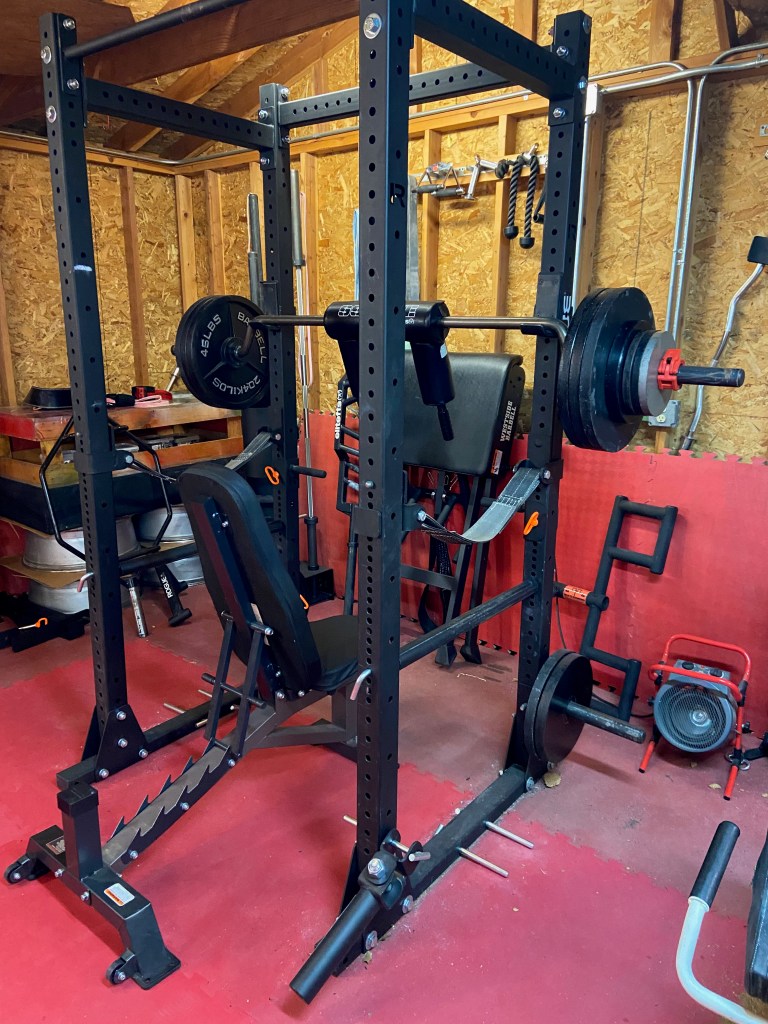
  1. Equipment is exceedingly important in developing a training program or structure. On the surface this sentence is a groaning statement of obviousness. I have written before about how lifting in the garage made me see how limited my commercial gym was so this is a thought that has passed through my mind before. It really started to sink in when I started organizing my training into 12-week blocks in the summer and fall. When I think of the subject of programming I think of it from two different angles: The Plan and The Lifting. The latter is the easier of the two parts to deal with because it’s what I’ve been doing for 8 years. It is far more ingrained than the former. What makes the plan interesting to think about is how I would go about helping someone with their lifting. The garage is full of specialty bars, a power rack, support equipment, bands and chains. The variety of training I have available to me in the garage is kind of crazy when I think about it. I believe I have learned how to work it all into one coherent program. It is not lost on me that anyone training along with me, not in person but following the logs, would need the equipment I have to match it. That is a bit of an arrogant statement for me to make given the relative newness of my blog but I think the concept behind it applies to all of the programs being sold or given away online. The big takeaway I got is that the idea that programming is built around the lifter solely is incorrect. What equipment is available to the lifter plays a major role in the program itself.
  2. I felt it was important to learn how to self-program because it is part of the process of improving. That was done with a mix of experience and listening to people who have done it before. It makes me feel more complete as a lifter that I understand the entire process better. It helps me better communicate goals, methods, equipment choice and all of that training stuff here on the blog and when talking with people I know better. Going through a program, especially the fall one, all the way from de-load to proper peak was very instructive because it showed me the stages of lifting during a program. It forced me to adapt to what my body was feeling over the 12 weeks in a way I hadn’t been forced to before. The fall program, in particular, helped me better understand the mental and physical challenges brought by a planned medium-term program with specific goals in mind.
  3. I learned in 2021 that powerlifting is my preferred mode of strength training. I started my blog during the end phase of the summer powerbuilding program, which was very successful. I designed it to be a program built around getting stronger and more muscular through the 3 main powerlifting lifts. I’d been doing powerbuilding since the fall of 2020. It intensified in the winter of 2020/2021 because I did my normal gym routine for the season. I know enough about strength training to understand there is a real choice to be made between strength and muscular development. Strength gains come along with muscular development and vice versa but one will get the lion’s share over the other. Working up to a top set of 1-2 reps is what gets me mentally excited. That idea of always testing and striving to get stronger is what I want to be doing. That feeling started to sink in about 4 weeks into the fall program when most of the hypertrophy stuff I was doing left the program in favor of main and supplemental lifts. When I felt everything in sync and peaked in late November, it was very different. I understand the value of hypertrophy based training and it’s never fully gone but it just doesn’t excite me in the same way.
  4. A big feature of my strength training learning in 2021 was learning the words that corresponded with what I was feeling when I trained. I’ve been lifting since 2013 but only taken in a very limited amount of media about it so my vocabulary for specific terms and feelings was quite low. It would have made starting a blog about the subject impossible because of my inability to communicate properly. I understood the concept of what I have been doing without ever knowing what that concept was called by the community. Dave Tate’s Table Talk has been incredibly helpful for the powerlifting and training side of things. I’m more aware of the broader picture and it’s made me better.
  5. I understood before 2021 that getting proper rest was important but I learned how to better listen to my body and find out what “proper” meant in that context. I knew to take at least 48 hours before focusing on the same muscle group again. I have followed that tenet but have found that 48 hours sometimes isn’t enough or wasn’t applicable, as is the case with arms at times. During March through May, there was a pronounced time period of plateauing in terms of volume. I could lift the same weight but not for as many reps as I had been doing. Looking back now at the end of the year, I’d say that was my first cue I needed to de-load. My course of action was to get myself back to the garage and into an organized program. Over the course of the summer the strength built back up through lifting 5 days a week. I missed only 2 designed training days over the summer, neither to unscheduled rest days. I started the fall program with the same thought process and it lasted about 8 weeks before the heavy load of training I was doing caught up with me. I had to drop a day of training to rest and that meant losing lifts for the week. A past version of myself would have taken that harder and been resistant to the realities of what was necessary. During those last 4 weeks of the fall program it was a mix of feeling dialed in neurologically and very strong physically but also beat the hell up. That’s the time I needed my discipline to kick in and stop me from going too hard.

2021 In Review

Part 1

Photo by olia danilevich on Pexels.com

December 31, 2021

The end of the year means think pieces presented in blogs and foggy, faded memories from the first half of the year are attempted to be remembered. Why should my blog be any different? I will split this essay up into two different entries: Year in Review and Lessons from 2021. The former won’t be an exhaustive look back at the year, as I have already posted the things necessary for a reader to piece it all together themselves. Rather, it will be looking at the big picture view as opposed to the more in-depth detail oriented Lessons entry. Taken together, they help give a sense of how 2021 was.

This past year has been a year of marked improvement in strength and muscular development. I started the year with maxes on 3 main powerlifting lifts well below what they currently area: 275 pound bench press, 405 pound squat, and 375 pound deadlift. 2020 was a major year of change in strength training in almost every way. I brought back lifts I hadn’t done in years, embraced strength development in ways I hadn’t before and most importantly took more control of my training than I had before by purchasing equipment. Those 2020 changes acted as the bloom that appears on a fruit bearing tree before it gets to its final form. It was the base for the improvements that I made in 2021. By the end of the year, I had bench pressed 295, squatted 415 pounds and deadlifted 405 pounds, both with and without straps.

A huge part of that development was the emphasis I put on strength training in my lift this past year. I don’t think it actively made it to the obsessive stage but it definitely came close. It absolutely dominated my life from beginning to end. It changed how I approach work mentally. Work was becoming far more mentally taxing than it ever needed to be, especially since it’s one of those jobs that it stays there when I leave the building. I have known for years that my job was physically demanding and always kept me on my feet, but the long hours of 2020 and at the start of 2021 marred what that could be in my mind. I realized somewhere in the middle of part of the year that the blessing my job was giving me: Getting paid to do my necessary conditioning. Lifting the way I do safely and healthily wouldn’t be possible without having to take time to do cardio and conditioning if I had an “easier” job. Once I had made the choice to go all in on strength training and I made the connection between the benefits of my job and that decision, my mindset got instantly more positive. There are frustrations that never go away but they are gotten through much easier and more positively. The heavy lifting makes the physical tasks I do at work (moving palettes, throwing them, carrying them and totes of variant weights, etc) much easier to do so it helps my conditioning and recovery. The cycle of development has been very apparent.

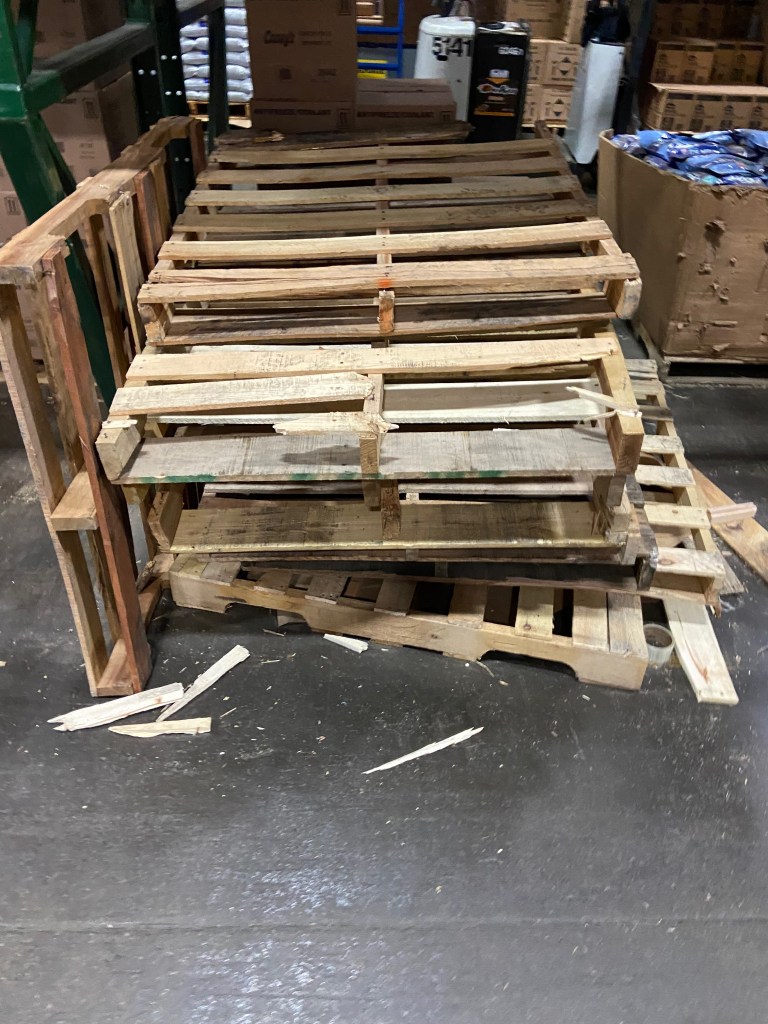
Badly stacked or unstacked palettes is the source of a lot frustration at work. Drives me nuts.

That dominance extends to all the other things in life that need to be accomplished. Lifting is what everything was planned around. I have said many times that I work, eat, sleep, lift and golf sometimes. That is because that is what I can afford fiscally and what time allows me to do. I am not interested in being a jack of all trades. I definitely let some things slide I shouldn’t have. Anything that interferes with my training definitely got treated as the enemy. I changed my lifting pattern during summer to take advantage of weekends for golf, especially after learning last year that any tee time after 8 am resulted in a 5 hour round. I have written before that I used to be a golfer who lifted and now I am a lifter who golfs. This is the year that statement became true. I definitely improved on the course this year. I shot the second 79 of my life and was more consistent in general. I have no doubt that all the gym time helped that happen but I couldn’t even begin to explain why. This concept of something taking over ones life isn’t new to anyone. Careers do this, especially now more than ever with remote job, predominantly. I personally have never subscribed that one has to do a job they love, but they do need find something they can fully embrace and use their job as a way to aid in their ability to do it.

Another part of the improvement is the equipment I acquired for the garage. It has helped vary training, especially in the area of being able to do overloaded sets. The biggest piece of equipment purchased this year was a Rogue Cambered Bar. I haven’t used it a ton so I am still very much in the first stages of learning how to be proficient at using it. The vast majority of what I have bought for the garage has been support equipment. It largely acts as as a force multiplier for the larger pieces I got in 2020. The attachable handles for the power rack help unlock the safety squat yoke bar’s full potential. I thought about getting them in 2020 but didn’t pull the trigger on them. I got axel locks to replace the one my friend has. I’ve noticed they were’t capable locking as necessary. In August I ordered deadlift mats. They allowed me to start using the deadlift bar’s whip to full advantage when doing partial movements and targeting my hamstrings. The last piece I bought is an EliteFTS adjustable box squat. I’ve been looking forever at a different one they sell, the soft box, but supply chain issues has kept it out of stock forever. The price to ship the adjustable box squat has also always been astronomical so I took advantage of they cyber Monday sale. It knocked off over $100 in shipping. I had been doing box squats with my bench, but the box allows me to go lower so it was a change that was necessary. It’s yet another support piece that acts like a force multiplier. Learning how to use the equipment has been extremely important this past year because I lifted solo the entire year.

The back half of the year I decided to make a concentrated effort to develop a lifting plan for 3 months and follow it through all the way to “test” weeks. Those test weeks were my way of replicating a meet to focus my energy. I did that after a 12-week program for the summer and after a fall 12-week program. For the last couple years, my lifting has been fairly organized but not ever done with physical peaking in mind for specific weeks. The last 6 months of 2021 was most commitment I have made to strength training to date because of my desire to learn how to program myself effectively. I felt the improvement and the numbers back that feeling up. The result of that process of self programming was that I got a better understanding of how to do it, what that felt like, and a clearer vision of what I wanted then how to get it. The fall program was an eye opening experience, especially the last 4 weeks, because I pushed myself harder than at any point before, mentally or physically. I now have a much clearer vision of what the next few years of lifting could be.

I started the year weighing in between 270 and 280 and never really deviated from that range so I kept the weight off that I lost in 2020. I never made losing weight a goal so my eating patterns reflected that. I have lifted mostly for strength gain but muscular development has come along for the ride. I feel it in my upper body mostly, especially shoulder and upper back area. I’ve had people talk to me about it, so it seems the growth is noticeable. Legs are definitely developing as well. I can see it in the quadricep muscles and feel it much more in the hamstrings, especially after the deadlift mats arrived back in August. I’ve mostly been doing block pulls from 3 inches off the ground since they arrived. I think I can count on one hand the amount of times I have pulled from the floor since so I have been hammering my hamstrings. On the movement side of things, I found that the more I trained legs the better my initial burst and following running felt. I still have no desire to jog or run at that speed so my cardio and conditioning practices has changed. Weighted conditioning is my favorite way of getting that task done. When I’m not getting paid to do it I usually do heavily weighted sled pushes.

Part 2 will be coming out soon.

Christmas Week ’21 Training Log

Mark Brown

December 26, 2021

Monday
SSB Good Mornings – 65 x 8, 115 x 6, 135 x 6, 155 x 6, 175 x 5
Box Squats, To Parallel – 175 x 6, 245 x 6, 275 x 5, 295 x 5, 315 x 3, 335 x 1
Hatfield Box Squats, To Parallel – 335 x 4, 365 x 5, 385 x 4, 405 x 3
Block Pulls, 3 inches – 315 x 5, 345 x 6, 365 x 3, 385 x 3
Leg Extensions – 110 x 12, 130 x 12, 150 x 10, 170 x 12
Calf Raises – 245 x 15, 295 x 12, 315 x 10

Tuesday
2 Board Press, Shoulder Saver – 135 x 6, 235 x 6, 245 x 6, 255 x 4, 265 x 2, x 2
Pin Press, From 2 inches above chest- 225 x 6, 235 x 6, 245 x 2
Log Press, Strict – 101 x 7, 111 x 6, 121 x 6, 131 x 5 (+1 push press), 141 x 3 (+1 push press)
Overhead Dumbbell Press – 45 x 12, 55 x 10, 65 x 6, 75 x 2
Flat Dumbbell Press – 100 x 6, 95 x 7, 85 x 8
Grenade Mace Pulldown – 45 x 8 (on each ball), 55 x 8 (on each ball), 65 x 6 (on each ball)

Wednesday
Scheduled Day Off – Recovery

Thursday
High Bar Squat – 135 x 8, 225 x 6, 275 x 5, 315 x 3
Leg Press – 478 x 12, 658 x 12, 838 x 12, 928 x 8
Cable Rows – 20 x 10, 25 x 10, 30 x 12, 35 x 12, 42.5 x 12
Cable Curls – 42.5 x 12, 50 x 10, 57.5 x 10, 65 x 10, 72.5 x 8
Standing Leg Curl – 35 x 10, 60 x 8, 70 x 8, 85 x 8
Sled Push, Upper and Lower – 150 x 2 down and backs, 240 x 2 down and backs, 330 x 2 down and backs, 420 x 2 down and backs
Preacher Curls – 45 x 10, 70 x 8, 80 x 7, 90 x 6
Calf Raises – 100 kg x 15, 120 kg x12, 140 kg x 15, 160 kg x 12,
Adduction – 295 x 40
Abduction – 295 x 70

Friday
American Press Bar, Outer Two Handles superset – 138 x 8, 178 x 7 (x 7), 198 x 6 (x 5 on outer), 218 x 4 (x 4), 228 x3 (x 3)
Seated Overhead Press, American Press Bar – 128 x 6, 138 x 4, 148 x 3, 128 x 6
Flat Dumbbell Press – 100 x 5, 110 x 2, 95 x 5, 85 x 7
Skullcrushers – 45 x 20, 65 x 15, 75 x 13, 85 x 12
Rear Deltoid Dumbbell Flies – 20 x 10, 30 x 10, 35 x 12, 40 x 10
Side Lateral Raises – 5 x 10, 10 x 10, 15 x 10, 20 x 10

Saturday/Sunday
Planned Rest Day – Recovery

Steps/Miles

Monday – 36,871 steps, 18.8 miles. Tuesday – 26,840 steps, 13.4 miles. Wednesday – 25,458 steps, 12.7 miles. Thursday – 23,416 steps, 11.6 miles. Friday – 26,017 steps, 12.9 miles. Saturday – 2,126 steps, 1 mile. Sunday – 2,228 steps, 1.1 miles. Total – 142,956 steps, 71.5 miles.

Notes

Christmas week at work is always mess so training during the holidays over the last couple years has been a nightmare I have managed better this year so far. Christmas and New Years falling on Saturday helped in that regard. It also forced me to deviate from my normal training week to ensure I got my leg/back work in as I desire them. The gym was understandably closed on Saturday so I had to make sure I could get my gym leg day in. I like doing legs on Saturdays because it is less busy but Thursday went pretty smoothly. Hard to tell if that was because of the holiday or if that’s just normal. I remember Thursdays at Genesis being busy as hell after 4 pm.

The leg/back days showed some progress this week. I had little of the doms that I had last week from the 1 leg/back workout I did early in the week. I am still very much in the initial stages of learning the box I got. Putting the box at parallel is a bigger challenge than the higher box my bench represented before the box arrived. I suspect I will see a volume increase in lifting tolerance on box squat before I see a load increase for the near future. I have been doing good mornings with the yoke bar as a main lift the last couple weeks and I feel more comfortable loading it heavier. It’s a lift like the barbell rows that I have actively avoided because I suck at it so it’s time to change that.

Upper body is still very much lagging from 5-6 weeks ago. Shoulder strength is holding steady but chest strength decreases with each lift. I suppose that makes sense but I know what I am capable of so I’m not entirely sure if it’s just the de-load cycle I’m on or something I need to study more carefully going forward. It’s very noticeable when I do dumbbell presses, both flat and incline. The intensity and volume are down on it but I am seeing muscular development.

Self-Regulation: De-Loads and Rest

Mark Brown

December 22, 2021

De-load and de-volume weeks are a reality for any lifting program. They can be both frustrating and necessary for one’s overall benefit. The easiest thing in strength training is to push relentlessly once the neural connection has been established. The feeling of improvement and increased lifts is an easy high, especially the latter stages of a program where physically and mentally peaking is actually occurring. That progress comes with the cost of the body breaking down at a greater rate. De-load weeks function as a regulator to help the body deal with the effort and intensity of strength training. Those weeks are related to rest times between sets during lifting sessions. It is incredibly easy to not give oneself enough time between sets, especially heavy ones, because that feeling of a successful lift is very intoxicating. Both resting and de-loads are necessary regulatory acts that must be taken seriously in order to make progress over the months and years of training.

I should start this with explaining a de-load or de-volume is and consists of. It’s as simple as not doing lifting that is as heavy or voluminous work as one has been doing. That may be an intentional act done to get work in while holding back the negative effects lifting has on the body, especially on joints. It might be the body not being able to physically accomplish the lifts one expects to be able to based on previously accomplished results. These de-loads and de-volumes in my experience come at different phases of the training program. The former is more likely to be in play during the middle or end phases of a long 16-week program or longer where one needs lift but also needs to recover more. The latter is much likely at the beginning of one of those programs. That is when I usually experience that particular kind of de-load. It is possible I am misinterpreting it as a de-load because the lifts are either max effort or intensity but I don’t think I am based on the fact I know I was lifting heavier and more voluminously just 3 weeks ago.

Each of those kinds of de-load/de-volume lifts has different physical and mental stresses on them. The start of program de-load coming off a peak normally produces a sessions that take far more days to recover from than later in the program. I attribute that to my body just being more used to the training the muscles are going through. I know the training sessions in the first couple weeks after not lifting for a week or so are extremely hard on the muscles impacted by big complex lifts. My legs are normally shot for 3-4 days after that first big leg and back workout coming back. This was definitely the case when I started the summer and fall programs. During the fall of 2021, I gave myself a week and half off after completing a 12-week powerbuilding program. My first leg and back session Tuesday resulted in me starting to cramp up before I even left the garage. The cramp hit me full on upon getting out of my car to walk into the grocery store 20 minutes later. I missed my second leg and back session that week because my legs were still crazy sore. I trained hard, but I didn’t do anywhere near my normal intensity or volume to get that level of soreness. The same thing happened in December after completing the fall program and taking a week off to recover from illness. In fact, the December session referenced here was very limited in volume so it could have been much more debilitating in terms of recovery time had I done what I normally do. The inevitability of soreness is where the mental training part of this comes forward in importance. To understand what is coming and still going after it like is necessary is the mark of discipline. The part of this de-load/de-volume that can lead to frustration is the competing natures of always wanting to do more and trying to figure out where the stop sign is, which I half joke is not something I do very well. I’ve gotten better at seeing the stop sign in recent months. De-load/de-volume days usually involve more than their normal share of reps-in-reserve and reps not attempted. Upper body de-loads don’t produce the same level of soreness as legs and back do but the work done is decreased. A major part of this period in the training program is rebuilding the neural connection that was interrupted by breaking from lifting. During the fall it took me about 4 weeks to reconnect and once I did I was locked in totally. I’ve found that the first couple weeks of a new program is more demanding mentally than physically, requiring more regulatory acts than later during it. Skipped sessions in this phase will have consequences later.

Later stage de-loads I don’t have as much experience with because I have only done 2 focused programs. The summer program was hard throughout and I did to a peak but not like the one I did in the fall. It was very noticeable how each week of lifts got harder to complete. It got to a point where I had to offload some lifts I was doing. First, the dedicated shoulder event day of log and viking press had to changed to a straight rest day so I went from lifting 5 days to 4. Second, I felt I needed to remove dumbbell presses from the chest days as last supplemental lifts. I could have kept them in but I would have had to have lowered the weight to keep doing them. Dumbbell press wasn’t the only lift I eliminated from my program for those 4 weeks. I stopped doing log press as the main shoulder supplemental. This was a cue for me that a de-load or de-volume week would have become necessary if I was on a longer program. I don’t have a dedicated programming plan as of yet so late de-loads and de-volumes will come into play probably February and March if my weekly lifting sessions progress like they did in the fall.

The other self-regulatory act I want to bring up is the much shorter term cousin of the de-load: resting between sets. In most areas, these 2 concepts don’t belong in the same essay but I think it is important to talk about because rest between sets is the most immediate act of regulation lifters do. Managing the workload is amongst the most important tasks a lifter completes, whether in the short term or in the long term. The temptation of eliminating rest time during heavy sets is very real. The adrenaline that comes from a successful set creates a desire to just get back under the bar or whatever the case may be requires physical and mental management. At lower percentages limited rest between sets is another way to vary up the training and can be done quite safely. I do it toward the end of individual sessions to work through accessories quickly and superset them to be as efficient with time as possible. Most of my sessions are close to 2 hours or slightly over because most of my main and supplemental lifts are done above 70% 1RM. I tend to wait 4-6 minutes between heavy sets of deadlifts or squats and 3-5 on bench press. I think that’s enough time between sets to recover for the loads I am lifting. That might well change if I was lifting greater loads. Sometimes I pace around and other times I sit until it’s time to go. I don’t yet have a steady thought on that part of it. The takeaway that I have after almost every session is that it is harder and harder to give myself the proper rest time between sets because I love getting after it. I am always very aware of the double edged sword that is my drive.

In many ways, resting between sets and de-load/de-volume sessions are a battle of motivation vs discipline. I’ve written before that the latter is the stronger of the two concepts and I still hold that belief but motivation run amok is an extremely powerful source of mental energy. It has to be managed to maintain the useful qualities it has while minimizing the risks associated with it. I haven’t had a proper injury since I pulled a muscle in my lower chest right on a rib while doing dumbbell flies the fall before I joined Aspen. That injury and near misses, mostly doing hip hinge movements, were all the result of me letting my discipline slide long enough to tweak or pull a muscle because I wanted to push the load or volume. They were painful lessons that help me to this day by helping me see the damned stop and speed limit signs. Motivation run amok can also lead to burnout, which is the mental version of a long term injury. I have never personally felt lifting but have in other areas. Instead of chasing an ever higher linear progress line, the best way forward, in my opinion, is to embrace the de-loads and rest times to help with both the mental and physical stresses one is imposing on themselves. That self-regulation is absolutely necessary.

12/13/21 -12/19/21 Training Log

Mark Brown

December 19, 2021

Monday
2 Board Press, Shoulder Saver – 135 x 6, 225 x 6, 245 x 6, 265 x 4, 275 x 2, x 2
Pin Press, From Bottom – 225 x 6, 235 x 5, 245 x 2
Log Press, Strict – 101 x 7, 111 x 6, 121 x 6, 131 x 5, 141 x 3 (+1 push press)
Overhead Dumbbell Press – 45 x 10, 55 x 8, 65 x 6, 75 x 2
Flat Dumbbell Press – 100 x 6, 110 x 3
Tricep Press – 45 x 15, 55 x 13, 65 x 13

Tuesday
SSB Good Mornings – 65 x 6, 115 x 6, 135 x 6
Box Squats, To Parallel – 155 x 6, 245 x 6, 295 x 5, 315 x 3
Hatfield Box Squats, To Parallel – 315 x 3, 335 x 6, 365 x 4, 385 x 4
Deadlift – 315 x 3, 345 x 3, 365 x 1, 315 x 4, 345 x 3
Leg Extensions – 130 x 10, 150 x 10, 170 x 8
Calf Raises – 245 x 15, 295 x 12, 315 x 10

Wednesday
Tricep Pushdown – 50 x 12, 57.5 x 12, 65 x 12, 72.5 x 12, 80 x 12, 87 x 8
Cable Curls – 42.5 x 10, 50 x 8, 57.5 x 8, 65 x 8
Standing EZ Curl Curls – 45 x 8, 55 x 7, 65 x 6, 75 x 6,
Rope Pulls – 20 x 12, 25 x 10, 30 x 10, 35 x 10, 42.5 x 10
Lat Pulldowns – 40 x 10, 50 x 10, 60 x 8, 70 x 8
Preacher Curls – 45 x 8, 70 x 6, 45 x 5

Thursday
Scheduled Night Off – Recovery

Friday
Flat Dumbbell Press – 70 x 6, 110 x 6, 115 x 5, 120 x 4, 125 x 2, 125 x 1, 100 x 7, 90 x 8
Close Grip Incline Press – 135 x 6, 185 x 5, 195 x 3
Viking Press – 90 x 8, 115 x 8
Rolling Tricep Press superset with Dumbbell Flies – 20 x 12, 30 x 12, 35 x 10
Cable Crossover – 35 x 12, 42.5 x 12, 50 x 10, 57.5 x 10

Saturday
Unscheduled Day Off – Recovery

Sunday
Unscheduled Day Off – Recovery

Steps/Miles
Monday – 27,192 steps, 13.5 miles. Tuesday – 23,628 steps, 11.8 miles. Wednesday – 20,582, 10.2 miles. Thursday – 26,443 steps, 13.1 miles. Friday – 27,685 steps, 13.8 miles. Saturday – 1,840 steps, .9 miles. Sunday – 3,716 steps 1.9 miles. Total – 131,086 steps, 65.2 miles.

Notes

First week back lifting after taking a week to recover from illness went as expected. I retained a good amount of strength gained from the previous peak. The upper body de-load is never as extreme feeling as the back and legs as it comes to recovery. That first leg/back session is always brutal and recovery always requires a couple more days than normal. I didn’t feel up to getting another leg session in before Saturday afternoon. I decided the best strategy going forward for the next week was to delay it until Monday given I am unlikely to train Saturday.

The adjustable box squat I ordered from EliteFTS arrived Sunday and I used it for the first time Tuesday. It is quite different than using the bench to sit on while doing squats. The lowest position on the bench is 2-3 inches above parallel so that makes it quite different in regards to squat depth. That could have contributed to the muscle soreness I felt during the week.

There’s no real plan going forward for the next few weeks. I’m going to just get to the garage and gym and figure out what I want to do for the day. The only thing I really am going to be pushing is shoulder strength and muscle development. Log press or overhead press is unlikely to be a main lift but I will be doing it at supplemental lifts.

The dedicated arm days at the gym will continue. It allows me to get a pump into the arms and push blood around the system to help allow for more recovery in shoulders and chest. They don’t take that long either. I initially planned for Sunday (today) to be one of those arms days but decided I was better off relaxing and getting food prepped for the week and house stuff done.

Skill Acquisition

Photo by Pixabay on Pexels.com

Mark Brown

December 16, 2021

Skill acquisition is a fascinating topic because it is both a straight ahead concept and a wandering target. It is something that must be done to improve but doesn’t always progress in a linear fashion. It can be particularly maddening in mentally and physically. Acquiring skills is how a person with less talent becomes more level with a person who is more naturally talented and how a person who is naturally talented takes his game up to a higher level. I can think of a couple examples from skills I have learned from the endeavors I have actually tried to improve at that have perplexed me. This isn’t going to be just about skill acquisition in the gym, but an overall look at it’s puzzling nature through personal examples.

The best way to learn something is by doing it. Learning of what to do or not to do from someone else’s prior experiences is nice but they don’t have the same type of sticking power as stepping in the same pile of crap as them does. That’s how I see it at least. I have only three activities I in life I have ever really tried to get better at: Strength training, golf, and cooking. That is not listed in any particular order. Acquiring the necessary skills to improve in those three things are quite different. Golf is the most maddening discipline of the three and strength training and cooking are much closer in terms of linear progression. All three require practice and continued book learning to really get better over time but the main difference is that skill acquisition in golf is far from linear in my experience. A late addition to those 3 is the thing that someone is reading right now. It’s been a near 12-13 years since I really devoted any time to writing so this blog project I’ve taken on it forces me to re-acquire the communication and organization skills that got me through Drake University. I want to take from these 4 areas this discussion.

Golf is a sport I have played for almost 13 years now and would say I have been decent at for about 6 years now. It is a frustrating game in general because of how demanding it is physically and taxing mentally. Physical skills are largely developed at the driving range. Those are learning how to strike the ball, how to move the body, how to read greens and all of that kind of stuff. Learning the mental, emotional and strategic skills of golf is done on the course and can really only be done there. So progressing in the sport takes a long time, even for naturally talented people. As I have improved overall I have noticed certain parts of my game progressing and others slipping. The best example I can think of is that over the last couple years my biggest strengths are my driving off the tee and putting. I’ve largely been long enough and accurate enough to put myself in position for good scores then when I get on the green I can put it in the hole relatively quickly. Through the same time period I have seen my shot making skill decline. I’m not entirely sure why, either. It’s not like a I practice driving and putting any more than I do successfully hitting a 7 iron left handed out of the trees. I play right handed, for the record. I can’t mentally dance around the fact that I was better at hitting shots over trees or from severely sloped hills in the early part of my golf playing life. This year I saw some improvement in chipping especially after getting the Cleveland Golf’s full faced wedges in late May but it still goes hot and cold depending on the round. Golf proves that there is more to skill acquisition than practice, playing and muscle memory.

I have also learned how fragile learning skills in strength training can be over the last couple years. I have twice had to readjust from primarily dumbbell pressing to barbell pressing. The first time was last year moving to lifting in the garage and the second was this year when returning to the garage from lifting in the gym for a few months. I learned that dumbbells don’t quite transfer over to bench press all the way. That makes sense since I doesn’t bench press the same way I dumbbell press. It was much more pronounced before. Skill acquisition has become more important over the last two years because I have gotten many specialty bars and have had to learn how to use them. I had to learn how to grip and get the most out of my bench press when transitioning to the Ohio Power Bar. That took a few weeks to get it dialed in and it confused the hell out of me. Only thing I can think of is that the combination of the thicker bar and difference in length of the bar is the reason why finding my hand placement took so long to figure out. The American Cambered Bar has taken some time to feel quite strong with it. It is an absolute ego killer, especially at the start. The deadlift bar’s flexibility is interesting to learn because it can help be an audible and physical cue doing the lift. The log took the least time to get my mind around because the front rack position for it is entirely different from that of a bar. The Safety Squat Yoke Bar (SSY) took me a long time to learn the movement patten on. It concentrates the weight of the bar on the yoke part of the bar, which is heavily padded on the back of the neck with hands down in front of the chest. That makes it a very, very different lift than a straight bar squat. It requires much more core stabilization in the core to do a free squat. This bar makes a lot of different squat varieties doable in ways no other bar does. There is a high skill wall to overcome though. The Rogue cambered bar is the last bar I bought, even though I’d been thinking about it since before last year. It’s squat bar for low bar squatters like me. Learning how to squat when the bar itself feels like it’s moving takes some time to figure out and in the meantime I am learning how to stabilize my core better. Same goes for when it’s used as a bench press bar. At 85 pounds, it’s also almost the weight of 2 bars so when I get it out, it’s with purpose. All of these specialized bars have required me to learn how to use them so I can train better and take advantage of all of the nuances they offer.

Programming lifts to maintain skills while getting stronger is part of what makes planning sessions a major challenge. If the goal is only to get stronger, I know I don’t even need to think about touching a barbell. I can do it with dumbbells alone. However, if I want to get better at strength training learning barbell lifts is necessary. Throw in specialty bars and programming not only gets harder to maintain skills but also gets more rewarding over time. The best example I can think of in my training is squats. I have 3 bars I squat with: The SSY Bar, Cambered Bar, and the Ohio Power Bar, a straight bar. I did a low bar straight bar squat during the summer specifically to maintain the skillset of straight bar squatting while outwardly trying to hit my hamstrings harder. I don’t compete but if the thought does ever cross my mind to do so a straight bar squat is the lift that counts so it has to be learned fully and practiced. The weight of the bar is displaced every place on the body the bar rests so in many respects it is the easiest of the variations because it is more controllable for me personally. The way the weight is focused on the back of the neck while squatting using the SSY Bar makes me have to concentrate energy into both breathing and stabilizing core that it makes it a very different lift. That alone makes it a lift that must be practiced a lot to become proficient at it. It has to be in the program if I want to maintain the skill of a SSY free squat. It wasn’t for a long time and I am currently attempting to re-learn it because I kind of forgot how to do it. I’ve been doing box squats with it for a long while now but that’s a different movement. The cambered bar doubles down on the lower back focus when squatting. It is an offset weighted straight bar squat. By moving where the weight is felt by the body down 14-16 inches it forces me to maintain a strong core and maintain a more vertical movement. It is more for quadricep development than hamstrings and I’ve noted it sometimes feels like a front squat. One of the big draws to the cambered bar squat for me is the hand placement. On a straight bar, I have trouble fully gripping the bar with both hands most of the time but that’s no such problem with the cambered bar. However, that does mean is takes strain off the shoulders, which is part of a competition squat lift. The last two bars I talked about exist to aid in the training of the first making them supplemental lifts. The key for programming having these three bars is weave them in and out of the program every few weeks for both skill management/improvement and muscle confusion purposes. Currently, I do my specialized bar squat in the garage on Tuesdays and a high bar squat in the gym at about 75-80% 1 rep max to maximize strength and skill development. That’s the price of having 3 bars for 2 lifts a week.

I learned how to cook around 13-14 years ago. When I decided to do it, I dove into fully and picked it up fairly quickly. I would say that it is most likely the one thing I am most naturally talented at. I have never been a recipe cook, even at the beginning, because I feel they hinder improvement in the area. Learning what ingredients do when paired with others in different applications or preparations is what cooking is all about. That is why I will never buy food that is already prepped for me. Cooking and prep skills are incredibly important and should be understood by everyone I believe. Over the years I have developed recipes and learned skills specifically to keep them in the back pocket for when they become necessary. Those include skills include sauce making, yeast bread baking, salsa and jam making, canning, and smoking meat. I can do just about everything in the kitchen. Baking bread, cakes and pies are the only things that I rely on recipes for because I’m not an instinctive baker and haven’t done it enough to really get the ratios down. I just don’t eat enough of them to justify making them.

Soon after I started cooking I began to gill quite a lot. First, I used my oldest brother’s, Mike, 22-inch kettle grill. That led to me buying a smoker, a barrel grill with a side firebox, about 10 years ago now. I’ve gotten pretty good at making barbecue, and those aren’t just my words. I’ve gotten quite a few compliments on it. My first couple efforts were pretty terrible. I still remember that first attempt. I immediately dove into the deep end by trying to learn how to smoke brisket, which I had heard was the hardest meat to crack. I proceeded to cook about 20 briskets over a 2 year period. Something I can’t fully explain happened after I got the smoker and started to really crank up the activity on it. I learned early on that smoking meat is two different skills: food preparation and fire management. Both skills are important but I consider the latter the more important one of the two based on the fact that it’s the element that defines barbecue. When I got the smoker, I learned that I couldn’t really start a fire in the smoker because I couldn’t get enough air to the heating charcoal so I used Mike’s grill to start the fire in a chimney starter then transferred the coals over to the side fire box or barrel. I also learned after taking Alton Brown’s advice that chunk style hardwood charcoal instead of briquettes because they burn hotter, faster and don’t have any binders, mostly petroleum based, to burn through. I found early on with the smoker that I could very easily make fires that maxed out the temperature gauge. Somewhere along the way I lost the ability to make that hot fire in the smoker. I don’t know when or where it happened but I can’t do it anymore. I’ve been grilling more lately than smoking so I’ve been attempting to get that hot fire ideal for grilling and have failed every time. No matte how many hot coals I have in the grill, it just doesn’t get there. What’s been gained, however, is an ability to build 225-300 degree fires without any real effort. For the purposes of smoking, that’s perfect ideal but it baffles me when I’m just grilling. I legitimately cannot explain the loss of the one skill and gain of the other.

Writing essays like this was much more commonplace at Drake than it was at North Polk. I’ve always said that high school teaches stuff and college teaches how to learn. I stand by that. I took enough storytelling and rhetoric classes at Drake to help me really formulate the difference between spoken language and written language. The ways words are used to communicate an idea sometimes differ greatly even though the meaning of those words didn’t change at all. A lot of the has to do with things that go beyond the words themselves. Things like body language, localities, tone, etc. To say reading and writing are top level fundamental skills sets is underselling how important they are. However, I found myself doing very little of the former and none of the latter in 12 or so years. I have books on my shelf at home and I have read about half of them. I read news articles and magazine-type pieces on my phone a bit but it’s not a skill I can say I practice a lot. The loss of emphasis on reading in the mainstream is something that worries me. Writing is something I haven’t seriously done since I turned in my papers on my history senior seminar classes at Drake in 2008. I learned enough to be able to do it again 13 years later but it’s taken some time to fully re-learn the skill of writing.

The English class part of writing isn’t that difficult to re-learn because it’s been practiced somewhat by reading. The hard part is what I learned while taking all of those journalism and storytelling classes at Drake: Editing. It’s not as simple as making a first draft, re-reading, second draft, re-reading, etc. Editing as one goes writing an essay like this makes the process take more time. Writing is not a fast process. I have noticed that I can put together essays quicker the more I do them because I’m able to find the exact words I am wanting to use faster. So in that way I am seeing improvement on that end to me. The other part of equation in writing, especially in this setting, is organization. When one is going through college, being well organized is the difference between performing well in class and not. I can think of at least a dozen instances off the top of my head that I screwed myself because I was unorganized. The biggest difference between classes and blogging is that I can change the due dates if I so choose. That doesn’t mean that choice is without consequence so I have to be properly organized. I need to have enough drafts nearing completion and essays actually done to so as to keep a consistent enough schedule of content on the blog. That pressure to continue writing so that I have enough done ahead is what turns writing into the grind that I feel. It’s a remarkably similar feeling to golf when on the course and lifting in the garage or gym, really. I do take it quite seriously. The days I’m not lifting I feel a pressure to get something written. It’s an enjoyable grind at the moment.

I hope I have been able to show how progression of skill acquisition can be less than linear. These were some of my strongest personal examples of how evasive it can be that I can give. Learning how to best get something done then practicing it repeatedly is required to get to place, mental or physical, one wants to go. Listening to how other people do things is important because it can give a fresh perspective but it cannot be the thing that defines improvement. Practice that skill is the only thing that gets one there. That doesn’t mean it’s going to go as planned.

1 Rep Max Recordings

I put the 4 recordings I did of my 1 rep max attempts together using iMovie and posted them up on my Youtube channel. No fancy editing, but I did want to put the videos out in the most efficient way I could. The squats were done on November 30th and the bench press was done December 2nd. I would have loved to shoot the deadlift attempt but I got sick last weekend and couldn’t do much of anything. I feel a lot better now and will be getting back to lifting next week.

Fall 2021 Program Wrap Up

Mark Brown

December 7, 2021

This fall’s lifting program was fascinating. I started out working kind in the way that I finished the summer program and ended very differently. The 12 weeks played out in 3 distinct stages: deload, rebuild then the peak. The longer I got into the program, the more I eliminated most of the accessory work. The program began as an extension of the powerbuilding one I had just completed and became much more conjugate at its base than anything else at the end. I learned quite a few lessons from the last 3 months and am writing about the lifting and the learning from them.

If I had posted the logs from my summer program all the way through, one would be able to tell that something was very different in the first 4 weeks. I ended the summer feeling very strong. I raised my 1 rep max in both bench press and deadlift in the test week. I decided to take a week off of doing any lifting after work and get back to work. I knew from previous experience that any length of time taken off from lifting results in a readjustment time when the lifting restarts. What I didn’t think would happen is that I would lose the neural connection I had built up over the prior 10 weeks. That is exactly what happened. All of the lifts took a dip in terms of weight right off the bat. In many ways, it was a 4 week deload while I rebuilt the connection I fine-tuned previously. That was especially true with the cambered bar, which I was squatting with regularly in a program for the first time.

I could feel the strength and power coming back more fully in week 5. Each movement felt more controlled, more powerful. Each week I was making progress in each lift, especially the bench press. In that way, the progress I was making felt natural and made sense. Progress did pick up quite fast those in those weeks. One can see it in training logs as the weights and reps are more consistent week-to-week. Weeks 5-8 were great for the bench press and Romanian deadlift, I just felt like I was getting stronger in the middle working sets. I intentionally stopped sets at 6 reps even though I could feel more than that in them because I knew I would need energy for the heaviest sets. I know I need to start at a higher weight when that I begin to get that feeling. Each week felt progressively stronger and more powerful. The connection was fully rebuilt. Squat was still in a bit of a transition, as I moved from the cambered bar free squat as the main to a Yoke Barr squat. I realized I had kind of forgotten how to free squat with the Yoke Bar and needed to work on it. All three different free squat movements really are different.

Weeks 9 though 12 were something different than I have really felt before lifting. The sessions were more heavy and exhausting than before. I went down from a 5 day schedule of lifting down to 4 days, including a move back to Saturdays for legs at the gym. That shift from 5 days to 4 made getting dedicated shoulder work in harder. From weeks 1-8, the program was chest/triceps/lats on Monday/Thursday, legs/back on Tuesday/Friday and shoulders Wednesday. That schedule became largely untenable starting week 9 because I needed more recovery. The schedule during this peak phase became chest/tris/lats on Monday/Thursday (or Friday) and legs/back on Wednesday/Saturday. That change forced me to think of shoulders very differently. At first, I decided just to mash shoulder stuff onto Thursday’s normal routine but that just made both days suffer. I had to stop looking at log press and viking press as their own lifting entities and more as supplemental lifts. I could feel my chest starting to become overworked so I cut down on dumbbell work that was functioning as the last supplemental lift I did for the night and replaced it with something different.

The last 4 weeks is when I became more acutely aware that my preferred plan of attack is conjugate. I have been following along with Dave Tate’s podcast Table Talk and the videos explaining the nature of conjugate and programming as a whole. The nature of changing lifts as necessary to bring the most out of the lifts they support and bring up weak points is kind of how I was attacking the last 4 weeks of the program. By the end of the 12-week program, I all but ditched accessory lifts was spending all of my time on the main lift and the supplemental lifts. I still see the benefits of all the accessories I took from the sessions but they don’t make sense to do them on the days I was prioritizing bench press, squat and deadlift.

Strengthening the hamstrings was a major point of emphasis this fall. I learned a long time ago that hamstrings were important to overall strength, but that fact was driven home by focusing on the deadlift during the summer. I decided to focus on them through Romanian deadlifts and to get back to the gym for one of the legs days. It’s always been easier to get them in at the gym where isolation machines are more prevalent. It also allowed me access to a leg press. Romanian deadlift as the main supplemental exercise on the first leg/back day of the week set up the rest of it. I could feel the strength I was building up through that deadlift when I went to the gym on Friday or Saturday. Leg curls felt so much more powerful and in control.

I typed out 3 goals before I started this fall program of lifting. They were to put 10 pounds on every bench press, squat and deadlift. I was successful on squat and bench press, but I got sick before I could test the deadlift. I was off for a week or so as a result because I wasn’t really able to hold any food in my system for any appreciable amount of time so eating became secondary. I also experienced some back soreness during the week I was sick, which could be attributed to a lot of things. I’m guessing dehydration was a major factor there. Therefore, The deadlift max attempt has been put off for the time being. I successfully squatted 415 with a straight bar squat and failed at 420 then bench pressed 295 and failed at 305 two days later. Outside of missing the deadlift gym personal record, it went as planned and I was happy I was able to achieve the goals I wanted.

Overall, the 12 weeks showed me a few things that I will be mindful in the future with these extended training programs. First, the initial 4 weeks was mentally painful because it was a physical slow. It was an extended version of the difficulty I feel in giving myself enough time between sets because I just want to get back under the bar. I found that it is a necessary frustration because they function as a deload, especially after four hard weeks of very heavy lifting. The mind-muscle connection is the most important thing to train and that 4 weeks is where it starts. Second, I could feel my strength building week to week, especially after I really started focusing on main and supplemental lifts and all but abandoning accessories. In all of my experiences lifting, I’ve never really felt my body peaking in terms of central nervous connection and physical strength. It was a feeling I’d like to repeat in the future. Third, the last 4 weeks was very instructive, if disorganized. As I felt my body wearing down from the intensity of lifts every single week, I decided to add a third rest day. The result of that was that lifts I had done the previous 8 weren’t being done. Log press, viking press, overhead dumbbell press all lost their place and had to be incorporated in a way that made sense to the overall goals. Fourth, I experienced specialization of lifts much more in this fall than I did in the summer program. It was a different feeling when I got to the garage and could count on one of my hands how many different lifts I was going to do. It’s a very different mindset.

Test Week 11/29/21 Training Log

Mark Brown

December 5, 2021

All weights in pounds unless stated otherwise.

Monday
Scheduled day off – Recovery

Tuesday
Squat, Straight Bar – 135 x 5, 225 x 4, 315 x 3, 365 x 2, 385 x 2, 405 x 1, 415 x 1, 420 x 0 (failed attempt), 315 x 3, 275 x 3.
Calf Raises – 315 x 10, 275 x 10, 70 lb dumbbells x 10
Leg Extensions – 130 x 8, 150 x 8, 170 x 8, 190 x 8

Wednesday
Scheduled day off – Recovery

Thursday
Tricep pushdowns, pronated grip 45 x 12
Bench Press – 135 x 5, 225 x 3, 245 x 3, 275 x 1, 285 x 1, 295 x 1, 305 x 0 (rep completed with help)
Cambered Bar Press – 175 x 5, 225 x 5, 245 x 3
Grenade Mace pull downs – 45 x 12, 55 (on each ball) x 6

Friday, Saturday, Sunday
Unscheduled day off – Sick

Notes

This week was always planned to be sparse with the lifting and heavy on the rest. I accomplished the goals of squatting 415 pounds and 295 pounds for 1 rep. I did get both of them recorded and the failed attempts at 420/305 as noted above.

I contemplated doing the deadlift max attempt the same day I did the squat because that’s the way I normally do it but ultimately decided not to. I regret not doing that knowing what I know now. If I had known I would have gotten sick Friday, I would have organized my week differently. As a result, I don’t see a scenario that I am lifting for another couple of days. The illness isn’t too bad as the headache has mostly passed but I simply cannot hold any food down right now.

Who Influences Me? Part 2

Mark Brown

November 30, 2021

There is another group of people out there whose influence on me is much greater. That can be seen in my training as a whole, techniques, lifts and attitude. That group is current or former strength athletes. Strongman is a sport that I am heavily attached to in large part because I can do it. That has led to numerous Strongman competitors becoming influences on me. Powerlifting has become a major part of my life so notable powerlifters have also entered that space. A lot of these have their platforms on Youtube and the other social network websites. Dave Tate is the entire reason why this blog exists and why I have made so much progress this year lifting. Strongman competitors Brian Shaw and Robert Oberst have both played a role in my lifting plan and mindset. Youtube content creators Derek, whose channel MorePlatesMoreDates, and Greg Doucette have very informative channels that have helped me understand training, performance enhancing drugs and their effects on the human body. Alan Thrall is a powerlifting and strongman gym owner in Sacramento, California whose Youtube channel that is very informative and entertaining. Zack Telander is starting to grab some influence on me. I will be giving a bit of information about them and how they have impacted me and continue to do so.

Dave Tate’s influence on me can’t overstated. He is a former competitive powerlifter and owner of EliteFTS. I’ve known of the company for a couple years now as it would be named dropped in Youtube videos by people explaining what equipment they have at their gyms, whether at home or in a commercial space. The name behind the company I learned last year when I started taking in more fitness content on Youtube. He releases content on that site through a channel called EliteFTS and podcasts available for downloading. The site, which sells equipment, also has a section devoted to articles about all of things that have to do with strength training. It’s a place I go to read about the subject. Where Tate’s influence is greatest is helping me understand the nature of powerlifting programming, specifically Conjugate. That is training style he practiced as a competitor and coaches. Videos through the company’s channel and the podcast have illuminated important elements of training that I had started doing organically, and backed up what I had felt. That change in my training process from bodybuilding to powerlifting is in conjunction with me learning way, way more about it. His company’s motto of “Live. Learn. Pass On.” is a large reason why this blog exists. It’s what sets his company apart from bigger operations like Rogue Fitness. I’ve learned a lot about strength training over the last 8 years, have talked with myself and others who would listen about the subject and thought it was time to get this stuff down on paper and out there. So, here I am passing it on.

Strongman, as a sport, has influenced my training quite a bit since I found all of those World Strongest Man competition videos on Youtube and the Strongest Man in History show. It opened me up to a world of strength training I hadn’t really ever delved into and the people who compete in it. I doubt I will be entering contests but I have implemented log presses and other event type lifts into my programs to a lot of success. Two competitors stand above the rest in terms of influence on me. Brian Shaw has won 4 WSM titles and 3 Arnold Classic titles in a career that started in 2008. His last title came in 2016 and has always been someone to be contended with. His goal is to leave the sport of Strongman in a better place than it was when entered it is something that resonates with me. His Youtube channel is full of training content as well as entertaining meet ups with other content creators. What’s most valuable to me is seeing the intensity, drive, mindset of a champion athlete and how he is giving back to the sport. I’ve personally believed that actions speak far more about one’s beliefs than the words that come out of their mouths. I know that isn’t a new concept but it feels more important than ever to live by that. Brian is very action oriented. He’s started multiple companies designed to help the sport grow. I’ve purchased quite a few things for his equipment company, Evolution Athletics. His elbow and knee sleeves and wrist wraps are top notch. The annual competition he started last year to help the sport get back on its feet after so many contests were canceled has made the community stronger. The way he put up his own money as prize money for the other competitors showed he was willing to put skin the game for it. He’s galvanized fans of the sport to support the athletes. He is truly an inspiring person. The other competitor with influence is Robert Obherst. He was on the Strongest Man in History show with Shaw. That’s where I was introduced to him. He is a former NFL player who made the transition to strongman. He has a big personality and isn’t afraid to call out bullshit when he hears it. His videos on his Youtube channel, American Monster Productions, are entertaining and informative. I have taken advice he has given on videos and put it into programming. I would be remiss if I didn’t mention guys like Eddie Hall, Zydrunas Savickas, Nick Best the other competitors of the 2010s here. I have definitely take little bits here and there from them.

I found Greg Doucette’s channel last year and am happy I did. He is a retired IFBB pro who has won contests. His channel focuses on bodybuilding as a result, though he definitely has powerlifting credentials as well. What that means is that there is less talk about lifts and programming and more about the stuff that effects the body like food, eating, rest, and drugs. All of those things are important because his channel really devotes a lot of time to managing self-expectations. Strength training and bodybuilding can leave a person in a bit mental and psychological quandary. Looking in a mirror and at other people in the gym or on one of the various social media platforms is a double edged sword. It serves as both inspiration and depressant at the same time. Which of those two things a person feels in the moment really depends on one’s own sense of security in self and if they feel the view/pictures make sense. He’s one of many content creators who does “Natty or Not?” videos to help get that point through to viewers. My understanding of performance enhancing drugs has always been in the minority as far as acceptance of them goes. I will get into that in detail at some point, just not here. It is a very complex conversation to have because there are so, so many layers of PEDs that get used. It’s kind of amazing what is legal or illegal and clean or unclean. He helps bring the conversation down to an understandable level. His channel helps me manage my expectations of how strength training effects my body.

For videos about the detailed effects of PED use on the human body I turn to the MorePlatesMoreDates channel. Derek, the man in front of the camera, has medical facilities that many people to get bloodwork done. Bloodwork is done to track health markers such as cholesterol, testosterone and many more. He, like many fitness content creators, also sells a line of pre-workout powder. The content he gives out for free is ludicrously informative and entertaining. For anyone either wanting to start a steroid cycle or who wants to merely understand the nature of the different kinds of PEDs that exist, it is a must watch. Recently, he’s been doing a series of videos scientifically breaking down all the new pre-workout and energy drinks that have been hitting the market lately. It really is a crowded market these days and a good channel to go for that kind of review. He has done steroid cycles so he has a very good understanding of what they do, and the consequences of them. It is a very important topic because PED use has a far greater spread than they ever have before. It’s not as simple as steroids and testosterone derivatives and professional athletes anymore. Fat burners, estrogen blockers, designer pre-workouts and energy drinks all effect the body in certain ways and they need to be learned before doing and using any of them. The more money comes to people on social media platforms, the more people are motivated to use them. If the larger narrative on PED use leaned towards them being okay, then this wouldn’t be as big of an issue as it is. People are more motivated to lie about their “natural” status than ever before. That makes managing self-expectations all the more important. Derek and Doucette both help me do that very well. For the record, I am about as natural as it gets. I just eat, lift and drink way too much soda. Derek put to bed any thought that would ever come to mind about using PEDs of any kind.

Alan Thrall, for lack of a better term, is a dude with a powerlifting and strongman gym in Sacramento, California called Untamed Strength. His beard is phenomenal. He’s competed in numerous powerlifting and strongman competitions at state and national levels but he isn’t a professional in either of them. He doesn’t post a lot of videos on youtube, and seems like he does significantly more on Instagram but I don’t have an account on that platfom. His content covers lifting, programming, and the not lifting parts of strength training. His videos are often instructional at their core, aimed at helping people with the technical aspects of lifts in the fields of powerlifting, strongman and weightlifting. In that way, his videos share a lot in common with Tate’s EliteFTS channel. He’s calm and collected on screen and knows what he is talking about. He is also genuinely entertaining while getting the points across, often times being sarcastic or a smart ass on subjects like PEDs.

Last on the list here is Zack Telander. I found his Youtube channel late last year and have watched it quite a bit this year. His influence on me is growing at a slower rate because he is a weightlifter. I don’t do much of any weightlifting. I have merely dabbled in some clean and jerk here and there because it’s fairly straight ahead. The snatch I don’t understand much at all. He has done many competitions and recently retired from competing. He coaches the sport and makes videos around the sport he competed in. The passion for it is very easily heard in his voice. His video helping teach the the snatch to Thrall, on Thrall’s channel, is about as good as it gets. The topic of weightlifting’s potential loss of its place at the Olympics due to corruption in the sport was an extremely fascinating discussion to watch and participate in because it crosses both the competitive side of sports with the business side. I could easily tell how much weightlifting’s spot at the Olympics matters. I am interested in learning how to snatch, and the odds of me doing it through Telander’s channel is high.

What each of these guys has is passion for what they do. It shows in their videos, articles and podcasts. They have had an impact on the decisions I make in my strength training journey. It’s not just an activity for me. It is life. These are the guys who have influenced me the most. When I write about subjects on this blow and talk about them when with people, one would hear their voices in my words.