Fall Week 12 Training Log

Mark Brown

November 28, 2021

Monday
2 Board Press, using Shoulder Saver – 135 x 6, 275 x 3 , 285 x 2, x 2, 295 x 2, 305 x1, x1, 255 x 5, 245 x 5
Narrow Grip Incline Bench Press – 165 x 8, 185 x 8, 205 x 6, 225 x 3, 195 x 6
Seated Overhead Press, American Cambered Bar – 128 x 6, 138 x 6, 148 x 4, 158 x 2
Tricep Extension – 45 x 15, 55 x 15, 75 x 15, 85 x 13
Shoulder width Lat Pulldown – 90 x 10, 115 x 10, 140 x 10

Tuesday
Scheduled night off, full work day – Recovery

Wednesday
Safety Bar Yoke Bar Box Squat — 155 x 8, 245 x 6, 295 x 6, 315 x 6, 345 x 5, 365 x 5, 385 x 2
Hatfield Safety Bar Yoke Bar Box Squat – 385 x 5, 425 x 6, 445 x 6, 465 x 6,
Calf Raise, Hatfield style – 345 x 10, 365 x 10
Romanian Deadlift – 345 x 4, 365 x 4, 385 x 4, 405 x 2
Safety Bar Good Morning – 65 x 6, 115 x 6, 135 x 6
Leg Extensions – 130 x 10, 150 x 8, 170 x 8, 190 x 8

Thursday
Dumbbell Flat Press – 100 x 8, 105 x 8, 110 x 6, 115 x 5, 120 x 4, 125 x 3
Overhead Dumbbell Press – 45 x 8, 55 x 8, 65 x 8, 70 x 5
Rolling Tricep Press – 25 x 8, 30 x 6, 35 x 6
Cable Crossover – 42.5 x 12, 50 x 12, 57.5 x 12, 63.5 x 12
Rear Deltoid Fly – 90 x 10, 105 x 10, 120 x 8
Side Lateral Raise – 80 x 12, 95 x 12, 110 x 10
Seated Chest Machine Press – 255 x 8, 270 x 6, 285 x 5
Tricep Pushdown – 42.5 x 12, 50 x 12, 57.5 x 12, 65 x 12, 72.5 x 10

Friday
Scheduled Day Off – Worked Full Day

Saturday
High Bar Squat – 135 x 8, 225 x 6, 275 x 6, 315 x 5, 345 x 3, 365 x 3
Leg Press – 478 x 12, 658 x 12, 838 x 12, 1018 x 7
Trap Bar Deadlift – 285 x 4, 325 x 4, 375 x 3, 395 x 3
Standing Leg Curl, per leg – 35 x 10, 60 x 10, 70 x 80, 85 x 8
Calf Raises – 100kg x 30, 120kg x 30, 140kg x 30, 160kg x 30
Cable Rows – 42.5 x 10, 50 x 10, 60 x 8, 35 x 12, 27.5 x 12
Abduction – 295 x 100
Adduction – 295 x 30

Sunday
Rope Pulldown – 20 x 12, 27.5 x 12, 35 x 12, 42.5 x 12
Tricep Pushdown, Pronated Grip – 42.5 x 12, 62.5 x 12, 72.5 x 12, 80 x 12
Cable Curls – 42.5 x 10, 50 x 10, 57.5 x 10, 65 x 8
Cable Double Curl – 10 x 12, 20 x 12, 25 x 12, 30 x 8
Single Arm Pulldown – 10 x 12, 15 x 12, 20 x 12, 25 x 12
Preacher Curl Machine – 45 x 10, 70 x 10, 80 x 8, 45 x 10
Wrist Curl, Dumbbells – 5 x 12, 10 x 12, 15 x 12, 20 x 12
31 minutes cardio on Treadmill walking at 4.0 and a couple minutes of running at 6.5/7.

Steps and Miles Walked

Monday – 29,908 steps, 15.2 miles. Tuesday – 22,501 steps, 11.4 miles. Wednesday – 22,218, 11 miles. Thursday – 5,975 steps, 2.8 miles. Friday – 26,222 steps, 13.2 miles. Saturday – 23,500 steps, 11.7 miles. Sunday (as of 5 pm CT) – 10,356 steps, 5 miles. Total – 140,680 steps, 70.3 miles

Notes

This week was hard and familiar at the same time. Started off very well with a strong bench press and chest session. It felt strong and has made me ready and excited this coming week when I bench press down to my chest for the first time in 2 months. Pulling the dumbbell press as the last supplemental lift on Mondays and Thursday helped a bit with recovery I think. It also allowed do some more shoulder supplemental and accessory work. I haven’t done that in awhile.

Wednesday’s back and leg session was the worst one I have had in awhile. It wasn’t get from an energy or lifting angle. You can see it in my lifts on that day. I just didn’t have it. I suspect it was because I did somethings at work I don’t normally do. My job is very good for getting my upper back and shoulders ready to go, but I did a task Wednesday there that is more lower back usage. It’s been a while since I’ve had to do it. The gym work still got done. It just wasn’t as smooth sailing so less weight got pulled and squatted.

Thursday I had off work because the place closes for the holiday so I made sure to get my lifting in before making my way to my parents for it. Instead of going to the garage, I went to the gym and hit a hypertrophy type chest day after hitting the flat dumbbell press as a main and overhead dumbbell press as supplemental. Last time I did what I did on Thursday was May.

Saturday was a great session. Very high energy and the session all worked. Didn’t have to wait on any machine or anything. I came prepared this time with the powerlifting belt and straps when I needed them. I can definitely feel my hamstrings getting much stronger with all the attention they are getting.

Sunday I got off my ass and decided to finish the week right. My Apple watch told me I had a perfect week of movement and exercise going so I got to the gym and get a good arm day in. It’s been a long while since I have gone to the gym to do only arms. I was inspired by the video Brian Shaw did with Jay Cutler in correlation with what I have been learning from Dave Tate lately. Extra cardio work never hurts.
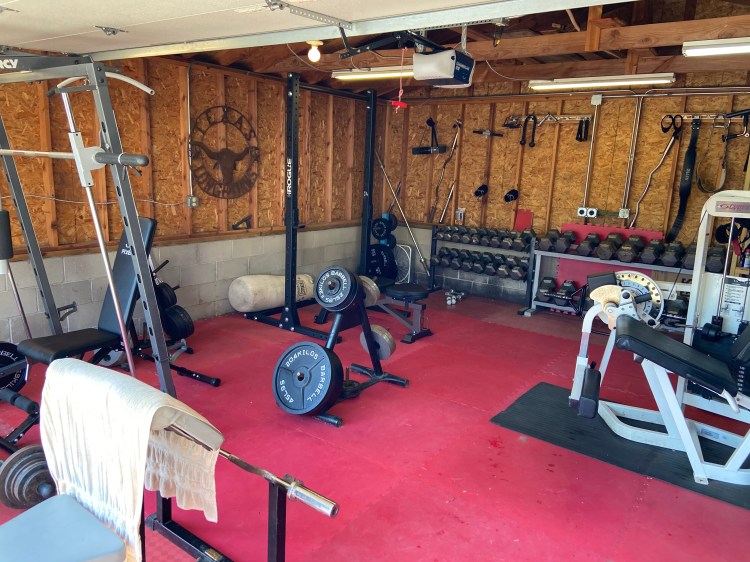
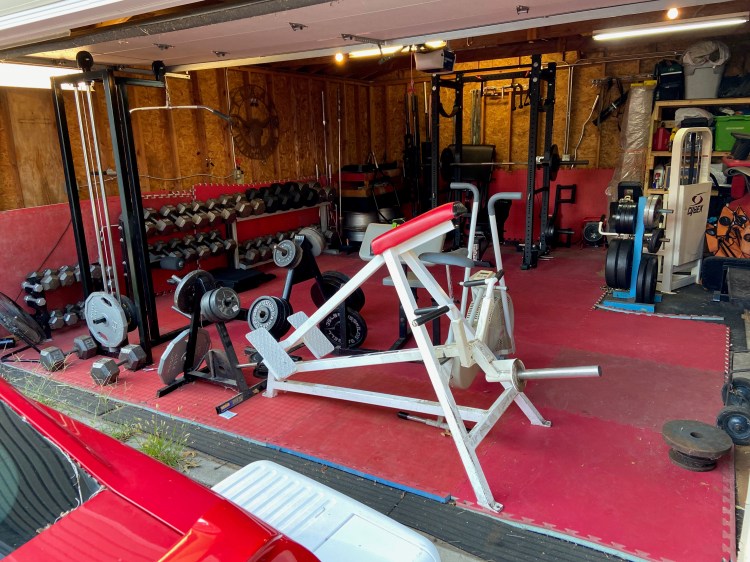
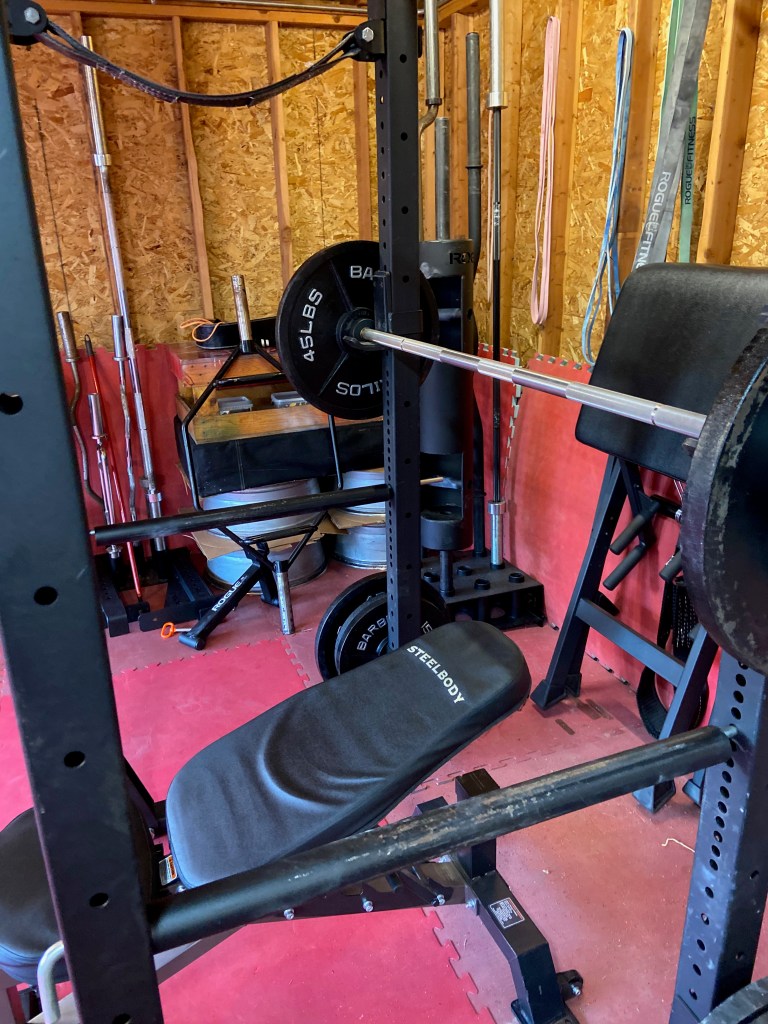
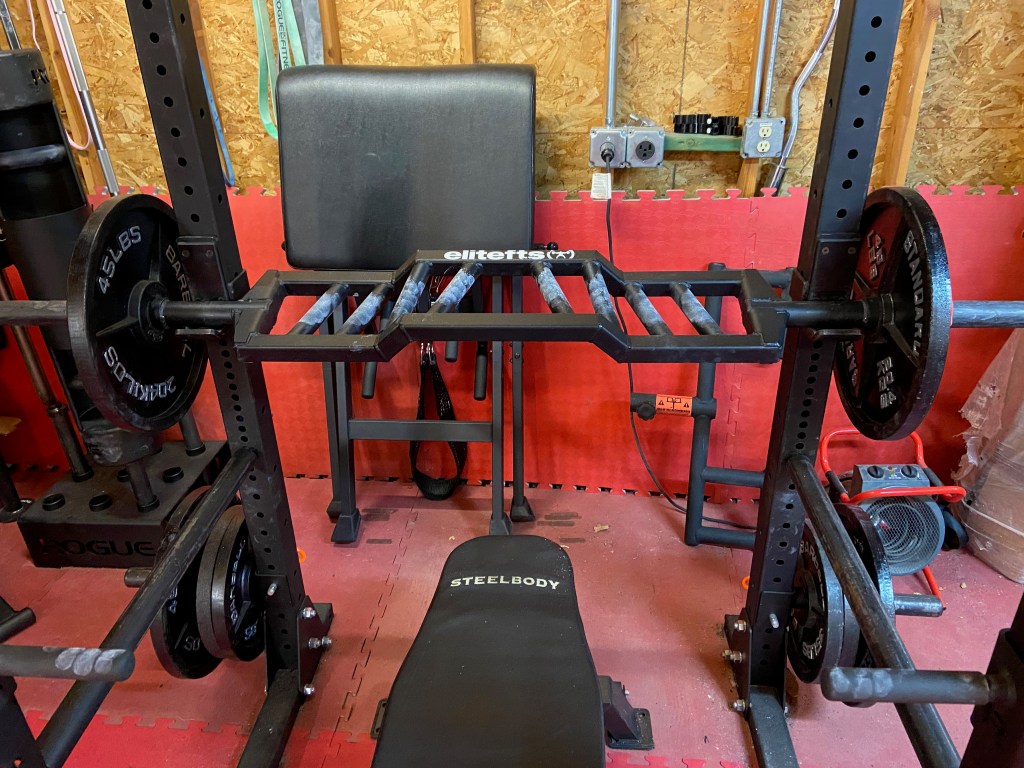
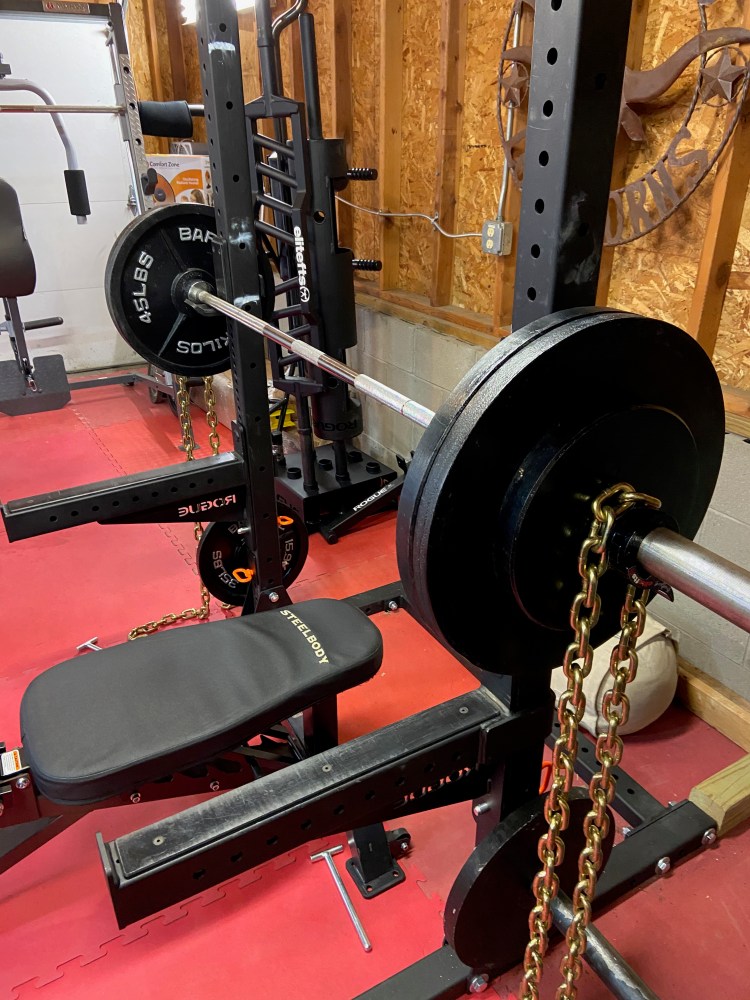
My How The Garage Has Changed!

Taken August 8, 2020

The above picture was taken almost a full year and half ago. It a few months after I started lifting in the garage. The squat rack barely a couple weeks old at that point. The bottom picture is a garage running out of space but full of the good stuff. Just thought these two pictures would show the development of the space I do the vast majority of my strength training.

Taken September 6, 2021

Who Influences me? Part 1

Photo by Dmitry Demidov on Pexels.com

Mark Brown

November 23, 2021

Influence is everywhere. It is inescapable. The best that we can do is vet then choose who we allow to influence the decisions we make. This influence on me comes from many different tiers. I have very little influencers in my personal life but have gotten a few more in the media space. For the bulk of the last decade, the influencers came from television shows I watched, which were mostly cooking shows. The last 2-3 years have brought fitness influencers from Youtube into my life. Sports stars have mostly very little influence on me because I prefer to follow things that I actively do but there is some there. This will just be a brief piece about who influences me and why they do.

Let’s start with the last group. It’s the smallest of the group by far. No one who plays the 4 major North American professional sports (basketball, football, baseball, and hockey) or soccer has any real influence on me because they play sports I am barely interested in actually doing myself. I have golfed for 13-14 years now so there is definitely some influence there from professional golfers I have watched over the years. I have taken parts of what various people have said on air for improving my game but I can’t narrow that down to names. The best example I can think of lately is when Trevor Immelman was doing analysis for the first Tiger vs Phil and advised when chipping to be sure to bring the shoulders all the way through the swing. I started doing it and it really helped. However, the only professional golfer who has had any real influence on me is Phil Mickelson. The first putter I bought was a direct result of my being a fan of his. He’s also genuinely entertaining, whether winning or losing. He’s the golfer I connected with the most because I feel he’s a little more everyman, despite my knowing otherwise. He didn’t win as much as Tiger, but I feel he is closer to the rest of than Tiger is. Still, it’s hard for Phil to have a lot of influence on me because I can’t golf like him. Ultimately, influence has its limits.

I have watched less television lately but a large chunk of the last decade was spent watching Food Network, HGTV, the History Channel and smattering of sports. I have watched probably more programming relating to food, cooking and the preparation of food than any other subject outside of movies on television. This dates back to days at home on Saturday mornings on a Des Moines area PBS station. That was too early for me to truly be influenced by Jacques Pepin or Julia Child and even Emeril Lagasse before I had access to his cable show. I just didn’t have the cooking reps under my belt to really learn from those shows. After I started cooking more often and really developing my own style and palette, everything about food media changed for me. I could then pick on smaller nuances in regular cooking shows, “road” food shows, and competition shows. Cooking is best learned through experience. Timing, knife skills and all the other things are the backbone of an important life task: Learning how to feed oneself. Information picked up by watching or reading becomes helpful after the skill has been acquired.

The show and host that has ultimately had the most influence on me in the kitchen is Good Eats with Alton Brown. Good Eats was a different kind of cooking show. A lot of cooking shows seek to help viewers develop a recipe book of their own and the techniques necessary to make them by doing them on screen. Bobby Flay, Guy Fieri, Giada De Laurentiis, Rachael Ray all populated shows like that over my time watching over the last decade. I liked some of those shows and they are genuinely helpful but they were ultimately too much slave to recipes for me to fully get into them. That’s largely because I’m not much of a recipe chef at heart. I own 4 recipe books. Two of them are baking based and 2 are reference books about fruits and vegetables with some recipes thrown in. I rely on a base of information to cook and plan. Brown’s show brought just enough of the science of cooking into the base of it that it managed to be a show about food and cooking without becoming a textbook. The way he presented information really helped draw me in because learning about failed attempts to solve problems is every bit as important as the ones that do solve them. I changed to using kosher salt instead of table salt, using hardwood chunk charcoal instead of briquettes and a few other changes that have unequivocally made my cooking better and helped me better understand. The biggest influence on me is seen in my skill set as a cook. Understanding what to do when is where his influence on me is best seen.

Mass media has always been a mental stay away for me in terms of influence for the most part. A lot of that is that most of what I see being discussed is stuff I genuinely have no interest in. That lack of interest was a driving factor in me switching majors in college from journalism and mass communication to history. If I am not interested in a subject, then I don’t have much drive to ask questions about it and that is a requirement for a reporter or news person. ESPN has always been a part of my media watching life because it is covers a stupefying amount of sports. It is though them that I was introduced to the 3 people who have the most influence in the mass media market: Bill Simmons, Ryen Russillo, and Colin Cowherd. I will take those in order of influence.

Simmons is a full on media mogul whose podcast is the most downloaded podcast in the sports category. When I first got on the train around 2004-5, he wrote for Page 2 on ESPN’s website and his writing style was very readable, fun and full of pop culture references that work to describe what he was going after but still very informative. His “fingers stopped working” around the mid-2010s and fully invested his time in the upcoming podcast market. It’s one he helped establish at ESPN by creating his first podcast “Eye of the Sports Guy” then the one that really got it all off the ground “The BS Report.” Friend and former NBA player Jalen Rose calls him the “Podfather” for good reason. The BS Report I listened to from probably 2008 until he left the company, and I have listened to him on a site he created a few years ago now call The Ringer. He’ll talk about all manners of subjects in the podcast but main features of it are the NFL, the NBA and gambling. He is very knowledgable about the NBA, its history and is a Hall of Fame voter. His book “The Book of Basketball” is a must read if one likes the NBA and explains its development over time, which is exceedingly fascinating. The first influence for me comes in the form of that informative, easy-reading style that helps lighten what would be a heavy subject. The second part is that I invested in podcasts from a very early part in their development. I listen to a handful of them a week. He’s at the center of all of that.

Ryen Russillo currently has a podcast at The Ringer that I have subscribed to since its inception. I got introduced to him by his time on ESPN Radio in the afternoons with co-host Scott Van Pelt. Like Simmons, he’s well versed in all of the major North American sports but centered around college football, the NFL and the NBA. Russillo and Simmons are quite similar in that vein but there is far, far less gambling content involved with the former. His style is direct and very light on the bullshit. He doesn’t hide a lot in his perspective and thoughts. What really sticks out is his willingness and ability to handle talking about business sides of sports without becoming a depressing cynic. The business side of professional, collegiate and amateur sports is something I have heavy, heavy interest in. He’s one of the few guys out there who go in depth on collective bargaining agreements, a topic that I could listen to endlessly about. He’s got good pick up basketball and gym stories. He’s fair, firm and genuinely entertaining. There are a lot of people who can do the first two but the last one can be lost in a variety of ways.

Colin Cowherd, currently working at Fox Sports, first hit my screen and radio about 2009-10 on ESPN. His radio show is dominated my national topics so there is a lot of NFL, NBA and talk about major sports stars. Occasionally, big stories will his and he’ll talk about them but regular season baseball or hockey in general aren’t in the cards. His podcast he gets into more subjects because the long form format of discussions permits it more there than radio, with its rigid commercial breaks. He’s always relatively loud, both in terms of vocal quality and directness. I don’t always agree with him but his takes and theories are almost always logical. The two I mentioned above and Cowherd all share the qualities of being firm, fair and entertaining. They have all also made significant changes in their lives, which are quite public because of what they do. Cowherd has talked about those changes and the positive effect it has had on him. It helps me question things about my lift and how best to answer those things.

I will be back next week with the the second part of this entry about those that influence me. I feel it’s important to help everyone reading this understands who helps really drive decision making.

Fall Week 11 Training Log

Mark Brown

November 21, 2021

Monday
2 Board Press, using Shoulder Saver – 135 x 8, 235 x 6 , 245 x 6, 255 x 5, 265 x 4, 275 x 4, 285 x 2, x2, 295 x 1
Narrow Grip Incline Bench Press – 165 x 8, 185 x 7, 205 x 6, 225 x 3, 195 x 7
Seated Overhead Press, American Cambered Bar – 128 x 6, 138 x 4, 148 x 2, 128 x 8
Tricep Extension – 45 x 15, 55 x 15, 75 x 15, 85 x 15
Viking Press – 115 x 10, 140 x 10, 165 x 10, 190 x 8

Tuesday
Scheduled night off, full work day – Recovery

Wednesday
Safety Bar Yoke Bar Box Squat — 155 x 8, 245 x 6, 295 x 6, 315 x 6, 335 x 6, 365 x 6, 385 x 1, 425 x 1
Hatfield Safety Bar Yoke Bar Box Squat – 385 x 5, 425 x 6, 445 x 6, 465 x 6, 485 x 4
Calf Raise, Hatfield style – 245 x 15, 295 x 12, 315 x 10, 335 x 8
Romanian Deadlift – 345 x 5, 365 x 5, 385 x 4, 405 x 3, 415 x 3
Safety Bar Good Morning – 65 x 6, 115 x 6, 135 x 6
Leg Extensions – 130 x 10, 150 x 8, 170 x 8

Thursday
Unscheduled Day Off – Recovery

Friday
Multigrip Press, cluster set outer two grips – 138 x 8, 198 x 6, 218 x 6, 228 x 4, 238 x 3 (outer only), 248 x 3 (outer only)
Narrow Multigrip Press, 2nd most nine grip- 138 x 8, 158 x 6, 168 x 5, 178 x 6, 198 x 5
Overhead Dumbbell Press, superset with Tricep Pushdown – 45 x 8, 65 x 6, 75 x 4, 55 x 10
Tricep Pushdown, Mace Grenade – 8 on each ball at 45, 55, 65, 75
Saradas pulldowns – 70 x 12, 80 x 10, 90 x 10, 100 x 5
Rolling Tricep Press – 20 x 10, 30 x 8, 35 x 6

Saturday
High Bar Squat – 135 x 8, 225 x 8, 275 x 6, 315 x 5
Leg Press – 478 x 12, 658 x 12, 838 x 12, 928 x 10
Trap Bar Deadlift – 155 x 6, 195 x 10, 255 x 8, 325 x 4, 385 x 3
Standing Leg Curl, per leg – 35 x 10, 60 x 10, 70 x 80, 85 x 8
Calf Raises – 100kg x 30, 120kg x 30, 140kg x 30, 160kg x 30
Abduction – 295 x 100
Adduction – 295 x 30

Total steps Monday through Saturday 135,824. 68 miles walked.

Notes

Another very challenging week of training. Each week gets harder and more exhausting. Definitely going to need a deload on chest after the next two weeks. I don’t feel overtrained but I can feel the strain even after a week of cutting out flat and incline dumbbell press on Monday and Thursday, respectively.

I feel my leg strength gaining quite a lot lately. Perhaps it is my focus on making my hamstrings stronger for the last 10 weeks. The Romanian Deadlifts have really taken my leg strength higher. Makes me really believe I can hit 415 on squat when I test it in a few weeks.

The multigrip press on Thursday has been ascending over the last couple weeks. It really is a good bar, and one that should be be gotten if one has the money. I can’t say enough good things about it. The mace grenade I got a few weeks back from EliteFTS is also a great piece of equipment. It’s quite different from a rope in how it behaves when doing pushdowns. Very worth having around.

I once again forgot my belt in the garage and decided to let deload on a high bar squat. I made up for it by going my normal heavy on leg press, which is making progress. It doesn’t show up in the numbers listed above but I can feel it when I do it. The big change in this weeks lifting was trap bar deadlifts as a supplemental. I’ve been thinking about for weeks and did it Saturday. I know it’s a lift I don’t need a belt for putting up big weight. I know if I am going to make a bigger part of my programming I need to get a trap bar with bigger loading sleeves.

Bench Press and Chest Development, Part 2

Mark Brown

November 16, 2021

Putting bench press back into the program in summer of 2020 made me recognize some instincts and forced me re-think my process. My hand placement on the bar was quite narrow. I gripped the bar a full thumbs length from the inner bare steel part of the bar. I realized it was that way because that’s how I press dumbbells, which I did almost exclusively for almost 2 years. I prefer to hold dumbbells at about 45 degrees and press them so the weight part of the dumbbell hits my outer pectoral or just outside it. I like it that way to get more tricep focus on the lift because that muscle group is what finishes the lift. It’s that extra push right at the lockout. I was gripping the bar instinctively far too narrow to push the most weight I could. Forcing myself to use a wider grip just felt weird and I had less power. Generally speaking, the more narrow the grip the less power will come from the lats in the back and more will come from triceps. I had to break my instinct to grip the bar so narrowly. It has now widened now that my pinky now rests just inside the bare steel ring that separates the knurling on a power bar and it feels comfortable. It’s not as far out as I could have it but that would take more training on that to make me comfortable with it. Another thing about transitioning to the garage for almost all of my upper body work was how dependent I was on isolation machines and movements for chest training. I’ve already mentioned some of them: cable crossovers, other chest cable related movements, and pec deck flies. Going to the garage for training has pushed most of my lifts to compound movements, not isolated ones. Pete acquired a lat pulldown machine that allows me to lat pulldowns, cable rows, tricep pushdowns, and even belt squats if I could weigh down machine down enough. However, being that there’s only one cable makes cable movements for chest inefficient at best. I figured that out last year when in an effort to focus on inner chest I employed a single arm cable crossover for a few weeks before I found that a close grip press with the ez curl bar was far, far more effective. Eventually, I decided to make a heavy lift instead of one done for high reps and it was the much better choice. The fact that the ez curl bar he owns isn’t rackable meant that the spotter had to do multiple heavy pulls to get it to the person lifting, which isn’t ideal but that’s training. I have since purchased a rackable ez curl fat bar, which is basically an axel bent in the shape of an ez curl bar, for that kind of lift now. I use it for JM presses and tricep extensions primarily.

I have said before I watched and listened to more training and fitness content over the past two years and have drawn some ideas for training from them. For the purposes of this essay I will keep it to what I have learned from Youtube and podcasts about bench pressing and chest training. Prior to 2020, I had bench pressed a lot but never really focused on how I was doing it. I just never thought about it those terms. So when I heard about all the parts of the bench press being broken down in various ways, mostly by EliteFTS owner and former powerlifter Dave Tate and former powerlifter JM Blakely, I took it in kind of mindblown. The two biggest physical things I’ve learned was what my lats should be doing and feeling like during the lift and what my feet should be doing. Effectively I learned how I should be using my entire body to perform the bench press, and that I need to be training every part of it. Information I was learning is why I even thought of pin and band presses in the first place. As I watched more I heard the thought processes around things I was had already discovered through experience lifting. In many ways I felt validated in my approach. I know that might sound stupid but I also know that one who is serious about strength training is constantly thinking of ways to get more of it so it just builds confidence in oneself.

The biggest impact where I felt this new found information was in the programming of my training. One word I haven’t said a lot of yet is “incline.” This year is the most I have ever incline pressed. That is because it was a lift I was always weak at and wasn’t that interested in getting it stronger. I had incline press in the program for Pete and I in 2020 for a few weeks before pulling it from the plan. I pulled it because neither of us was getting much out of it. We were both pretty dead after flat bench press. That changed as a result of learning the value from a different view. That credit is largely due to 2 people: Greg Doucette, a champion bodybuilder and bodybuilding coach, and the above mentioned Tate. I started following Doucette’s channel last year and it’s full of good information. He did a video about what he thought the best chest exercises and his top was incline dumbbell press. He made a point to say how much incline was necessary and said that only 17 degrees of incline. For most adjustable benches that’s just the first hole up from flat. It made me think about putting back in play at that angle, and I did that when I returned to the gym at the start of 2021 because the weather was starting to become too cold to lift in the garage. I made it the main lift of my second chest day for those 3-4 months I was lifting primarily in the gym and has been a big supplemental lift since then. I’m an avid listener of Dave Tate’s Table Talk podcast. A few weeks ago he and Sam Brown were talking about training accessories and referenced a video he made years ago on the EliteFTS Youtube channel about the subject. I watched it and I implemented some of the ideas to programming in general. The concept of main lift-supplemental-accessory programming really struck me and the lift he talked about as a main on chest day was a chest a narrow grip incline press. My prior experience with incline press has always made me leery of it but I trusted the information and it’s turned out well. I use it as a supplemental lift, right after a heavy flat press variety from roughly 65-80% 1 rep max bench press. The narrow grip priorities the triceps over the lats.

From January to March of this year I was at Genesis full time doing everything. From April to May I was half in the gym and half in the garage. I used my old lifting program at the start of 2021 and added some lifts to it. Day 1 consisted of flat dumbbell press, cable crossovers, wide iso lateral jammer machine, and a seated chest press machine at the end to burn out. I did triceps and shoulders in the middle of them to break them up after crossovers. The other chest day was more incline based: Incline dumbbell press, crossovers, incline iso lateral jammer machine, and pec deck flies. All of these were done as heavy as I could get them to go. I changed up how I did the dumbbell presses in mid-March after I watched a Youtube video by Robert Oberst, an American Strongman and former NFL player, on his channel uploaded in mid-June 2020. In it, he outlined how upper body strength built by football players. By putting the heaviest sets of 2-4 reps first and volume to failure after to build strength and muscle. He did using incline press and bench press. I was doing neither of those at the time and I decided to apply it to dumbbells. I started with 100 pound dumbbells did sets of 5-6 reps to about 110 then from 115-125 3-4 reps. I would finish with sets at 90 then 85 to failure, which was normally 10-12 reps. The incline press version involved starting lower and finishing on the higher end lower. I noticed a difference immediately. The first few weeks went very well and could press the 120s 5 solid reps and the 125s 4 solid reps on flat press. I could feel it in the muscle as well. I did it for about 8 weeks. About the 6th week I started to notice my sets at 120 and 125 were limited to 2-3 or less. The plateau had arrived. It was an interesting experiment and I learned a lot from it and got stronger but perhaps took the premise a bit too far in the lack of recovery time. It was very heavy training. By then it was mid-May and time to move back into the garage.

I have written about my summer 2021 powerbuilding program before so I won’t go into ton of detail here about it. It was built around primarily successfully deadlift 405 pounds. One major goal also was to get my bench press back up to where it was at the end of 2020, which was 275 pounds. I didn’t realize that would be a goal until after I started bench pressing and having a lot of trouble with getting 245 pounds back up. I’ve been well aware of the past that dumbbells and bench press don’t translate all the way but the bench press struggling that much surprised me. It took me to week 8 of the 12-week program to successfully put back up 275. I did a normal bench press down to the chest on Mondays and a chain press on Thursdays. Mondays I supplemented with presses using the American cambered bar on all 4 handles and dumbbell pressed on a flat bench. Thursdays I supplemented with heavy tricep extensions or JM presses and incline dumbbell press. Both days involved doing accessory work in the 6-12 rep range on arms. Wednesday was the day I did shoulders. I many ways it could also be seen as an “event” day for strongman. I did a seated overhead press with the American cambered bar from 128 to 148 pounds for the most part, standing overhead press with a log up to about 141 pounds and viking press to almost 200 including chain weight. Shoulder strength definitely increased over the last 5 months. Perhaps they’ve seen the most growth over that time. I learned in 2020 that the best way to do military press, regardless of bar, was best done from a pinned position so I have been doing that ever since. After week 12 of the program I did a test week in late August and successfully bench pressed 285 pounds for 1 rep twice. I felt in the prior weeks more could be there because I was putting up multiple reps at 275. I tried and failed both 295 and 290 so I know my true 1 rep max was 285.

American Cambered Bar, fully chalked up and ready to go. Note the 2 inch camber in the middle of the bar. That’s what really makes this bar great.

I began to immediately plan my next few months of lifting, and will be starting week 10 of it this week. I initially thought to go back to more hypertrophy as a body break from the intensity of what I had just done but I just like lifting heavy and pushing upward. Mentally, it’s more stimulating. I took a full week of rest off and began the new program, which all can follow via logs I post on Friday or Saturday so I will keep the following short. Mondays I started doing chain presses down to the chest for the main lift followed by narrow grip incline press, overhead press with the American press bar and flat dumbbell press. I have since replaced chain work with a two board press with the shoulder saver attachment. Wednesdays stayed the same but replaced a seated barbell press with a seated dumbbell overhead press. Thursday started out as mainly a volume day, as I was still thinking in terms of power building. I do two different cluster sets using the American cambered bar and incline dumbbell presses as a supplemental lift for chest. The biggest difference between the summer and fall programs is in the accessories. I started the program with the intent of building bigger arms but haven’t done much with curls and I have done lighter, limited work with triceps in isolation. I moved isolated lat work from back to chest centric days and don’t do a lot of it. Most of the lifts are large compound movements. I noticed immediately that the week and half of not lifting had put me behind making more progress by the end of the calendar year, not that means much but it’s a good line of demarcation. I could feel the lack of strength compared to just weeks before in every lift I did. It stayed that way till about week 4-5 and it’s been going up since. I’ve believed for awhile now that in order to keep building strength I have to do more lifts at the heavy end of the spectrum than the lighter end. That has held up over the last couple weeks. I’ve even felt that with the American press bar. I think getting to 300 pounds on a bench press to the chest is a bit aggressive to say but I think I can for sure raise my 1 rep max by the end of the year.

I’ve noticed some changes to my thought process and programing over the last couple years. Some have been conscious decisions and some have been some have been changes I’ve made within the flow of things. Note that these apply to just about every muscle group not just chest. The first is that I do less exercises than I did before. Prior to 2020, I used to do a lot more sets than I do now. That was largely due to my tendency to find more exercises to do and do them to about 4-5 sets. Around 2019 I really started to hone in on what I thought were the most valuable lifts and just did a lot of sets of those instead of doing a lot of different ones. Moving to lifting in the garage deserves credit for a shift towards powerlifting. The strategy has stayed the same in terms of number of exercises so my total number of sets is lower. The second is the focus on barbells over the last couple years. I love lifting with dumbbells but I have done a lot more with barbells recently. Lifting with them is just different, and if one is going to get better at lifting barbells it has to be done consistently. As a result, the 3 core powerlifting lifts (bench press, deadlift, squat) and overhead press have become the focus of strength building. Third, and this one is the most recent of the changes, is that I am doing less accessory work than I ever have. I started summer of 2020 very firmly in the powerbuilding camp, even though I didn’t know that term at the time. That is using powerlifting principles in correlation with bodybuilding principles to become both stronger and more muscular. What that means for lifting sessions is that they will take longer to complete because accessories are a bigger part of the program. Muscular development is just as valuable to powerbuilding as building strength is. Regardless of how many sets of accessories are done, that is time off the clock. I have never minded longer sessions but I have found myself valuing the 3 core lifts and bigger supplemental lifts than accessories so my programming has become far more powerlifting based over the months. Fourth, and last, I have done some thinking lately and came to conclusion that my programming for the last couple years, even going back to 2018-19 has been chest centric. Now which the shift to the garage, it’s bench press centric as a result of it, even as I lift very hard on legs and back. If I were to try to pin down a reason why is because I know bench press is the weakest of the 3 main lifts. I have made a lot of progress since 2018, about an 100 pound improvement, but to think of it in terms of time commitment is kind of mind-blowing. I have put a lot of hours into deadlift and squat training over the last year and seen a lot of progress there but it’s very different. I do far more chest exercises than leg and back lifts primarily because the latter two are physically more taxing.

I feel like I am making major progress in bench press and chest training. I might even be making more in that than I am any of my other lifts. I have noticed it both in strength and muscular development and look forward to putting more work in.

Week 10 Training Log

Mark Brown

November 14, 2021

Monday
2 Board Press, using Shoulder Saver – 135 x 8, 235 x 6 , 245 x 6, 255 x 6, 265 x 6, 275 x 4, 285 x 3, 295 x 1
Narrow Grip Incline Bench Press – 165 x 8, 185 x 7, 205 x 6, 225 x 3, 195 x 7
Seated Overhead Press, American Cambered Bar – 128 x 8, 138 x 6, 148 x 4, 158 x 2
Tricep Extension, superset with Lat Pulldown – 45 x 15, 55 x 12, 75 x 12
Flat Dumbbell Press – 110 x 5, 115 x 5, 120 x 3, 100 x 7
Lat Pulldown – 90 x 10, 115 x 8, 140 x 8

Tuesday
Scheduled night off – Recovery

Wednesday
Safety Bar Squat – 155 x 8, 245 x 6, 295 x 6
Hatfield Safety Bar Squat – 315 x 6, 335 x 6, 365 x 6, 385 x 6,
Hatfield Bench Squat – 425 x 6, 445 x 6, 465 x 4
Calf Raise, Hatfield style – 245 x 15, 295 x 12, 315 x 10, 335 x 8
Romanian Deadlift – 345 x 5, 365 x 5, 385 x 4, 405 x 3, 415 x 3
Safety Bar Good Morning – 65 x 6, 115 x 6

Thursday
Multigrip Press, cluster set outer two grips – 138 x 8, 198 x 6, 218 x 6, 228 x 3, 238 x 3 (2 on outer)
Multigrip Press, cluster set inner two grips – 138 x 8, 158 x 6, 168 x 5, 178 x 6 (outer only)
Incline Dumbbell Press – 110 x 5, 115 x 4, 100 x 7, 95 x 7
Tricep Pushdown, Mace Grenade – 8 on each ball at 45, 55, 65, 75
Saradas pulldowns – 70 x 12, 80 x 10, 90 x 10

Friday
Unscheduled day off – Recovery

Saturday
High Bar Squat – 135 x 8, 225 x 8, 275 x 8, 315 x 4
Leg Press – 478 x 12, 658 x 12, 848 x 10, 928 x 10
Dumbbell Deadlift – 100 x 5, 105 x 5, 110 x 4, 115 x 4, 125 x 2
Standing Leg Curl, per leg – 35 x 10, 60 x 10, 70 x 80, 85 x 10
Calf Raises – 230 x 20, 250 x 20, 290 x 15, 310 x 12, 350 x 10
Abduction – 295 x 80
Adduction – 295 x 30

Notes

Another week of training four days, instead of five. I made the change to move the number of training days down because it was just so much wear and tear, despite the gains I’ve been making in strength and muscle growth.

I know a de-load cycle of training is coming for chest. Possibly moving away from the bar for a few weeks. The second chest day of the week on Thursday has gotten progressively harder over the last few weeks as I have gotten stronger. Mondays sessions are so, so hard that I might not be giving enough recovery time.

I skipped doing solo shoulder work this week, relying on my chest work to get the delt work that needs done. I thought about it Wednesday and Friday but ultimately passed. It as a good decision to pass on Thursday as well as I have felt it a bit much to do.

I forgot my lifting belt in the garage on Thursday night. That turned Saturday’s session into a bit of a deload, at least on the high bar squats. Without the belt, I decided ultimately to stay at a lower, safer weight for my top set. I got to the gym at a slightly bad time. I wasn’t able to keep the front end of the session in order the way I wanted to, but it ended up going according to plan.

Bench Press and Chest Training: Part 1

Mark Brown

November 9, 2021

The bench press historically been my hardest lift to make progress on. I even actively avoided it for about a year and a half fairly recently. That time taught me how to train chest and shoulders effectively without the use of a barbell. The lift itself has gotten significantly better over the last 2-3 years as I have put forth a much more serious effort. It’s been quite a winding road to where I am currently with the bench press. I have learned both from videos watched and experience with this lift more how to make more sustained jumps in both strength and muscular development. Today I am writing about my experiences with the lift, what I have done to get where I am now, what I am currently doing with bench press training, things I have learned revolving around it, and chest training in general.

I remember bench pressing in high school and never really making it past 135 pounds. If I did, it wasn’t much more than that. Looking back on it now it makes sense that I never made progress with it. I was never consistent enough in my approach to strength training in that time period. I loved lifting and was serious about trying to get stronger for baseball but there was hardly any kind of plan to actually see improvement. Even after I joined Aspen in 2013, strength progress on the bench was always hard to achieve. A lot of that was I was either doing it too much or not enough. Once again, the lack of a plan for getting better at the specific skill that is bench pressing with a barbell got in the way. The “organic build” phase in my strength training from 2013-18 I have referenced before helped build the library of knowledge I use now but it certainly didn’t help strength development of the barbell flat press. I struggled at or below 185 pounds for a what felt like an eternity. In reality it was for about 4 years. It was lagging far, far beyond the other two lifts in powerlifting competition: The squat and the deadlift. To put it all in perspective, in the middle of 2018 my unofficial gym total for powerlifting was about 885 pounds and only 185 of it came from bench press.


During the years from 2015-18, I did a lot of lifts with dumbbells. Dumbbell presses, both on a flat bench and overhead, are both key supplemental lifts for the bench press. Those two lifts is where I saw the most steady growth in progress. I pushed through all the way to the 100 pound and above dumbbells on the flat press and to the 55 pound dumbbell on overhead press by the end of 2018. In this time frame I rarely pushed myself when doing a barbell bench press because I didn’t have a training partner and I was resistant to ask for spotting help. Looking back now I’d say that was a major impediment to progress in that time frame. Dumbbells are safer for heavy press movements when one lifts on their own because the odds of injury when lifting to failure are lower. They make lifting to failure a far more manageable proposition than barbells do on the whole.

In the late summer or early fall part of 2018 I took action on my lack of upper body development and spent almost all of my time in the gym doing it. Prior to 2018, I lifted shoulders and chest in the same session but I split them up now and gave them their own session. I broke down the week to 2 chest sessions a week, 2 shoulder sessions a week and 2 arm days a week. No more leg or back work. By the end of 2018, I could reliably hit 205 for a couple but I noticed something that pushed me more towards dumbbells than barbells. If I bench pressed heavy, I felt it sapped my ability to dumbbell press heavy as I wanted and vice versa. That makes sense to me now based on current experience level and everything I have learned from listening to podcasts and videos on training. I didn’t take that as positive sign so I decided to focus on dumbbells and maximize the gains I could make there. When I made my mind up to move that direction, development in dumbbell press was pretty quick all things considered. I can’t be sure when or how it happened but the way I do dumbbell presses helps chest development overall. I don’t push the dumbbells straight up from their starting position. I angle the press inward so the dumbbells meet directly above the middle of my chest. I think it’s mostly a mental cue I have to know when to begin the eccentric part of the lift. By the end of 2019, I was capable of pressing the 125 pound dumbbells a few times. I generally followed the dumbbell press with a cable crossover for 4-5 sets of 8-10 reps from 35 pounds all the way to 62.5 depending on how I felt. I feel cable crossovers are very good for muscular development in the chest, especially when the lockout is held for a few seconds before returning back to base position. A gym friend offered advice in how to do the crossovers that really helped. It was to not allow the arms from the elbow to the hand to get past 90 degrees on the way back to starting position. It helped keep tension stay on the muscles. Most of the time, after heavy dumbbell press and cable crossovers I felt I needed to let my chest rest for about 10-15 minutes before I did another chest based lift. That mostly took the form of triceps pushdowns and other triceps lifts. I was working primarily a bodybuilding split after all.

Shoulder development was also progressing nicely during this period as well. When I started the upper body focus I was using 50 pound dumbbells for dumbbell presses and by the end of 2019 I could use the 70 pounders for the same lift. Shoulder press with a barbell, also known as military press, was and still is quite difficult to get into proper starting position for me so I tended to favor dumbbells for it. Dumbbells still have the issue of getting into proper front rack position but it’s not as restrictive in my estimation. Plus, the dumbbells allowed me to go deeper than the shoulder if I wanted to. I also did Arnold Press. It’s a compound lift that focuses effort on all 3 heads of the deltoid by starting with a curl of the dumbbell up to a front rack position in front of the chest, turning the dumbbells so they are held a few inches outside of the shoulders and then pressed upward with a inward path so they meet above the head. It is a very useful lift for getting all 3 deltoid heads hit simultaneously. The change in the front rack position from regular dumbbell press and the Arnold press means I can’t do the latter at the same weight. From there was doing isolation movements like lateral raises and rear deltoid flies.

During the span of 2018-19, I occasionally bench pressed as heavy as I could to find out where my maxes were. I was still very much only really doing dumbbell presses. When I was reliably pressing 215 for about 4-5 I was nervous about pushing to 225 because I didn’t want to get stuck under the bar. It had happened once before on an incline press sometime between 2016-17 at 135 pounds. The progress was slow but steady. By the end of 2019, I could press 235-240 pounds about 3-4 times but I rarely went beyond that because I wasn’t sure where the failure point was. Finding the failure point is great, but only if its done safely. The gym closings in March 2020 put a serious wall up in my progress. When I joined my buddy from work, Pete, in his garage for lifting I found that even the 75 pound dumbbells felt heavy as hell. That was eye opening. I worked extremely hard to push all the way up where I did and it all disappeared in 4 weeks of inactivity. I thought perhaps it was just the difference between the shape and size of dumbbells from Genesis, which have rubberized dumbbells with knurled handles made by Iron Grip, and Pete’s, which are metal hex dumbbells. I found when I went to the gym on a day where we weren’t lifting together that my hypothesis was wrong. I knew then the road back to where I was before the closings was going to be longer than I thought.


The closings did force me to make necessary changes to my plans to accommodate the equipment that was in the garage. One of the things that had always held my bench press back was not lifting with a steady partner or not asking for spots. I realized that key after I added bench pressing back into the program I was creating on the fly with Pete. I added equipment to the garage gym he had already built up. The major pieces of equipment I purchased that helped me make gains in the bench press were the logical ones. The squat stand, now converted into a power rack, from Rogue Fitness and the spotter arms for it were the first key pieces I got to help me train better in the garage. Pete and I started with just regular bench press and a pause press, holding the bar down to either the count of 3 or 5 before pressing back up. That was useful for making progress before the spotter arms arrived, which had been out of stock for a few months like everything else fitness related. Once they got to the garage pinned dead presses, max effort lifts solo and training specific parts of the bench press all became possible. Pin presses are performed by starting the lift from a “pinned” position above the chest so that only the concentric part of the lift is done. It prevents the pectoral muscles from be loaded prior to the press by starting from a dead position at the bottom. I did them for a few months last year and use them to re-rack the bar at 225 pounds after failed lifts currently. I’ve experimented with a pin press halfway up to help train the upper part of the press to help train the upper half of the concentric and lockout phases, but it isn’t major part of my current plan. Benches were difficult to come by last year. Pete bought a taller, narrower adjustable bench first but then replaced it with a shorter, wider bench that had a higher weight rating which we both prefer.

I have bought accessory pieces to enhance or make it more difficult: A pair of 70 and 100 pound Rogue Monster bands, a pair of matching 30 pound chains (with eyes on getting more) and an EliteFTS shoulder saver pad. Banded press is the hardest lift I have ever done. I can’t overstate how much effort it requires and how dangerous it can be. From the lifter’s perspective, it’s a lift that taxes the body at a higher level. What I found most interesting was that grinding out reps was just about impossible. It was consistent that I would get 4-5 good, smooth reps at 60-70% 1 rep max then the last attempt would fail miserably. I call that concept the “door shutting.” From the spotter’s perspective, it’s a challenging lift to spot because it’s essentially a banded pull if help becomes necessary to give. There truly is no just reaching down and pulling the thing up. The lifter must help the spotter in a way that isn’t like a regular bench press. I got chains last year to for speed work. Chains work by lowering the weight at the bottom part of the lift, ideally helping it become faster and more powerful. I tend to go on and off chains every 6-8 weeks. It gives a lot of “theoretical” possibilities for what can be lifted. The shoulder saver is pad that can attached to the bar to serve as a 2 board press, then removed when the lift is done. Shoulder saver bars exist but are quite expensive so the pad is a great to help save the shoulders. I used it on combination with the bands on the above mentioned band press so I could never get to the least possible resistance.

Front left: American Cambered Bar. Middle left: Safety Squat Yoke Bar. Back left: Fat Grip EZ Curl Bar. Front right: 8 inch log. Back right: Ohio Power Bar. Middle back: Ohio Deadlift Bar


I bought quite a few bars last year, mostly specialty varieties. Two of them were purchased with bench press in mind. The first of the bars was the American Cambered Bar by EliteFTS. It has 4 pairs of slightly pronated grips with a 2 inch camber in the middle portion of the bar. There is no knurling on any of the handles but it doesn’t really need it. When I first started using it, I found out how much of an ego killer this bar is. I can’t press anywhere near my 1 rep max on a straight bar with this one. It feels like an offset dumbbell press. Where this bar shines is cluster sets and supersets because the way the bar allows for a lot of volume to be done in a relatively short amount of time. That makes it extremely useful for both strength and hypertrophy work. The second was Rogue Ohio Power Bar. This bar opened my eyes because it took some getting used to and that fact didn’t entirely make sense to me at the time. Prior to me getting the new bar, we used Pete’s powerlifting bar that he’s had for 25 years. It’s a good, old bar. I was motivated to get a “regular” power bar for two reasons. In the first few weeks of lifting together, one of ends the bar where the plates are loaded became loose on a deadlift. We got it tightened the event highlighted a need to have another non-specialized straight bar around as a back up. The other reason was that I just wanted one going forward as a straight bar. It has an aggressive knurling pattern, but it’s not as sharp as the Ohio Deadlift Bar. That took some getting used to because the knurling on Pete’s bar has eroded over the years. What really puzzled me was the fact that the bar seemingly suppressed my bench press. By this point, I could bench press 265 2-3 times on Pete’s bar and with the new power bar I was struggling with 235-245. It stayed that way for weeks and I was just miffed that a transition from a straight bar to a different one was that difficult. Obviously, I’ve gotten the hang of it now but it took a long time to do it.

This will be continued later in the week. I would put it all on here but that would be absurdly long for this format.

Week 9 Training Log

Mark Brown

November 7, 2021

Monday
2 Board Press, using Shoulder Saver – 135 x 8, 235 x 7 , 245 x 6, 255 x 6, 265 x 4, 275 x 3, 285 x 2, x 2
Narrow Grip Incline Bench Press – 165 x 8, 185 x 7, 205 x 6, 225 x 3, 195 x 7
Seated Overhead Press, American Cambered Bar – 128 x 6, 138 x 4, 148 x 4, 128 x 6
Tricep Pushdowns, pronated grip – 45 x 12, 55 x 12, 65 x 12, 75 x 12
Flat Dumbbell Press, superset with Tricep Pushdowns- 100 x 7, 110 x 6, 115 x 4, 120 x 3, 95 x 7
Lat Pulldown – 90 x 10, 115 x 8, 140 x 8

Tuesday
Uncheduled night off – Recovery

Wednesday
Safety Bar Squat – 155 x 8, 245 x 6, 295 x 6
Hatfield Safety Bar Squat – 315 x 6, 335 x 5, 355 x 5
Hatfield Bench Squat – 385 x 6, 405 x 6, 425 x 6, 445 x 6
Calf Raise, Hatfield style – 245 x 15, 295 x 12, 315 x 10, 335 x 8
Romanian Deadlift – 345 x 5, 365 x 4, 385 x 5, 405 x 3, 415 x 2
Cambered Bar Good Morning – 85 x 6, 135 x 6, 155 x 6, 175 x 6
Barbell Row – 135 x 6, 155 x 6

Thursday
Multigrip Press, cluster set outer two grips – 138 x 8, 198 x 6, 218 x 5, 228 x 4, 238 x 3 (2 on outer)
Multigrip Press, cluster set inner two grips – 138 x 8, 158 x 6, 168 x 5, 178 x 6 (outer only)
Incline Dumbbell Press – 100 x 7, 110 x 4, 115 x 4, 95 x 6
Tricep Pushdown, Mace Grenade – 6 on each ball at 45, 55, 65, 75
Log Press, Strict Press – 111 x 6, 121 x 5, 131 x 5, 141 x 4
Viking Press – 115 x 12, 140 x 12, 165 x 10, 165 x 8

Friday
Unscheduled day off – Recovery

Saturday
High Bar Squat – 135 x 8, 225 x 8, 315 x 3, 345 x 4, 365 x 3
Leg Press – 478 x 15, 658 x 12, 848 x 10, 928 x 10
Dumbbell Deadlift – 100 x 5, 105 x 5, 110 x 4, 115 x 4, 120 x 2
Standing Leg Curl, per leg – 35 x 10, 60 x 10, 70 x 80, 85 x 10
Calf Raises – 230 x 20, 250 x 20, 290 x 15, 310 x 12, 350 x 10
Abduction – 295 x 30
Adduction – 295 x 60

Notes

This was a hard week of training. I can definitely tell I am hitting the last part of this particular program by my body telling me to not lift twice this week. Each week is so heavy and so hard.

Bench press is gaining steam fast. Both sets of 285 for 2 were solid reps, even though I knew a third one wasn’t in the tank. Narrow grip incline press is becoming more solid.

Wednesday was very intense. Safety Bar free squat is coming around but the box squat is turning a corner. I think I found the right mix on it and can really overload it going forward. Romanian deadlift felt very good and very hard, as it should at that weight.

Thursday was even harder than Monday. I decided I needed to start heavier on the American Cambered Bar to keep pushing it higher and I think it is working. The grenade mace I just bought from EliteFTS provides something different in tricep pulldowns. Putting the strongman event lifts on Thursday this week felt better than it did last week.

I talked with Pete for about a quarter and half of the Thursday night NFL game about NBA and work stuff and my back stiffened all the way up as I stood there. I could feel every second of it happening. That lingered into Friday at work so I decided to call it. I was content to just let it all go until I woke up Saturday and I felt good enough to lift.

High bar squat is getting more and more tested every week. Squatting in the gym has typically meant that I do no more than 75% 1 Rep Max but I’m getting more comfortable with it. That followed by heavy sets on the leg press are why I still have a gym membership, even with all of the equipment I have. Very good volume leg day.

Changing The Forma: Part 1

Mark Brown

November 3, 2021

This summer I changed the timeline of my lifting program and I felt it had a significant effect on my lifting. That change was simply removing lifting from my weekends. It was a decision I had been thinking about for a few months. To some that might not sound like much of a change, but that one change in how I use my time had rippling effects in how I program and adjust on the fly. Recovery is not something to mess around with. My style is to go hard as I can but I have definitely paid the price for not giving recovery enough respect at times. That was the primary goal of the change and that has been achieved for sure. Golf was also part of the motivation to make the change.

Making a change is hardly ever done without conscious thought. A change in behavior is done usually having experienced or seen various cues to make one question if what they are doing could be done better another way. Shifts in strength training aren’t any different. There’s usually some physical evidence involved as to why a change needs to be made. One thing I learned about making changes doing something that improves as slowly as physical strength is that it can’t be done hastily. I have to make plans and stick to those plans until I have enough information to make decisions on what to change and what to continue with. This is exceedingly important because I program my own lifting so paying attention to all of the details matters.

Time is a key element in every program, whether it’s designed for a professional athlete or the average gym warrior. How much time a lifter has for lifting, as I have written before, influences everything about the workout they are going to do. Even for a lifter without a hard time limit like myself, other factors push them to keep sessions within a sane time range: Energy is first and recovery is the second. Going hard as one can is the only way a lifter improves and gives them a chance to progress. However, one only has so many reps in them for a given session before repetitions just aren’t worth doing anymore. Goals have to be understood and choices have to be made about how to get there. That takes lift choice, sets, rest, and reps all into account. What a lifter did before the session also matters a lot. I arrive at the garage or the gym pretty warm already from work because of the nature of it. I have also already burned through a good portion of my energy by that time. It is possible to borrow from tomorrow’s energy to get lifts done but that debt gets paid pretty quickly. It’s real easy to tell how much I borrowed by how tired I am the next day.

Recovery’s importance cannot be understated. It is very easy to take the session too far and too long because it just feels good. People who lift seriously know exactly what I mean by that. It can also easily become an excuse not to work as hard as one can causing progress to be stunted that way. The line between working too hard and too light is nearly invisible. One only knows it when they’ve crossed it, especially beginners. What I have learned is recovery is more or less everything else that a lifter deals with during the day. Sleep and nutrition are the two biggest components I have heard from bodybuilders, powerlifters, strongmen and other professional athletes. Those become even more important when performance enhancing drugs become involved because one is putting an extra strain on their body then. They are big challenges for me because the length of the workday is unpredictable. The last few years has been full of 12-14 hour days and that has produced a relatively high amount of physical stress. Lifting has helped me get through work without injury and deal mentally with the stress it has caused. The company has lost a lot of good employees because of the stress they were putting on people’s lives. Those long workdays also had a highly negative impact on nutrition. I found myself eating from gas stations just to get something to eat before going to lift. My being single kept a lot of what others were dealing with out of my way. The company was just eating into my recovery time and it angered me.

Time and recovery have been a big part of how I programmed, informally and formally. For the vast majority of my 8 years training, I have saved the heaviest days for the weekend with a few rest days during the week. With the exception of 8 weeks in the fall the last 2 years because of an indoor golf league I have participated in with a buddy from work, Jeff, I did a 5 day split. Usually that meant legs and back on Saturday then chest, shoulders and arms on Sunday for weekend work. During the time 2018-19 when I was only working upper body it was more a 4 day split, but always lifting both weekend days. The common thread in the thought process in all the years I have trained was that I viewed recovery days only through the lens of not having lifting on that day. As I have gotten deeper into strength training, especially the powerlifting parts, my mindset borders on obsessive. It actually gets there at times. It dominates my life.


In May 2021 I reached a bit of a plateau I needed to break through physically and mentally. I thought about my planning process and came to the conclusion that days that I didn’t lift but still worked definitely weren’t “off” or “recovery” days at because of the physical demands at work. Palettes and totes of stuff don’t weigh much but they make up for it with sheer volume. The numbers of those two things creeps up into the high triple digit-low 4 digit number range in tight spacing every day at work. That was the biggest factor in my Summer 2021 power building program: True recovery days. Another consideration I had to take into account is the other sporting activity I like doing. Golfing on the weekends was going to require me to work lifting in creatively. I know how much golf can take out physically and I didn’t want to train my heaviest lifts after golfing. I distinctly remember how sore my legs were the last time I trained them hard after golfing. It’s been years since I learned that lesson. I really wanted to play a lot of golf during the summer and I played every weekend from June to August, sometimes twice a weekend. Work was a factor for another reason. When I figured up how much time in my weekdays were actually taken up or planned for it was a startling little amount of time for anything else: 8-12 hours at work, 20 minutes to the garage gym, 2-3 hour lifting session, 20 minute drive back home with maybe a stop by grocery store. Sleep has to be in there somewhere, too. All of that made me come to believe the only logical conclusion was to use my workday as the warm up and lift hard during the week so I could relax completely as I wanted to on the weekend.

The results of the change were positive. Physically I got stronger. Not just because I was using the entirety of the day to get better but I also was actually allowing my body to recover. I was skipping weekend training days because I just didn’t feel like lifting even though there was nothing physically or mentally wrong in spring 2021. During the summer, I missed 3 planned training days. Two were from exhaustion and the other was a fluke one off that will never happen again. Since the end of the 12 week summer program and the beginning of the fall program, I have missed 2 training days. They both had to do with physical condition. Mentally, the change allowed me to not have to figure out what time I was going to do something. I could just let stuff be until I wanted to do it. Stress on the whole has gone down because my time has been planned effectively during the week and I choose not to do time sensitive things on the weekend. Last year the stresses of work were much greater than they are and have been. That was a curse then but is a blessing now because it cemented my nigh iron will.

Recovery comes in many different forms. The two types I have heard is “active” and “passive” recovery. The latter is sitting down, relaxing and keeping good nutritional practices going. Active recovery is keeping on ones feet, working throughout the day and maintaining an active heart rate. That doesn’t mean doing excessive amounts of cardio because that can potentially be not helpful for building muscle. I lean towards passive on the weekend with sprinkles of activity like mowing or other house work. I do recognize that I am missing out on opportunities for improvement by doing what I am currently doing. I am also quite aware that as the weather cools down to winter that desire to just relax after going so hard during the week will only grow. So I just have to reach reach a little deeper in the tank and get it done.


This small shift in was just one of the adjustments I have made over the last couple of years to my training. I will be detailing some of the changes both big and small over numerous entries over the next few months so keep an eye out.

Seasonal Lifting: Fall and Winter Edition

Photo by Pixabay on Pexels.com

Mark Brown

October 31, 2021

Last year was my first year lifting in a mostly outdoor setting and it taught me a few lessons I had never experienced or even thought of. A lot of it was learning how equipment and the human body reacts to a strength training in a mostly outdoor setting. Each season brings its own flavor to the challenges one faces when strength training. Lifting in the garage has made me a better lifter because it’s made me more aware of everything that goes into training. Today I want to go over some things I learned from the colder months.

Equipment comes in many forms and I will be very specific when I am talking about equipment that is lifted and equipment that is worn. I am only vaguely familiar with fully equipped lifting because only use powerlifting belts and straps when necessary. I do however use elbow and knee sleeves as well as heavy wrist wraps every time I am lifting heavy, which is just about every time out. Last year was also the first time I ever owned a lot of gym equipment. I did own pairs of dumbbells up to 35 pounds minus a few and was gifted some kettle bells prior to 2020. I kept those in the basement of my house. My garage has some conditioning and cardio equipment as well as a tractor tire for flipping when I feel like doing it. Bars and racks were all brand new for me. I have added a few pieces here and there this year but the bulk of what I used was purchased last year.

One on the first things and most important things I learned last year was the importance of what to wear when the temperature outside dropped into the 30s and 40s. Compression shirts weren’t anything new to me last year. I’ve had a couple sleeveless shirts and long sleeve shirts for years now but I don’t wear them frequently when training. It’s just a case of me liking loose shirts when I lift just a bit more. I did wear one of my long sleeve compression shirts at work for about 6 months when I worked in a refrigerated part of the warehouse for 1 day of the week. I knew it helped keep heat in and trapped much better than my normal lifting tanks. Compression pants and shorts are a different story. I have always worn them for leg training. What I didn’t realize was how important those long sleeved compression shirts were for mobility during sessions, especially in the shoulders. My training partner, Pete, lifted during those cold night sessions in 3 layers, the top one being a sweatshirt and did say it had a negative effect on his mobility, especially on overhead presses. I could see it in the lifts. There was just too much material physically on him to complete the lifts as necessary. I felt the effect myself and made sure I wore a loose fitting thin hoodie or fleece top over the compression shirt. When combined with a space heater to get the temperature of the garage up to 50 or so, it was more than enough. The only annoyances were that elbow and knee sleeves don’t compress onto the joints they protect as well as they do on bare skin so they need to be constantly moved back into position and my leather heeled lifting shoes felt like they were shrinking on my feet in the cold weather. The corns I developed and physical discomfort I felt on my small toe have made me begin to look into a lifting shoe made of a material that won’t do that.

One thing people who lift in temperature regulated rooms never even think about is how the metal will feel against their skin when they pick up whatever they are lifting. I know I never had to think of it while lifting at the gym. I learned it doesn’t take a lot of cool weather to make a bar cold, and they get cold fast. I know that’s an incredibly obvious statement but I’d never even thought of lifting with physically cold equipment ever. I also learned that different styles of bars get colder than others do and at different rates. Power bars, deadlift bars and the like are solid and the smooth part of the bar will get quite a bit colder than the knurled part of them will. Specialty bars that employ a hollow piece of steel like an axel bar or my American Cambered Bar from EliteFTS get very cold, very fast. It does change things about the session in both obvious and not so obvious ways.


Anyone who lives in a part of the world where the majority of the months of November to March are 45 degrees fahrenheit or lower knows that hands are among the most vulnerable parts of the human body. The fact that they are the only parts of the body that actually make contact with the bar on 99.9% of the lifts anyone will ever do only further highlights their importance. I experienced the effect of cold bars on warm hands last year and felt the negative effects on the lifts throughout the sessions. There’s no real way to keep the bar warm during the resting phase, especially for powerlifting where I can go between 5 and 8 minutes between sets on on low rep sets. The hands receive a shock from the cold steel that will impact grip strength throughout the session. Fingers lose dexterity the longer they are exposed to cold, especially directly contacting the source of that cold. For a squat, regardless of type, this isn’t a big deal but it is quite so for presses and deadlifts. I countered cold bars using gloves for lifts I didn’t particularly care about training the grip part of the lift to keep my hands warm for lifts that required bare hands. The knurling is on the bars to help grip the bar after all. The other thing a cold bar does that effects the entire body is that it helps conduct the cold into ones body. The compression shirt helps to keep the body heat trapped, but that doesn’t stop the never-ending loop of body heat escaping and being replaced with more body heat. Everything is done with the end goal of gaining and maintaining the most amount of body heat as possible. Keeping the muscles warm is the most important thing to lifting heavier as the surrounding environment is actively getting colder.

Everything above are things I did to counter the colder environment at a physical and response base level. However, having a plan of attack with all of the elements in mind is how progress is actually made. This is where seasonal lifting conditions really come into play during the lifting year. Both strength and bodybuilding work require heavy amounts of volume so there must be a heavy time commitment. That means one can’t just counter colder environment training with shorter, heavier sessions if one’s plan is to lift once a day. Structuring lifting sessions to prioritize lifts becomes even more important than it was during the less extreme environmental parts of the year. Normally that means the heaviest compound movements and/or explosive movements like Weightlifting are weighted towards the front of the session. I began that process this past summer, but last year that was very much not the case. My sessions often combined the accessory work with the heavy compound movements in super sets so I was accelerating fatigue at a greater rate. I had no problem (and still don’t) deadlifting at the ending of a long session that involves squats because I believe working heavy into fatigue is an important wall to break down. These sessions in the garage lasted all the way till the end of December when the really cold weather hit. The human body is designed to deal with colder temperatures. I know this because we evolved to be warm blooded, not cold blooded. Like with everything in life, that warmth comes with a cost. One has to keep feeding it to keep the body doing what is designed to do. I found I went through my energy faster during sessions in extreme heat or cold so part of the overall plan has to be focused on food intake. In the past I have looked to protein for a pre workout boost but recently I have felt it slow me down so I have reached for easily accessible carbs in the form of granola bars. It’s really helped.


The real bastard of colder lifting sessions comes in the form of discipline and motivation. It’s so easy to get lost in strength training when its shorts and tank top weather. Colder weather has tested my discipline the most. It’s the reverse of the jokes at work about people using sick days on beautiful days in spring and summer. Our senses are the principle actors in tricks played on us and lost motivation or discipline. Seeing snow and feeling cold are just two of things that late fall and winter use to derail training. Icy conditions are a different thing altogether. It is akin to an unsafe squat rack to me. I am amused by how putting on more workout clothing makes me more acutely aware of my environment. I wore shorts into work for most of last years winter, even when temperatures dipped down into the negatives so work definitely didn’t give that same effect. I started using my gym membership in January of this year completely for about 4 months because I knew there was going to be a time during the year lifting in the garage was going to untenable for logistical reasons. It was always part of the plan. Temperatures in January and February dipped down into the teens and lower. Snow on the ground made it more difficult to physically get to and into the garage. The mindset to train was still there but logistics made the gym the smarter choice. Once that decision was made I moved into the mode of gym training, which can be done any time of the year.

I really enjoy lifting in the garage. The more I do it, the more I prefer it to being in a gym full of people in competition for the same benches and machines. I don’t say that in a “I hate people” kind of way. The kind of lifting I do would drive me crazy if I saw it in a gym. I am currently far more in the powerlifting camp than anything else. Like I wrote a month and half ago, no gym goer deserves to wait for someone doing powerlifting in a public gym. The garage brings more different environments to strength training than my commercial gym does so understanding what challenges those bring to it is just part of the learning process.