Leg Training

Photo by Ketut Subiyanto on Pexels.com

Mark Brown

September 19, 2021

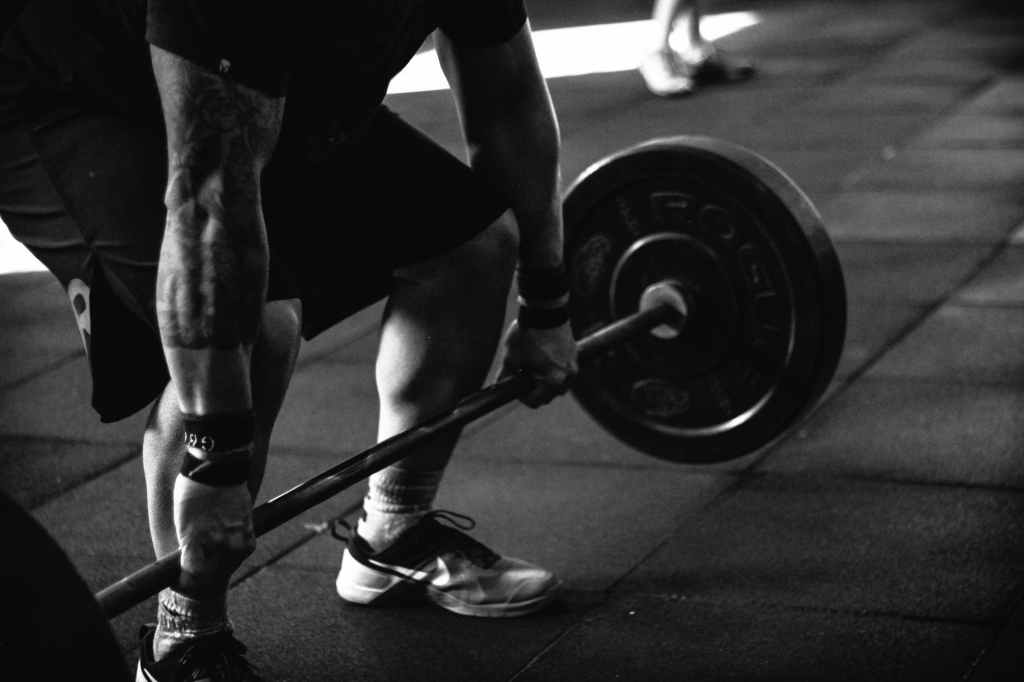
I don’t consider “leg day” to be the joke or meme that the internet likes to consider it. Training legs when done correctly are the hardest days of the week, depending on how one does back training. What makes them so hard is the fact that the vast majority of people who lift are also on their feet for a big portion of the day so a much bigger effort must go into the training day. They are definitely worth taking the time during the week to hit hard. It helps put muscle mass on them to help stability, strength to be able to lift more and from different angles and to be able to move with more speed and power. The real kicker with leg training is that it tends to heavier than upper body lifts for most gym goers. I believe legs should be trained aggressively but this isn’t a persuasive essay for those who don’t. I am more writing about how I do it, and what I have learned along the way.


I started training legs as a response to becoming top heavy after the first 6 months of lifting upon joining Aspen Athletic Club in June 2013. After I started I felt the difference in the training between upper body and lower body. I understood just how much harder I had to go get leg development than I did what a gym buddy called the “vanity muscles,” the chest and arms. I took full advantage of having a room full of isolation machines and progressed slowly over the first year. I went so hard on leg days during 2014 to 2018 that I could barely walk out of the gym after I finished. This was in part because of the way I conceived the lifting day: start harder, go hard and finish harder. The machines I used the most during this phase of leg training were leg press, leg extension, standing leg curls, prone leg curls, seated leg press, leg adduction, leg abduction and the smith machine. It was this “organic building” phase where I learned the major lessons of leg training that I still follow even though my leg training now is radically different.


The first lesson learned was simple: Train with a higher level of intensity. This statement might seem it applies to more than just leg training, and for some, it probably does. However, I believe due to heavier loads the attention to detail and intensity has to be higher than upper body days. This was especially true when my upper body strength lagged as far as it did in 2014-2018. The other big reason for higher intensity is the monotony of hypertrophy machine training. It is sheer repetitiveness that one has to get through, especially when muscular development is the goal. There’s no skipping sets on the way to getting stronger.


The second is: Once you start, do not stop. This one is interesting to me because of the relationship that continuous improvement has with recovery. If a lifter is training with the philosophy of progressive overload without needing to miss training days due to failure to recover in time, then weeks pass without them even thinking about stopping. Sometimes other elements of life get in the way of training. Personal tragedies, vacations, work, or just wanting to take a week or more off from lifting can all cause breaks in training. I found out early on what happens one starts back up training legs that first time back in the gym: Every muscle in my legs were incredibly sore after, massive leg cramps followed, and increased necessary recovery time before I could lift the next time. This has happened every time I have ever given myself a break from lifting. This is important because I believe training muscle groups twice a week is important for strength and muscular development. This impacts people who actually compete in strength sports more than those who just lift but every little bit helps.


The third lesson is: Leg training leads to lower back development. I learned this one around 2015-16 when I started to deadlift more. My deadlift form in the beginning was far from good so I never fully stuck with it until Summer 2016 or so. Around December of that year, I tweaked my back on an attempted straight leg deadlift at the end of a night of leg training. I took a few weeks off but it didn’t get better until I realized I needed to get back at it. I moved forward under the theory that my hamstrings weren’t strong enough and that was the root cause of my problem. I can’t say if that self diagnosis was correct, but I did get better after starting to hammer hamstrings more when I did get back to the gym. What I did learn was that lower back training and leg training cross over at a lot of points so I began to think of my overall informal programming differently. Leg day and back day are the same day. That makes leg days even more punishing.


Going hard in the gym creates fatigue both mentally and physically. Around the middle months of 2018, I felt the effects of the grind on me more mentally. I just didn’t want to train legs at that point. They needed a break. I could feel my knees becoming “heavier.” The easiest way I can describe the feeling is that basic jogging is something I never wanted to do because my legs and knees just felt heavier than they did before. They probably were because of the all the time I had put into hard lifting for them. The gap was widening between my upper body and lower body strength so I stopped squatting and deadlifting to focus on chest, shoulders and arms. That changed in 2020 when I put legs back into the unofficial program before the gyms closed. During the latter weeks of the closings I started lifting with a friend in his garage doing mostly upper body movements, and after the gyms opened up legs on Saturdays starting about June of 2020.


It was during this period the next stage of lessons from leg training became learnt. On the Saturdays at the gym, I hit all of those machines I mentioned up above and was introduced to a new one: the Hack Squat. It was an eye opener. Normally, I used leg extensions as the finisher on leg days but the hack squat took its place. It was a safe way to do a lot weight with squat like form at the end of a session. That gym eventually closed in the process of moving and I had to adapt to life without a hack squat again. In summer 2020 I started acquiring equipment to help expand what could be done in the garage. That started with a squat rack. I started to squat in the garage during the week to help Saturdays at the gym be less dependent on lucky timing. Once my powerlifting belt I ordered arrived in July 2020, I began to really get after legs again and eventually got back up to where I had stopped in 2018, which was 365 pounds for 2-3 reps. I surpassed it with a personal best 405 pound squat 1 rep max in late August. All of that leg strength was coming back after 2 years of hard intentional leg training.


As Fall 2020 progressed I became more garage heavy in my lifting. There were still some public gym Saturdays but I got more comfortable lifting in the garage. My buddy, his son and I more than enough equipment to handle any kind of upper body strength training regiment I could ever think of but legs is another thing. Leg training is where public gyms shine when compared with home gyms. This was when the fourth lesson of leg training came to me: Understand the limitations of the gym you are lifting in. Space is limited everywhere but that more acutely effects home gyms than public gyms. Isolation machines cannot be part of the average lifter’s equipment because they are expensive and quite large so leaning towards compound movements like full motion squats and its partial range of motion variants are far more likely to be part of the program than isolated movements. This means that a home gym has to have equipment that is safe to perform heavy squats, ideally without the aid of a spotter. I have since turned my squat rack into a power rack, making heavy squats a garage day. That changes everything about the session. If a lifter wants to focus on leg muscle development, the public gym is fully the way to go. All of that isolation equipment is something I miss very much. I miss the leg press most of all. I got so much out of it. I, however, don’t miss squat racks at all. I just don’t think they are safe.


What all of that means is that equipment matters a lot. It’s a very obvious statement to say that what one has will have the most impact on what one can do. For home gym owners, equipment has to have multiple uses and they have to understand all of the things they can do with the stuff they have. Every muscle can be training with a barbell, but isolating specific muscle groups is difficult to do with that limitation. That’s why my current leg training in the garage is strength development based, not muscular development. It includes mostly squats, deadlifts and their partial range of motion variants with a splash of isolation from the leg extension machine I own. I wish I could hit my hamstrings better in the garage but I have yet to figure out how to do it so I there will be gym days in the future for my programs.


Time is a limitation everyone has to deal with. Leg training challenges time management because it is hard to get the work done efficiently. Rest between sets is mainly figured out through understanding the what the goals of the session and the training block are. Powerlifters take more time between sets because the loads are heavier and focused on the first rep because that’s the only one that matters. Bodybuilders use short rest times to build muscle through increased muscle fatigue. Strongmen and CrossFit competitors have to do a lot of events that require both conditioning and strength for both max effort and repetitions so I imagine rest between sets has to be minimal. My lifting sessions in general take around 2 to 2.5 hours but leg days can run even longer. Squats and deadlifts eat a lot of time because I do a lot of sets of them. I view them as being more important for development than the other lifts I do. Not having tons of isolation equipment makes exercise choice more simple than when I do my leg days at Genesis, where I can use accessory lifts to decimate my ability to walk more. I just choose the exercises that I feel do the most for me and go from there. There’s just no getting around the truth that if a lifter isn’t going to do accessory lifts at max effort, then they can’t skip sets.


I did not always train legs and back on the same day. This was especially true when I was lifting only at Genesis. Early in 2020, I was thinking about how I could get back training in during the week before the gyms shut down. When I started lifting in the garage with my friend I put back training into the program with barbell rows but I found I could only feel the at a weight that was clearly too heavy so deadlifts came back into the picture. That decision is the biggest driver in my overall lifting plan. I know when I do heavy leg training that I will be paying for it over the space of a few days. The commonalities that squats and deadlifts have lead me to not only put them on the same day but also right after each other in the sessions they are lifted. I do squats first and deadlift second, even though the latter is my better, more consistent lift. It doesn’t make sense to me to break up the two lifts onto two separate days when they overlap with each other the way they do. Having two 300-400 pound lifts in the same session just makes for a very destructive night, but that’s how progress is made.


Every muscle in the human body is connected. Understanding what those connections are and how they are made is the key to understanding strength training. Putting legs through intense, heavy and dense lifting will make every exercise better. Yes, even bench press. Might even improve stability and speed outside of lifting. I have found my first step is much quicker now since restarting my leg training. The lessons I learned in the first five years of my training journey have helped influence the ones I am currently learning in a different location. Don’t be afraid of aggressively training legs.

Week 2

Mark Brown

September 17, 2021

Monday

Chain Bench Press – 135 x warm up, 225 x 6, 225 w/chain x 6, 235 w/chain x 5, 245 w/chain x 3, 255 w/chain x 2 and x1.
Narrow Grip Incline Bench Press – 135 x 10, 155 x 10, 165 x 10, 185 x 8, 205 x 3
Seated Overhead Press, American Cambered Bar – 128 128 x 5 x 3 sets
Tricep Pushdowns, pronated grip – 45 x 15, 55 x 12, 66 x 12, 71 x 12
Flat Dumbbell Press – 100 x 6, 110 x 4, 115 x 2, 95 x 6
Lat Pulldown – 90 x 12, 100 x 8, 115 x 10, 125 x 8
Preacher curls, super set EZ curl bar outer grip and inner grip – 45 x 15, 55 x 12, 65 x 10, 75 x 10
Standing EZ curl bar curls, superset strip set outer grip and inner grip – 75 x 10, 65 x 12, 55 x 15, 45 x 20

Tuesday
Cambered Bar Squat – 175 x 8, 225 x 8, 275 x 6, 325 x 5
Calf Raise, Hatfield style – 245 x 15, 295 x 12, 315 x 10, 335 x 8
Block Pull, Romanian style – 315 x 6, 345 x 6, 365 x 5, 385 x 4, 405 x 2
Hatfield Bench Squat – 245 x 8, 335 x 8, 355 x 8, 385 x 6
Leg Extensions, Held – 90 x 9, 110 x 9, 130 x 9

Wednesday
Log Press, Strict Press – 101 x 8, 111 x 7, 121 x 6, 131 x 4, 141 x 2
Viking Press – 115 x 12, 140 x 12, 165 x 8, 165 w/chain x 8
Seated Overhead Dumbbell Press – 45 x 8, 55 x 7, 65 x 6, 75 x 3
Bent Over Rear Deltoid Fly, Dumbbells – 15 x 12, 25 x 10, 30 x 10
Side Lateral Raises – 10 x 10, 25 x 8, 15 x 8
Messed around with Snatches, some barbell overhead press.

Thursday
Multigrip Press, cluster set outer two grips – 138 x 8, 178 x 8, 198 x 6, 218 x 4, 228 x 3 (outer grip only)
Multigrip Press, cluster set inner two grips – 138 x 8, 148 x 8, 168 x 6, 178 x 5
Tricep Pushdown, Pyramid style – 45 x 15
Preacher curls, super set EZ curl bar outer grip and inner grip – 45 x 15, 55 x 12, 65 x 10, 75 x 10
Incline Dumbbell Press – 100 x 4, 80 x 8, 85 x 6, 95 x 5
Standing Lat Pulldown – 70 x 15, 80 x 12, 91 x 10, 102 x 6
Standing curls, EZ curl bar outer grip – 75 x 10, 65 x 12, 55 x 12, 45 x15, 25 x 30

Friday
Leg Press – 388 x 10, 478 x 10, 658 x 10, 838 x 12, 1018 x 6
Dumbbell Deadlift – 85 x 6, 100 x 6, 105 x 6, 110 x 5, 115 x 5, 120 x 4, 125 x 3
Standing Leg Curl, per leg – 35 x 10, 60 x 10, 70 x 10, 85 x 10
Iso-Lateral Row, per arm – 45 x 8, 90 x 8, 115 x 6
Sled Push, 40 feet down high push, 40 feet back low push – 250 x 4, 340 x 4, 430 x 4, 520 x 4
Calf Raises – 242 x 12, 260 x 12, 330 x 12
Leg Extension, held 5 seconds – 100 x 10, 115 x 8, 130 x 8
Abduction and Adduction, both – 295 x 20

Notes
This weeks lifting felt better and more cohesive as a plan. I was experimenting last week a bit with the other of exercises and have figured something out. I will carefully monitor how the increase of shoulder work impacts lifting and overall health. I just wanted to get an extra pop in there.


I did more work with dumbbells this week. I like using dumbbells for all presses. It doesn’t translate in a 1:1 ratio but definitely helps in a different way. I haven’t done the dumbbell deadlifts before like this but I got the idea from racking them over the last couple weeks. Was a different feel. I first thought of doing a trap bar deadlift Friday night but experimented with dumbbells and glad I did. The lower pull created much greater activation of quads. It was definitely more deadlift than squat but elements of both were there.


Friday night was my first time back in Genesis since May. I learned a few things that will be guiding decisions over the next 10 weeks. First is that I found out the Romanian deadlifts have worked. I could feel how much stronger my hamstrings were on the curl. My right hamstring is coming closer to my left in strength. Second is how much I miss the sled push. As much as I like leg press, the sled push is a major opportunity to really make my legs push dynamically. That’s more my kind of conditioning.


The shift in doing triceps and biceps in the strength rep range to hypertrophy range feels like it’s having it’s intended effect. I feel more blood flow to my arms and a better pump.

Public Gym Training vs. Home Gym Training

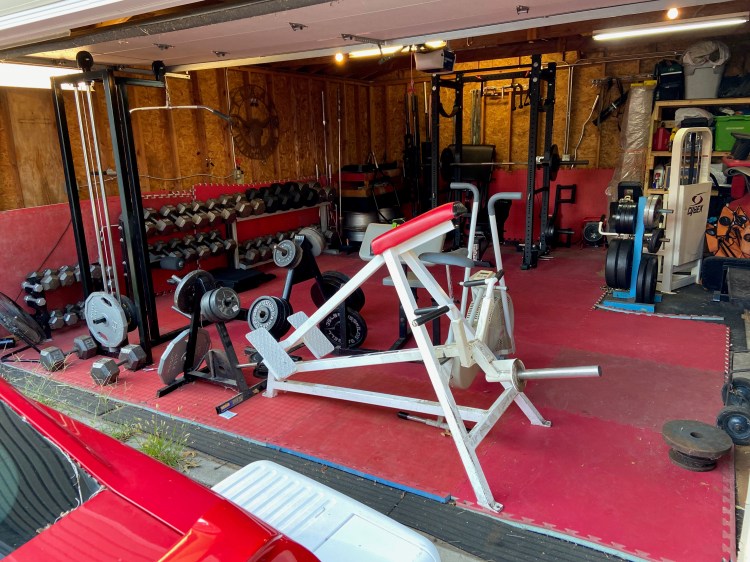
The new decluttered garage gym!

Mark Brown

September 13, 2021

Home gyms have always been popular for people who like to train but don’t like the atmosphere of public gym, be it a private gym or a commercial gym. Prior to 2020, I didn’t have access to a private home gym but I soon learned that there quite a bit of difference in strength training after getting it. Having experienced both now, I better understand how to get training accomplished in both settings. Gym training requires being flexible, choosing time wisely and working as a team with other gym members to really make progress in that setting. Those with home gyms don’t have to worry about all of those things, but safety and lack of equipment are things that can hold them back. Both have merit and will remain part of my training, and should be seriously considered if one can afford it.


Time management is a major determinant in how workouts are structured in both long term and day to day training. It forces us as lifters to figure out what we value a lot, a little or not at all. There are so many different ways to train and so many different reasons to train from sport specific to general health that we have to choose exercises that give us the effect we are after in the time we have. I have prioritized strength training in a way that I don’t worry about how long session will physically take, but I can definitely understand someone who has time constraints. This understanding of how much time lifter can devote to training sessions leads to any number of decisions that need to be made and the one at the top of the list is quite logical: “Where will I do the training?” Like with everything in life, it comes down to weighing the pros against the cons.


My main experience with strength training comes from lifting in a commercial gym. I have been a member of what is now Genesis Health Clubs in central Iowa since 2013, and my understanding of how a public gym works has evolved with what I have experienced. Everything changed when I began to primarily train in my friend’s garage starting in Spring 2020. I have a general rule that applies to life: “Your greatest strength is your greatest weakness.” I believe that in large part because what one is great at creates blindspots that can be exploited by those around them. The greatest strength of a public gym is that it is likely to be well stocked with equipment, especially cardio and muscle isolating machines, because those running the facility want to appeal to the broadest possible pool of clients. The problem from a training point of view with this is that a well stocked gym attracts a lot of people who can prevent one from getting done what they want done in a given day. When I was first started training having a lot of people around in the gym didn’t effect my lifting as much because I didn’t have a real plan anyways. As I got more serious and more specific in my goals, having a lot of people around got in the way of planned routine.

This led to what I call the first rule of the gym: Training in a public gym must be adaptable. This sentence can mean a lot of different things so I will specify. Make a plan for the workout, but have substitutions in mind for lifts in case a bench or machine is taken if order of operations is important. If a lifter is set on doing a particular exercise in a session in order, especially compound lifts, then they will simply have to wait if the equipment isn’t available. I have done this. Choosing to do another lift before a main will have consequences for that main movement, for better or worse. A prime example is when I was focusing on chest development 2018-2019 and often chose to do heavy flat dumbbell press before bench pressing because the latter was already in use. The dumbbell press so negatively impacted my bench press in the very short term that I got rid of it altogether from my sessions. That decision had the long term side effect of me having to reacquire the skill in 2020, but I did get good chest development from the dumbbells. Substitutions for accessories is much easier, but like with main lifts, choices have consequences especially if time becomes an issue when training at the gym.

Time management creates the second rule of the gym: Choose training time wisely. This one is pretty obvious but takes a lot of learning through experience to fully understand. This applies to both when one trains and when one trains best physically. The latter effects the former more than vice versa but it could lead to a more crowded gym. It is important to prioritize what matters more. I train primarily in the evening because of my work schedule, but I have also lifted in the morning in the past and found truly no discernible difference. If anything, I have made it to a point in my training that my job acts as a warm up, as it is more or less weighted carries and presses. The bigger factor turned out to be when the crowds started to flow in at the gym. I found that if I was able to get started with my session before 4 pm then I was able to get what I intended done in the intended order for the most part. Between 4 pm and 8 pm, an increasingly crowded gym made it harder to get what I wanted done in the order I wanted it done. As my training has progressed, the order of lifts has become more important because I am more sport specific in my goals. I have graduated from lifting for general health to possibly entering a lifting contest in the coming years.

The third rule of the gym is one I figured out more in the last year than the two above: A public gym is a team effort. This goes beyond just spotting someone on a bench press or a squat. It is a mentality that I don’t see everyone having, including myself, at times. Everyone who is at the gym is there with the purpose of getting better so it makes sense to think of one’s behavior at the gym with that in mind. There are only so many flat benches, adjustable benches, squat racks, etc and there is only so much time one can devote to training. Working in, spotting and asking how many sets are left are all ways people work with each other to get what they need done. The first two things listed are close contact and social distancing was intended to prevent just that. 2020 didn’t eliminate them because stuff still needs to get done in a timely manner. That team effort mentality leads to frustration when selfishness is seen at the gym: benches used for phone or drink rests, people taking excessively long on machines or circuit training without allowing work ins, adjustable benches used for flat presses or flies when a flat bench is available, not racking dumbbells between sets and too many other annoyances to write here. It has also led me to become more aware of my surroundings. In the beginning, I watched what people did to learn exercises to do and I still do that but in the process of doing so I learned how people trained, how many sets they did, when they lifted, and common practices. That all made me a better lifter and better team player at the gym. Safety is a major component of the team atmosphere. The ties that bond everyone at the gym together creates a desire not to see someone get injured there. That leads to advice sharing, helping when seeing something bad is happening and pats on the back when a lift is accomplished. The more people understand they are part of a team effort the better training is for everyone.

The gym closings in 2020 pushed me to train in a work friend’s garage for the bulk of 2020 by necessity and, later, by choice. It also illuminated those rules I have written about above because they don’t really apply to a home gym setting. As I got deeper into the year and into 2021, I found I planned and focused differently. That deepened the more into powerbuilding I got. I began to see the weaknesses of the commercial gym I was at. I still find tremendous value there, which is why I am still a member, but understanding those weaknesses has made me better. Going from training from at a place that has every conceivable muscle group covered by isolation machines to a place that has a bar, a bench and a rack with a single cable attachment is a stark change in both reality and mentality. I had used both compound movements, almost exclusively with dumbbells, and isolation machines in my training before and now only had the former so I had to fundamentally change how I lifted. I brought back the 3 main lifts from powerlifting back into my program, I didn’t have to worry about people in the way and I lifted with a training partner so the team effort was much more focused.

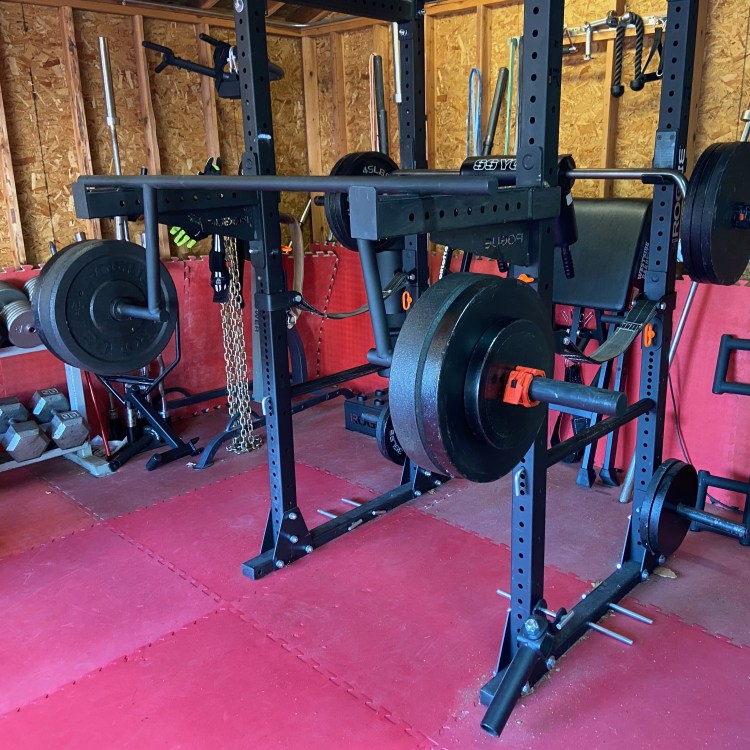
I made a lot more money in 2020 than I had any prior year so I was able to help the garage gym improve by getting a power rack, various specialized bars, dumbbells, bands and chains. My friend added to it as well with a better bench, a cable machine for pull downs and push downs, a trap bar and other accessories. Most of the bars came after late summer and fall because the run on lifting equipment at the big online stores, but once they arrived I found my training became far more varied than I was doing at the public gym. Each of the bars had a specific purpose and keeps unveiling more ways to train with it. The EliteFTS American Cambered Bar makes cluster sets very easy to do, the Rogue Deadlift Bar has the bend and knurling to help learn competition worthy deadlifts, the Rogue Log is perfect for shoulder and tricep work for people who prefer neutral grip, the Rogue Ohio Power Bar is a great all around powerlifting bar with aggressive knurling, and the EliteFTS SS Yoke Bar is made for squatting heavy without shoulder pressure. All of this equipment makes training for strength and power very easy to do. Chains and bands add resistance to vary the training even more. Training muscle building is harder to accomplish, especially certain muscles like the rear deltoids and hamstrings, because of the lack of isolation equipment. More thought has to go into what compound movements I can do to really make those two muscle groups work.


Safety is planned for differently in a home gym setting. The strength of public gym safety is numbers, and at home the strength of safety comes from equipment. This realization was the start of both more intense training for me and understanding just how unsafe major pieces of equipment at a lot of commercial gyms is. Lifting heavy and to failure is how one progresses on most lifts, but it is especially true on major compound movements like bench press, squat, and overhead press. How does one do these lifts without a consistent spotter? Most free weight equipment I have seen at the various commercial gyms I have gone to leans on spotters for max effort lifts so I just don’t do those lifts with barbells at the the gym. The rack I completed last year, a Rogue RML-390F, allowed me to really push more weight and do better max effort lifts because of the safety pins, straps and spotter arms I have for it. It became very apparent to me that where I trained had a major impact on how I trained when I started to lift back at Genesis for the first 3-4 months of 2021. In the garage, I focused on building strength through the use of barbells in lifts and in the gym I did so with dumbbells largely because I feel they are safer in that environment. It’s not that I go less hard, but barbells and dumbbells don’t have the same effect. When at the gym I also use the isolation machines quite a bit, so in a way I adjust the ratio of the bodybuilding part of powerbuilding to be higher than the powerlifting side of it, especially on upper body training. I’m not entirely sure of the psychology of why the gym makes me do more bodybuilding than I do in the garage but I think it has a lot do with the equipment at hand. That is especially true with legs. I am constantly thinking of new ways to use equipment I have to get more from what I have, but that thought process simply isn’t necessary at the gym.

The time element has never been effected by where I am training. I have always been the guy who is in the gym way too long by most standards. I’m in the 2-3 hour range. In the beginning this was the case because I was doing so many lifts and now it’s because I have added more powerlifting to my programs. Heavy powerlifting causes longer workouts in my case because longer rest between sets is necessary. They are very taxing on the body, especially squats and deadlifts. I don’t believe in taking 10-15 minutes between sets but I am solidly between 5 and 8 minutes between them. This would be truly annoying at a public gym, and that’s why I don’t do it there. Powerlifting and commercial gyms do not go together. I have whittled down the lifts I do on a given day to 5-10 different exercises but dependent on what that exercise is could get as many as 6-8 sets of it. Yet another thing that would be annoying at the gym. This is where the home gym truly shines: The ability to get done what a lifter needs to get done without negatively effecting someone else’s workout.

I love finding the limits of the strength I’ve gained and blowing past them. That means lifting very hard and very heavy. I would not subject any other gym members to the realities of training that includes powerlifting. I will be including gym days in my upcoming plans because it does something that I can’t get from the garage gym. I believe the integration of the two different mentalities is what will take me to the next level, and should be considered by others unless their home gym is incredibly well stocked.

Week 1

Mark Brown

September 6-10, 2021

All weights are in pounds.

Monday
Chain Bench Press – 135 x warm up, 225 x 8, 225 w/chain x 6, 235 w/chain x 5, 245 w/chain x 3.
Seated Overhead Press – 95 x 8, 115 x 8, 135 x 6, 145 x 3
Narrow Grip Incline Bench Press – 135 x 8, 185 x 5, 175 x 5, 165 x 5
Tricep Pushdowns, pronated grip – 70 x 10, 80 x 10, 90 x 8
Flat Dumbbell Press – 100 x 6, 110 x 4, 115 x 2
T Bar Row, pronated grip – 45 x 8, 90 x 8, 115 x 6
Lat Pulldown – 90 x 10, 115 x 8, 125 x 8
Standing EZ curl bar curls, superset outer grip and inner grip – 45 x 10, 55 x 10, 65 x 10, 75 x 8

Tuesday
Cambered Bar Squat – 175 x 8, 225 x 7, 255 x 6, 275 x 6, 315 x 5
Calf Raise, Hatfield style – 2 sets of 245 x 10, 2 sets of 335 x 8
Block Pull, Romanian style – 315 x 6, 345 x 5, 365 x 4, 385 x 3
Hatfield Squat – 155 x 8, 205 x 8, 225 x 6
Leg Extension Holds: 5 seconds held, 5 second rest 1 minute 30 seconds time total – 90 x 9, 110 x 9, 130 x 9, 150 x 9

Wednesday
Off – Rest Day


Thursday
Multigrip Press, cluster set outer two grips – 138 x warm up, 158 x 8, 178 x 7, 218 x 4, 228 x 4 (outer grip only)
Multigrip Press, cluster set inner two grips – 138 x 8, 158 x 6, 168 x 6, 178 x 5
Log Press – 101 x 8, 111 x 6, 121 x 6, 131 x 6
Tricep Pushdown, Pyramid style – 45 x 15, 45 x 15, 60 x 12, 71 x 12
Viking Press – 115 x 10, 140 x 10, 140 w/1 chain x 8, 140 w/2 chains x 8
Preacher curls, super set EZ curl bar outer grip and inner grip – 45 x 12, 55 x 10, 65 x 10, 75 x 10
Incline Dumbbell Press – 80 x 8, 85 x 6, 95 x 5
Standing Lat Pulldown – 70 x 10, 80 x 10, 90 x 10
Standing curls, super set EZ curl bar outer grip and inner grip – 75 x 10, 65 x 10, 55 x 10, 45 x10, 25 x 25

Friday
Off – Rest

This was the first week back lifting in a week and a half and it showed. Weights were a bit suppressed and reps also a bit suppressed resulting in somewhat of a de-load week for upper body. The plan for a strength based upper body day and a volume based day is my current thought for at least a few weeks for upper body. The American Press Bar by Elite FTS is is the best bar for the volume day. I will be using that as the main chest press movement on Thursdays.


Tuesday I absolutely killed my legs. I felt my legs on the verge of cramping as I was turning off the fans and the lights in the garage. The hard right leg cramp came about 3 hours later as I laid in bed. I know from prior experience that taking anytime off from legs then working them even somewhat hard will result in leg destruction. I pushed legs between 70 and 85% of my 1 rep max Tuesday. The Hatfield Squat/Leg Extension Hold super set was particularly hard. At the time of this post, my legs have still yet to recover, which is why there was no lift on Friday, my normal second leg day of the week. They should be recovered by Tuesday and I will once again build up that tolerance to the normal intense workload I put them through.

Golf

Photo by Kindel Media on Pexels.com

Mark Brown

September 3, 2021

Bet you’re wondering what this one could be possibly about. Is it what lifts carry over over to the golf course? The connections between golf training and strength training? The second of those two questions is much more likely to be answered than the first. Partly because I don’t honestly know the answer to the first and, second, because I’m not that interested in figuring out the answer. This essay will touch on the second question but is far more interested in the organic shift I feel in identity that I have made in the last couple of years. Golf and lifting do overlap in areas of competition, training and space in my life but I found that as I got more serious about lifting golf became more secondary. 

I can’t remember exactly when I started golfing but I believe it was around 2008. I convinced my older brother, Steve, to pay for half of a starter golf set as a birthday gift. He had started playing a few years earlier and talked about it a bit. I had watched golf on television for years and was now ready to start actually doing it. Mini golf wasn’t cutting it anymore. Like everyone who plays golf, I was abjectly terrible in the beginning. I distinctly remember being at a range and someone seeing me swing so badly they actually had to say something to me about it in that first year. Learning how to hit the ball to make it go somewhat the direction I wanted it to was a major challenge. It is a frustrating sport in part because a golfer can do everything right on a shot and still get screwed. The biggest part of that frustration comes from the expectations a golfer sets on themselves when playing. Around 2017 I started making a goal of 5 pars a round then added 1 more to that in 2019 because I feel I’m good enough to make at least 6 pars on any course I place. When those personal goals aren’t met or the day isn’t going well for physical or mental reasons, emotions come pouring out and that is always a bad thing. All emotions, in my experience, have negative consequences. Yes, even the positive ones. 

After the New York Yankees lost in the American League Division Series to the Chicago White Sox in the 2006 Major League Baseball playoffs I cut myself off from being emotionally attached to spectator sports. Prior to that I was very highly attached to the performance teams I rooted for. It was part of who I was. I still follow and root for the Yankees, the Iowa Hawkeyes and the New England Patriots but it’s not life or death anymore. I successfully ripped a part of my self identity away. Spectator sports took on a different role in my life. Once I started playing golf, I started caring more about the activities I was doing far more than the ones I could merely watch. It filled the void that spectator sports had previously played, and I dove into sport with everything I had. I was a very emotional golfer all the way up till about 2016. My expectations for my play were far higher than they should have been. They should have been “be content with not sucking for 1 round” as opposed  the “I should be shooting 90 dammit!” I was at in my head. That led to a lot of temper tantrums and a lot of unfriendly words directed at a golf course that had very little to do with my hitting a terrible shot.

The self identification as a golfer allowed me a fuller emotional, physical and psychological commitment to the game. Golf is a sport with an expensive buy in at the start. Starter sets aren’t stupid expensive but those clubs are exactly what they say they are. They are clubs meant to be replaced by better ones at some point. Upgrading equipment is where the sports true level of expensiveness becomes really understood. I currently have about $2,500 in my  bag, including the bag, and that’s with irons that were on a severe discount. The more I played made me want to play more. What makes golf so fascinating is that it really is a grinder’s sport. Natural ability just doesn’t get anyone very far in golf. Progress in ability is marked more by improved and more consistent play. It is also not very linear, which makes it an easy sport to drive people crazy. Improvement usually leads to higher expectations and in a sport where progress is far from linear, frustration is never more than a swing away. If a golfer cannot control those emotions tied to expectations then it’s just not going to be an enjoyable experience. What combats that is a learned ability to subdue all emotions to put in the work of getting better. I many ways, the sport trains willpower more anything else.

The grind is what separates people who want to be better and those who are truly content with the status quo. They can say they want to improve, but they just aren’t putting in the effort to do so. Grinding happens in two ways in golf primarily: range time and course time. The practice range is for learning how to hit a ball properly and how far one can hit it then, after that, making adjustments. Grinding on the course involves putting all of the work done at the range with the intangibles that both athletes and media members talk about: determination, drive, focus, willpower, etc. One can learn how to hit a golf ball at the range, but only the course teaches one how to golf. I am not a great practice player because I just like playing more than practicing and with lifting in the picture heavily there isn’t much time to do it. I find that playing golf is more fun and rewarding when playing out on the course. The challenge to play better knowing that any day could be one of those days where nothing is going right is what gives that sense of accomplishment that is important to any endeavor. Pushing through the days where the golf gods seem to be against the golfer without emotionally breaking is when true progress is made, at least on the mental side of the sport. Playing well can be equally challenging because each hole that is completed just adds to the pressure of the moment and knowing one bad swing could kill it all. This is even before additional pressures from gambling or money, for professionals, comes into play.

It’s that grind that I understood and found my self identification with. I think it happened because I find that life is a similar grind that requires a similar emotional balance. There are going to be things in life that just aren’t fun but have to be pushed through to get to the other side. Golf got easier to take and the grind became more fun after I decided to let go emotionally on the course. Laughing at missed putts or terrible drives, sighing when having to hit the same shot I just did because I duffed it, and putting away the rage when mistakes piled on top of each other were all things that made me enjoy it more. When I started lifting in 2013, I found another activity with almost the same infrastructure of grinding as golf. I primarily looked at lifting as a way to help my golf game. I reasoned that if I got stronger I could hit the ball farther, but found that reasoning mostly faulty. My focus was still very much on golf despite going to the gym at least 4 times a week. I played a maximum of 20-25 rounds of golf a year so I lifted far, far more than I golfed. This all remained the case all the way up until 2018 when I became more serious about specific strength training goals. From 2013-18, I was rather aimless in my lifting goals but that was definitely not the case with golf. After summer 2018, I think training started to become more level with golf in terms of desire to succeed. 2020 was a year of change for a lot of people, but I wasn’t one one those people whose life was overly effected by it. My life is the same grind it has been since 2011 without any real change.

What did change in 2020 was the fact that I could afford to start buying gym equipment and started lifting in Pete’s, a friend from work, garage. I became much more focused on strength training and that focus took me down a path towards a combination of powerlifting and bodybuilding called “powerbuilding.” I had done a lot of powerlifting before and was reconnecting with it organically. I golfed quite a bit in 2020 so there wasn’t any change in the golf and lifting dynamic physically. However, I had a bigger sense of accomplishment from my daily lifting than my golf scores. The only thing I can point to about the competing feelings of accomplishment in golf and the powerlifting I was doing is that luck plays a much bigger factor in golf than it does in lifting. After I swing the club in golf, I can’t really tell what is going to happen when the ball lands. I just have to adapt to what does happen. This is very different in lifting where I am much more in control of the results of the lift. In a sense, the accomplishment of a heavy deadlift is much fuller than even a few good holes put together. The heavier the lift, the bigger the accomplishment. Even if golf could be seen as harder because of having to deal with a bigger luck factor, I just don’t feel the same level of accomplishment anymore. 

This feeling doubled down in 2021 when I started to feel myself getting stronger and lifting more weight, especially during the summer of 2021. My golf game is also improving as well and has matched my expectations. I have played quite well this past summer, shooting mostly in the mid to low 80s including another round in the 70s. Progress is being made in both lifting and golf but I feel a bigger connection to the lifting I am doing now than golf. I’m not entirely sure what is the driving factor is right now. I suspect it has something to do with the knowledge that there is a ceiling to how good I can become at golf because I just don’t put the time and money investment into it. The lifting helps golf through being more stable at the base and a stronger back but it doesn’t replace hitting balls or playing holes. That directly contrasts lifting where I feel I can truly make big strides in weight lifted and the body I can build in the years to come. That is not to say there isn’t a ceiling there but it feels higher than with golf. If you were to ask me what I was in 2019, I would have said I was a golfer. Now, I’d say I’m a lifter. 

Both sports have had an effect on me and what they have taught me. Had I started lifting before I golfed, I don’t know if I would have had the level headed approach to it that I did. Golf taught me the grind and emotional balance required to truly succeed with making progress in the gym. Perhaps it even influenced my overall life disposition, or maybe I just responded to it that way I did because I was a grinder to begin with. A true chicken or the egg proposition. I see life through the lenses of lessons I have learnt from the gym, and looking back on it all now it started earlier than that.

Goal Setting

Photo by Victor Freitas on Pexels.com

Mark Brown

September 2, 2021

Goal setting has always been hard for me to wrap my head around because I have rarely met something prior to strength training worth having a hard standard to hit. Even after I started lifting, setting specific goals was difficult for me. Lifting for general health is so aimless. Effective training can definitely done without specific goals in mind if the process is done well and understood because it’s a grinder’s sport. I did make progress doing so but that feeling of accomplishment was nonexistent. That feeling I think is responsible for lack of motivation sometimes and the root cause why so many stop. Strength training over the last two years has taught me the value of goal setting and how best to understand and set those goals: How best to keep general goals from becoming meaningless, how best to make specific goals, and how to make short term goals line up with long term goals. It’s not as simple as writing down a goal and executing it. 

I am an aimless soul at my core. I need to find something that really generates interest to motivate me to really dive into the rabbit hole. Anything short of that and I’m kind of out. I am not interested in being a jack of all trades. Not even lifting really even brought me that motivation. A lot of that was that the “goal” of getting better and stronger barely qualifies as a stated goal. It’s so general that’s there nothing inherently there. The fact that just going and doing anything with a modicum of challenge to it in the beginning will result in getting better and stronger just exacerbates that generality. Goal setting isn’t something I did naturally growing up so even when I did do it, like the case with lifting my senior year of high school trying to get on the baseball field more, I never stuck to the concept of goal setting after that. 

It’s taken me all the way to 2021 to really take goal setting seriously. The major difference between now and past years is that I am now seeing more tangible evidence of success than I have before and a better understanding of the process that got me there. Part of that process was putting aside a lot of the bodybuilding stuff I was going before and doing more powerlifting. I get a more feeling out of powerlifting than I do bodybuilding. That has nothing to do with what’s required to do with the latter because both are very much a grind in their own way. As stated above, I’ve always had an understood goal of getting stronger but I think of the truth this way: General goals get general results. This is not an indictment of general goals. They do need to exist. The mistake is believing that a general goal will get the same effect that a more specific one will. Programming specific goals into a training cycle is ideal but choices have to be made on what will be prioritized based on time and the fact the human body only can handle so much. It wasn’t a surprise to me that my squat didn’t show signs of the progress at the top end my bench press and deadlift did during my summer 2021 powerbuilding program. I had prioritized deadlifting over squatting. It also wasn’t a surprise to me that the best progress I saw in my legs was in the work sets where I was doing more reps than at the heavier loads. In the end, what I was after was stronger legs and I got that. 

General goals are necessary to set in the beginning because there is no baseline knowledge to inform on what a realistic specific goal should be. I remember saying I wanted to bench press 250 pounds when I first joined Aspen Athletic Clubs in 2013 when talking with a trainer in my first meeting there. Looking back on it now, that statement really meant nothing. I had no idea how to actually get there and had no idea where I was at. It just sounded like a cool number at the time. I didn’t set any real goals from about 2013-18 because I was still in what I would call an “organic build” phase. I went to the gym and figured out what worked best together for me without any major pointed outside direction. Those 5 years featured a lot of supplemental lifts as mains and tons of accessories. I saw plenty of progress in those lifts in that time but they are examples of what I was referring to in the introduction about being able to get strength gains by just grinding workouts. Towards the end of summer in 2018 I changed my program radically to be 100% upper body to help it catch up to my legs and back. It marks a clear delineation in my strength training journey from semi serious to outright serious. 

My chest, shoulders and arms were lagging severely behind my legs and back muscular and strength development. It marked the first time I truly set a specific goal for myself lifting. That transformed what lifting meant to me. I had more emotional investment in it. It was becoming more who I was and what defined me. My bench press in the middle of 2018 was a struggling 185 pounds. I used more dumbbells for heavy main lifts because I liked them better for safety reasons. I remember I was pressing the 75-85 pound dumbbells for flat pressing as I saw progress up to the 95-100 pound dumbbells over the next few months into 2019. That was about the time I made it a specific goal to be able to press the125 pound dumbbells on the rack. Those were the heaviest in the gym. This was the first real specific goal I made for myself. Accessories all had to benefit the dumbbell press, either flat or overhead. In 2021, I learned from videos from Youtube that this progressive kind of overload training is very much in the powerlifting vain of training. In fact, I was employing a lot of tactics in the gym I didn’t know had already been defined. By the end of 2019 I had hit my goal and started using the 125s for low rep sets, not just heavy singles. There was a definite feeling of accomplishment in achieving this goal that was very different from  anything I had done before. It was the kind of success that made me want more. The sense of accomplishment is why making specific goals will always produce more concrete results than setting general goals. The latter produces a grind that can wear down even the toughest willpowers. It is primarily why I just don’t get as much enjoyment out of bodybuilding as I do powerlifting. Both have strong points and one really helps feed the other but I know I just have to push through the grind of bodybuilding to help my deadlift, squat, bench press and overhead press. 

The element that makes specific goals superior to general goals for experienced lifters is the understanding that goes into what it means to achieve that specific goal. General improvements will come along when training for specificity. Strength goals will also spur muscular development in cases of goals that involve increased 1 rep max efforts. The former will definitely get the lion’s share but it’s not like muscular development won’t happen. Setting a goal in a main lift requires more than just doing that lift a lot. Technique is important as it is really the only way one learns how to do something but strength is required to actually perform the lift. That’s where supplemental and accessory work comes in. Some powerlifters just train the lift and that’s fine but that doesn’t work for me, at least for right now. If I make a goal weight to hit doing bench press chest, arms, lats, and shoulders are all involved in the development of it. Each of those muscle groups matter and must be trained on their own to prevent them from being the weak link. The body only has so many lifts in it for a given session so those supplemental and accessory lifts must be chosen carefully. That goes for all compound movements. Setting those specific goals will also keep a lifter on task more and help them from drifting mentally into areas of strength training that will not ultimately benefit it. It is very easy to get distracted from a program, especially if taking in a lot fitness media, but being rooted in a dedicated specific plan will greatly reduce the chances of that. Skill acquisition, as Dave Tate calls it, is extremely important so learning new lifts is must. During a specifically planned program is not the time to do that. 

One more other important component in this discussion is how goal setting effects a lifter psychologically. Failure can be very helpful or very damaging. It takes a long time to really understand failure as a training tool. For experienced lifters and coaches, failure is used to understand exactly where one stands. Plans can be made around those failures to push through the sticking points that caused them. For new lifters, experiencing failure, or a lack of progress, in the beginning can represent a major blow to their psyche. If they lack willpower naturally, it will compromise their emotional investment. Setting general goals is a necessary defense against this potentially playing out over the first year or two. Having a hard specific goal in place during this time could break a new lifter mentally and cause them give up entirely if failure to accomplish a major goal were to occur. It is very tempting to want to make hard, specific statements about goals in the beginning but I think it is a major mistake. The slow nature of progress at the gym is very unforgiving. I made a grand statement of what I wanted but it was ultimately the organic nature of my first 5 years of lifting discoveries that helped me hone in on what actually made me feel some accomplishment.

The accomplishment of a given goal is measured by two related factors: Expectations and time. The latter is the most important of the two because it influences all of the choices made in planning and execution of said plan. For professional or amateur bodybuilders, powerlifters, and/or strongmen time is represented by the number of weeks till a given show. For the the vast majority of people who strength train, there’s nowhere to show progress made outside of the various social media platforms that exist in 2021 as ways to earn income. A shorter timetable means a plan is going to be more aggressive its structure and is going to compromise more safety measures and other areas to successfully hit the expected goal on time. Long term timetables allow for progress to come along more steadily and more organically. Safety is something that is never far from my mind when I lift because injuries can happen at anytime, good form or not, and I can’t train if I am hurt. Long term timetables allow more safety protocols to be in place and less compromised than they would be if time were shorter. 

Expectations is what can really mess with a lifter’s head. Strength training is quite linear but doesn’t always add up the way one expects all the time. Training with the progressive overload principle leads to gains but being able to bench press 225 pounds 8-10 times like I can doesn’t necessary add up to a really high 1 rep max, which in my case is 285 pounds. Expecting explosive jumps in weight lifted during max effort lifts after becoming experienced is dangerous for both physical and mental health. Failing attempts at personal best lifts can be emotionally and psychologically devastating. Most of my personal best lifts come during regular training sessions when I am feeling good about expanding my weight range. Surviving fails max weight attempts is a major test for a lifter. In May, I attempted a 405 pound deadlift at the end of the deadlift portion of my workout and failed to get it past my knee. Since I started doin that lift again in Summer of 2020, my deadlift had been climbing steadily to 385 without failure. The previous sets felt good and I thought that day could be the day. It wasn’t the case. I knew the lift would be harder than anything other I had done, but I expected to get it. My gym willpower and psyche is near bulletproof at this point so I took it in stride and responded by making a program built around successfully pulling 405 pounds. Learning that failure is part of the process helped manage expectations so that when it does occur it isn’t damaging psychologically.

Decisions have consequences. As such, new circumstances and situations are developing with every new decision made. This makes lining up one’s short term goals with their long term goals very difficult. Often times decisions made to ensure the success of the short term goal will negatively effect the long term goal. Depending on the timetable of the latter, the damage might not be mitigable. My decision in 2018 to work on upper body exclusively with dumbbells is an example of a decision made that took 2 years to realize its effect then start the process of changing. After adding bench press back to my routine during the pandemic lifting with Pete, my training partner, I realized the effect of only using dumbbells as my heavy main chest exercise. My hand placement on the bar was how I instinctively pressed dumbbells. This meant my bench press grip was quite narrow. That brought it in more tricep into the lift and has took till Summer 2021 to make my grip more suited for maximum pressing power. This situation was mitigable because a total lack of a timeline. However, if there had been a goal with bench press in mind during the stretch from May 2020 to May 2021, then the decision to use only dumbbells would have resulted in a negative effect overall. If I want to make serious gains in weight I can deadlift or squat in the next two years, then everything in my life will be effected by that short term goal decision. Part of me legitimately wonders how long I can keep up doing my physically demanding job while lifting the way I do, even if my training makes my job easier and feel better. The place tends to break people.

Goals are not blowhard mission statements made to motivate people to do what words say. They are not distant dreams written down in a journal, blog or whatever. They need to be well thought out and attainable with a realistic amount of effort in a well defined amount of time. When one goal is accomplished, make a new one and keep that process going over and over. Decisions made to attain a goal in the present may well have negative consequences years down the road after the short term goal has been accomplished. Those consequences just have to be lived with, understood why they occurred and a new plan made to deal with them. 

The Value of Training Partners

Mark Brown

August 30, 2021

Strength training can be a lonely experience. It requires a lot of internal motivation and a lifestyle defining amount of discipline to get anywhere to close where a lifter wants to go. Coaches in team sports use other humans as supports against the mental and physical wear and tear that intense training in general can bring, never mind training that has very specific goals. For former team sports athletes the “team” aspect of training is ingrained so they might never lose that understanding as they age. What about the people who didn’t play team sports growing up or people whose 2020 was inconsolable brutal isolation? That feeling of going at strength training solo can get equally ingrained. What people who train by themselves, even with the aid of programs designed by professional coaches or athletes, need to understand is that they are leaving both training and results on on the bench, in the squat rack, on the stage or up on the platform.

I would be lying if I said that 2020 wasn’t one of the best years of my life. It was a very productive year for me. I made way more money than I had in any year prior, and the circumstances created by Coronavirus made me shift my strength training in ways that is still benefiting me and will do so for the rest of my life. The combination of increased money, lack of free time, lack of motivation to spend said money on things I don’t use, and the gyms closing made me begin to buy gym equipment and cultivate a “home gym” training thought process. The gym equipment I have spent the money on has led me to more varied training, and a better understanding it in general. It helped me understand the difference between training solo at “home” and solo at a public gym, and how to go bout it. 

The training changes all started when the gyms got shut down. Of all the privately owned public spaces, the gyms were the only shut downs that mattered to me. I was a miserable human being because the only real thing I was committed to was taken from me and I didn’t have much recourse to combat it. That was when a long time co-worker, Pete, asked if I wanted to lift with him in his garage. He saw how crazy frustrated it was making me and was feeling similarly. Didn’t take me more than a few second to say yes. He had a good set up. Dumbbells from 20-100 pounds minus 90s, an all-in-one rack, a power bar he’s owned forever, bench and other gym essentials. I didn’t realize it at the the time because this was my first experience with a true training partner but this was going change strength training for me in ways I couldn’t see at the time. Since my oldest brother and women’s basketball coach, Mike, got me into a commercial gym through an ex-player he coached in college 7 or so years ago, I have lifted almost exclusively by myself. Every now and then I would ask a for a spot and developed some friendships with other gym goers, but that’s about it. I would see people training with partners but I was never driven to find one. 

I started training in Pete’s garage around April-May 2020 and deferred to him on lifting  because he has age and training on me. He said something to the effect of “what I want to do” when he asked what he wanted to do. He was putting his training in my hands. Him saying that laid down a challenge to me, and was not lost on me in the slightest bit. He is more of a powerlifter in approach so I had to think about how to benefit us both. By March of 2020, I had been training long enough and researching enough content by reputable athletes and strength coaches that I pretty good idea of how to train effectively for hypertrophy and strength, but building a program is different challenge altogether. My approach to such challenges is to learn as much as I can and figure out how to do it myself. It’s how I got better at cooking and golf, two things I consider myself decent to good at. That has been proven to me to be the best way that I learn.

I began training with Pete and didn’t really have a set program and it didn’t take long to realize the 4-6 week layoff from lifting had taken a major toll on my lifts. The week prior to the gym shut down I was doing sets of 4-5 reps with 125 pound dumbbells on a flat bench, and I could barely do the 80 pound dumbbells for the same amount of reps 5-6 weeks later. That’s another lesson for another discussion, but it helped me figure out where I was at again. This is when I decided to put the heavy bench press back into to my lifting routine. I hadn’t regularly done bench press despite focusing on chest development for 2 or so years because I didn’t feel safe doing the lift in the commercial gym setting largely because of bench design, and didn’t like to ask for spots. This is when I first started to see the value of having a training partner: having a regular spotter. This might sound like an obvious statement but having a spotter will increase a lifter’s ability to get stronger. The question is how they accomplish this task. I believe that answer comes in multiple facets. The first is that they help complete lifts that might not otherwise be completed. The second is that they can see what the lifter cannot: themselves lifting the bar. The third benefit comes only after training with someone long enough: understanding the partner’s personal lifting tendencies. These are benefits I didn’t see or really understand prior to putting bench press back into the program I was creating on the fly in the garage in April/May of 2020. I did some thinking on it during the summer of 2020 and came to the conclusion that while I had been lifting hard and getting results, there was about 25% I would never be able to get lifting solo. Just being able to finish reps at the end of sets doesn’t sound like much but it adds up very quickly over time, especially since most partial and failed lifts happen at maximal weight and/or effort attempts. 

That challenge to come up with a lifting plan for both me and Pete sparked a need to improve much more mentally than physically. I needed to learn how to put together lifts into a cohesive plan to get better, more specific results. That was just the first part of the mental challenge. The second part was being ready to go when the training was planned to happen. That accountability is important in gaining the trust of the training partner to take what is said seriously. The person lifting cannot see themselves lifting, so it is important that the lifter knows he or she can count on his or her partner to see for them for both safety and improvement. Having a training parter helps keep a lifter on that edge they need to be at to improve through offering criticism of technique, and encouragement. This element of mental training is something I had been missing, and it actively made me a better and stronger lifter and give me more motivation to train. Every lifter knows that it is a grinder’s sport, and those are low energy sessions are the ones that are the difference between goals attained or unattained. My training discipline was already strong, but by the middle of 2020 it was borderline unbreakable and was only getting stronger. I missed 3 sessions of my 12 week Summer 2021 power building program, 1 due to my house fighting back when installing a home security system and 2 to total exhaustion. If this is sounding like strength training is a team sport, that’s because it is when it’s at it’s best.

January 2021 started with Pete stopping training for a while due to family Coronavirus complications and injuries. I continued on with it going to the commercial gym for a few months while winter was still set in, and I haven’t lifted with him since. I began to see all the advantages of training with a partner I have listed but didn’t actively seek out someone else to lift with. I made a slight change in my approach to strength training but still had not made an official plan. Somewhere about April and May I began to feel myself hit a plateau on certain lifts and knew I needed to make a change to something more specific in goal setting. 

My summer 2021 powerbuilding program I built for myself was easily the heaviest lifting plan I have ever done, and I accomplished the goals I set for myself but I did find myself wanting a training partner for it in spots. I watched a video during summer 2021 on EliteFTS’s Youtube channel and in it Dave Tate, former powerlifter and CEO of EliteFTS, said that the lifter’s job is to lift the bar, not unrack it. That struck me at the time, but it didn’t really hit me until I found myself having difficulty unracking 275 pounds when on bench press and keeping my body in proper position. Since getting my bench press back up to 275 pounds was one of the goals of my summer 2021 program, learning how to bench press better was at the top of the priority list. That entailed getting into proper position under the bar, and pressing my lats into the bench. Unracking maximum weight caused me to get out of my locked in lat position just to get the bar to the point it can be pressed. I have since lowered the j cups on the power rack to find a better way of unracking it, but the best solution is still to find a spotter.  What I learned from both that video and personal experience with the bench press showed me a big part of the value of the spotter is at the beginning of the bench press movement, not just at the end as I had previously thought. The devil is truly in the details. 

Spotting a bench press or a squat might be the most important thing a training partner does physically but I don’t think that’s the case on the whole. I don’t do many lifts that require a spotter for physical safety’s sake, the way the garage is set up makes it very safe to do maximum weight and/or effort lifts solo, and my intense focus created by isolated single lifestyle are three factors that have allowed me to keep making progress in the face of not having a training partner; however, I know I would be further along if I did. The stay-at-home protocols in various cities of 2020 have led more people to becoming solo lifters, especially those with gym equipment at home. Technologically advanced phones allow for both video that is both very clear and very quick to play back but a video cannot give live feedback the way another human can. Even video streamed via internet to another person can’t help  in the same way someone standing just a few feet away can. Lifting, like other sports where form is the difference between success and failure, requires in the moment feedback to help the rate of improvement. Societal pressures and changing social norms are helping people become less socially active than ever before. People need to be around others less to accomplish goals more than I have ever experienced, and I don’t see that as a positive step.

Finding a training partner in 2020 helped me increase my strength training drive, made me physically stronger, and forced me to mentally understand strength training more at a fundamental level than ever before. Those are all things that benefited my progress in 2021. If I had not said yes to Pete’s offer to train in his garage with him, I would not be entertaining the thought of entering powerlifting meets or strongman events in the coming years. There’s no way for me to quantify, not even how much my lifts have physically improved, how much finding a training partner aided my development as a strength athlete. It also showed me how much I had been leaving on the bench and in the squat rack. Don’t take what I have written as a statement of regrets of training prior to 2020 because it is all part of the learning curve and I wouldn’t change a thing about it. If improvement is what a lifter is after then finding a stable training partner is the best way forward. 

2021 Summer Program

Goals

The goals listed here are going to be differentiated by long term, short term, specific, general, powerlifting and bodybuilding because goals are inherently time and situationally dependent. I have been lifting progressively more seriously for about 7-8 years now, so I thought it was time to really nail down some serious lifting goals this as this my first really documented training block: 

1) Get deadlift up to 405 pounds by the end of the training block. After integrating deadlifts back into training during the summer of 2020 after about 2.5 years, I have been progressively getting stronger in the lift throughout the last year and 2021. In May, after finishing my normal sets up to 385 for a set of 4, I tried to pull 405 but wasn’t able to get it past my knee, so I dedicated this training session to pulling 405 from the ground.

2) Increase leg strength. There was no real goal number to lift on the squat, as I had lifted 405 last summer but rarely gone back up to, but I wanted to increase the amount of reps I could do at heavier working sets.

3) Get bench press back up to 275 pounds or higher. I ended 2020 successfully having lifting 275 pounds in bare weight for 2 reps, which is my personal best. 2020 turned into 2021 and and winter hit, and once it got colder I started training at the commercial gym I am a member of. I started lifting more for hypertrophy, so I used other means to train chest other than bench press. When the weather improved in March I started lifting back in the garage and found the weight I could handle in the bench press had gone down to 245 over the months.

4) Improve overhead press strength. Shoulder strength is important to performing bench press and the best way to increase shoulder strength is to overhead press. 

5) Increase muscle mass. This goal sounds so general it feels stupid like typing out, but it really is because the most of the other goals listed are quite specific and this one is more for the body, not the movement.

The Program

My job demands I am able to carry up to 50-60 pounds in totes for 8-11 hours a day, so it is both a driving force of motivation and freedom. Lifting helps me be able to do my job without too much of a threat of injury and gives me a warm up and the conditioning that allows me to lift hard without worrying about cardio and conditioning. If I didn’t do what I do, I would have to think about my programs I follow very differently. I lifted Monday through Friday after work and rested passively, outside of rounds of golf, on the weekend. This is the break down of my lifting week:

Monday

Bench Press: 135 warm up, 225 lbs x 8 reps, 235 x 6 reps, 245 x 4-5, 255 to failure (usually 3-4), 265 to failure (usually 2-3), 275 to failure (usually 1-2).

Chest press with cambered press bar: 128 lbs 158 lbs, 178 lbs, 198 lbs, 218 lbs.

Wide Lat Pulldown: 90 lb x 10-12, 115 x 8-10, 125 x 6-8, 140 x 6-8

T-Bar Row, wide handle: 45 lbs 10-12, 90 x 10-12, 115 x 8-10, 140 x 6-8

Tricep push down, pyramids: 70 lbs x 10-12, 80 x 10-12, 90 x 8-10, 100 x 6-8

Ez Curl Bar curl, Preacher Bench both inner and outer grip: 75 lbs x 8-10, 85 x 8-10, 95 x 8-10, 105 x 6-8

Standing EZ curl bar curl, inner and outer grip: 75 lbs x 8-10, 85 x 8-10, 95 x 8-10, 105 x 6-8

Single arm cable tricep push down: 25 lbs, 35, 45 x failure.

I started by super setting standing ez bar curl with pyramid pushdowns to get blood flowing into the arms before starting bench press. It was the main exercise on Mondays, and also got superset with wide grip lat pull downs. After bench press, I used the cambered pressing bar to do cluster sets with starting with inner most grip, and working my way out to hit a progression of inner chest, tricep, and lats. Each set ended up being 25-30 reps at the lower weight and 18-24 on the heavier. That closer set could be super stetted with a T- Bar row for extra burn. This exercise was done to supplement the bench press, and because I wanted both a strength chest lift and a hypertrophy lift. I finished with standing EZ curl and single arm tricep push down superset to burn out. I only did the push down on my left arm to try to get my left tricep to increase size to match my right tricep, which is slightly larger.

Tuesday

Straight Bar Squat: 135lbs warm up, 225 x8, 315 x 6-8, 345 x 4-6, 365 x 3-4, 385  to failure (usually 3-4), 405 to failure (usually 2ish).

Rack Pulls (through week 9): 315 lbs x 5-6, 345 5-6, 365 x 4-6, 385 x 4-5, 405 x 3, 415 x 3.

Block pulls (week 10-12): 315 lbs x 5-6, 345 5-6, 365 x 4-5, 385 x 3-4, 405 x 3

Leg Extension (through week 9): 150 lbs x 8-10, 170 x 8-10, 190 x 8-10, 210 x 6-8

Leg Extension (week 10-12): 110 lbs x 8-10, 130 x 8-10, 150 x 8-10, 170 x 6-8

Calf Raise: 225 lbs  x 8-10, 235 x 8-10, 245 x 8-10, 255 x 6-8

T-Bar Row, neutral grip: 45 lbs 10-12, 90 x 10-12, 115 x 8-10, 140 x 6-8

I chose a low bar straight bar squat, despite my options, because I wanted to keep maintaining the skill of doing so. It is quite a challenging lift because most of the time merely getting my hands into position on the bar and gripping it isn’t easy by any means. I follow with pulls from my rack (off of safety straps positioned so the bar is 2 inches below my knee at starting position). This was done to limit the effect on the quadriceps during the pull and focus on lower back and hamstrings. Towards the middle weeks the reps would  be more Romanian Deadlift as my shin position was more perpendicular to the foot, rather than my knee over my foot at starting position. Once the deadlift mats arrived, I started to pull from the ground, elevated from the floor 3 inches. This made quite a difference in intensity. The starting position on the block pulls was 3-4 inches below what I had been doing, so I was pulling with much more quadricep action. As a result, the I was not able to hit the heaviest sets I was able to from the safety straps.

I would superset the rack pulls with Leg extension weeks 1-9 to accomplish two things: 1) work all elements of the deadlift but do so in a way that separated the muscle groups, and 2) to save me time. I chose to do a medium tempo extension at higher weight for higher resistance because it’s all I’ve really known, but I began to experiment with holding the the end position and found I liked the way the tension held. I held it for 5 seconds, and rested for 5 more seconds before doing another one. I had to bring the weight down in order to get any volume out of it. Even then the last couple reps were extremely hard, even to the point of not being able to being able to a full rep. I didn’t always do a T-Bar Row on this day. It depended on how much I felt I needed to do it between the squat and the rack pull. 

Wednesday

Seated Should Press, Cambered Press Bar: 128 lbs x 6-8, 138 x 5-6, 148 x 4-5, 158 x 2-4

Log Press, clean and press: 101 lbs x 6-8, 111 x 6-8, 121 x 5-6, 131 x 4-6, 141 x 4-5, 151 x 3

Viking Press: 115 lbs x 10-12, 140 x 8-10, 165 x 8-10, 165 plus 1 30 lb chain 6-8, 165 plus 2 chains 6-8

Bent Over Dumbbell Rear Delt Flies: 20 lb dumbbell x 10-12, 30 lb dumbbell x 8-10, 40 lb dumbbell x 8-10, 50 lb dumbbell x 6-8

Side Lateral Raise: 25 lbs x 8-10, 30 lbs x 8-10, 35 x 6-8

This was the physically the shortest day time wise because of how I chose to break down the muscle groups through the week. My job is a combination of load carrying and overhead lifting movement so I felt I could put my heavy overhead press day all in one session. After starting using bars and other lifting implements that were neutral grip or slightly pronated in 2020, I have found I like them more for overhead press than a fully pronated bar grip. Only lifts that were super setted were the rear deltoid flies and side lateral raises at the end of the session.I At the start of the block, I did a seated press with the cambered press bar but in the last couple weeks I did it third of the three main overhead movements. I didn’t find fatigue to much of an issue in terms of weight pressed.

Log Press, for most of the sessions, was the second lift I did on Wednesdays and my main standing overhead press. I was able to strict press for most of the reps and would only push press only at the of a set to get a few more reps lifted. Viking Press, done on an attachment to a landmine connected to a power rack, developed into one of my favorite overhead press lifts. I initially got the attachment for front deltoid development but found very quickly that it was my best lift for hitting read rear deltoid and upper back very specifically. It was a game changer in that regard, and something that will be a major part of my lifting plans going forward.

Thursday

Bench Press, with Chain: 135, without chain, lbs x warm up, 225, without chain, x 6-8, 225 w/chain x 6, 235 w/chain x 4-6, 245 w/chain x 3-4, 255 w/chain x 1-2

Chained Tricep Extension: 75 lbs x 8-10, 75 w/chain x 8-10, 85 w/chain 8-10, 95 w/chain to failure (usually 6-8)

Incline Dumbbell Press: 100 lb x 6-8, 110 x 4-6, 115 x 4-6, 95 x 6-8, 85 to failure (usually 6-8)

Standing Lat Pulls: 70 lbs x 10-12, 80 x 8-10, 90 x 8-10, 100 x 6-8

Narrow Neutral grip Lat pulls: 90 lb x 10-12, 115 x 8-10, 140 x 6-8, 150 x 6-8

Tricep push down, pronated grip: 70 lbs x 10-12, 80 x 10-12, 90 x 8-10, 100 x 6-8

Ez Curl Bar curl, Preacher Bench both inner and outer grip: 75 lbs x 8-10, 85 x 8-10, 95 x 8-10, 105 x 6-8

Standing EZ curl bar curl, inner and outer grip: 75 lbs x 8-10, 85 x 8-10, 95 x 8-10, 105 x 6-8

Single arm cable tricep push down: 25 lbs, 35, 45 x failure.

The second chest/lat/arm day of the week employs resistance other than bare weights to challenge. The chains I used weigh just short of 30 lbs each and through careful measurement I was able to determine that about 22 lbs stays up in the air at the starting position of the lift. At the lowest position of the bench press probably about 34 extra pounds of chain weight in addition to the amount loaded in plates. I supplemented the main movement with a chained tricep extension and to work on the tricep part of the bench press at higher weight than I do on pushdowns. The chains came in handy giving extra resistance at the top of the extension. Occasionally I also did a few sets pin presses from the middle part of the bench press. The standing lat pulldown was a movement I learned last year and chose to use it as a secondary lat pulldown movement for the week.

Friday

Bench squat, with SS Yoke Bar: 155 lbs x warm up, 245 x 8-10, 335 x 6-8, 355 x 6-8, 355 w/chain x 4-6

Hatfield Bench Squat: 385 lbs w/chain x 6-8, 405 w/chain 6-8, 425 w/chain 4-6, 435 w/chain to failure (usually 3-4)

Rack Pull, with Bands: 135 lbs with 70 lb band warm up, 185 w/ 70 lb band and chain 8-10, 205 w/70 band and chain 8-10, 225 w/70 lb band and chain 6-8, 225 w/100 lb band 6-8, 235 w/band and chain 6-8, 245 w/100 lb band and chain 4-6, 255 w/100 lb band and chain 3-4, 265 w/100 lb band and chain x-2-3

Calf Raise: 245 lb x 10-12, 255 x 8-10, 265 x 8-10

Cambered Bar Squat (starting week 8): 175 lbs x 8-10, 225 x 8-10, 275 x 6-8, 325 x 4-6

A lot of this day’s session were designed to be as heavy and killer as possible because of amount of rest between days legs and back were targeted. To that end, the SS Yoke Bar was the perfect choice of bar for the squat. It is able to stay to stay on my shoulders without being held there by my hands. It made overloaded leg work easier to do and transition without wasting time moving weights around. A box would have be ideal but the bench was better than nothing to squat on so I used it. After the handles that were attachable to my power rack arrived, it allowed me to start using Hatfield Squats into the program to use as a supplemental exercise. By being able to leverage a stable upper body position, I was able to effectively to do standing leg presses. The handles also helped me increase the weight I could perform calf raises at towards the end of the block. 

My main back exercise of choice for Friday is one I found to be very effective lift in 2020 after I got my squat stand (that turned into my current power rack) and spotter arms. I wanted a movement that took focused on the movement of the deadlift from the knee up to help train the lockout. I found last year that adding bands to the weight being lifted made me feel it all the way up my back into my lats and even the hamstrings if started right below the knee. The bands, 70 pound an 100 pound resistance, forced me to pull the weight with both maximum effort and with fully correct form or else the lockout was virtually impossible. The goal of the of the lift is to make the upper part of the deadlift faster to the lock out the more weight I put on the bar, and I feel it was very successful. I was able to increase the weight used in the lift and the speed up to the  lock out increased throughout the training block.

I had been wanting a cambered bar for the better part of the last year and finally bought it in July. I had learned about it’s benefits to training and it didn’t disappoint. I had been searching for a secondary quadricep exercise for the session and didn’t want to repeat doing leg extensions again, and initially arrived at front squats. However, I wasn’t able to find a good front rack position so I ditched them for the time being. The cambered bar squat felt like a front squat the first time I tried it so I integrated it into the session as a finisher to give that hard stretch of the quads at the end of the workout. 

Results

This training block was a very successful one in all of its phases. Some the results were both expected and surprising. I successfully deadlifted 405 pounds in week 10 after performing block pulls to that weight for a set of 3. It wasn’t a lift that would have counted in a powerlifting meet, especially since I used straps, but it definitely met the Strongman standard so I counted it. In the process of getting there I found my back strength increasing in a linear way through the training block. I was able to lift more weight without a powerlifting belt, only employing the belt at 405 for block pulls in the last few weeks. 

Leg strength also improved in the way I was looking for it to do. I regularly trained up 385, and at times was able to successfully do 405 pound reps on a straight bar squat for 2-4 reps. I didn’t do a lot of hypertrophy work in the legs until later in the block, so didn’t really develop a lot of the visual signs of muscle mass increase but could definitely feel it. This program was more strength based for legs and back. 

I was also able to hit my goal of getting my bench press back up to 275 about 8 weeks into the program. It was a longer road than I had expected. I knew from previous year’s work outs  that dumbbells don’t translate to bench press power in 1:1 ratio kind of way so I knew it would take time. Part of that was learning how to bench press better by learning how to arch my back while doing the lift. That shift in technique is undoubtedly responsible for some of the increase is strength. Once I got through a few weeks in I started to focus more on lifting for strength rather than hypertrophy so I stayed 225 pounds and above in terms of weight. I began to note about week 9 or so was that I had a hard time putting reps together at 275. Something else I learned this block was the value of spotters in bench pressing. That wasn’t news to me but I found the true value of spotter wasn’t at the end of the lift, but at the lift off. I found that at maximum weights it was hard for me to bury the lats into the bench prior to pressing. 

Shoulder strength is where I increased the most during the summer. Prior to June, most I had strict pressed over my head was 131 pounds with a Rogue 8 inch log, didn’t really challenge weight when doing Viking Press, and 148 pounds seated using EliteFTS’s American Cambered Bar was a real struggle to get 3-4 reps. I found the Viking Press to be one of my best exercises because I could really overload the weight in ways I couldn’t Log Press. The interesting part to me was that I could feel my entire upper back activating when I did the lift, not just the deltoids, so it was a press up and a pull down in the same rep. In both log press and seated overhead press I saw a 20 pound improvement on working seats over the 12 weeks. I also saw an increase in muscle mass in the shoulders in general as well so I couldn’t be happier with it.

I wasn’t as concerned with gaining muscle mass with this program as I was more after power, and I did make adjustments in the lifts during the 12 weeks depending on the evolving patterns that were showing up. For example, my taking out hypertrophy sets at the beginning of bench press out because of an understanding that I had a finite amount of presses in me, especially at max loads. Arms and lats got the biggest dose of muscle building concentration but I could feel and see it muscle development everywhere. I did feel wider in the shoulders and upper back when I finished the 12 weeks and the triceps and lats helping pressing movements more throughout the block, I could both see and feel bicep development continuing every week. 

This program succeeded in pretty much every phase I thought it could. I could have bought a program or used free one from the internet from reputable strength athletes, but this was the next step in the mental side of strength training. This program was kind of a culmination of what strength training taught me in 2020.  

Thus Far…

Strength training has taught me lessons that I didn’t learn from anything else in life. It is who I am at my core and what I do. It shapes my decisions every day in every way. I have no other bond as strong as mine is to training. If asked in 2019 what I was athletically I’d have said that I am golfer who lifts, but now in 2021 I’d say I am very firmly a meathead who golfs. This essay is meant to give a brief background of the last 19 years so I can start writing about more specific training subjects. I’ve been thinking about about that over the last couple months but I realized in order get to the specific subjects I first had tell about my journey into serious strength training first.

My first experience with strength training was my senior year of high school at North Polk in Alleman, Iowa. I had played baseball as a freshmen and junior, and decided I wanted a serious go at the sport my senior year so I planned to hit the weight room hard. That started with biking 5-10 miles every day in August preparing my legs for what I knew would be an uphill battle on legs. I hit the weight room religiously that senior year, covering September 2001- May 2002, and I made progress though the year but my lack of general athleticism was something that was very hard to overcome. I was lifting not only to get ready to a chance to play but also a spot in the 500 pound club. That was a goal created to motivate athletes to total 500 pounds in a 1 rep max in squat, power clean, and bench press. It was proving difficult because my bench press sucked so I had to make up for it with the other 2 lifts. This pursuit, looking back, was the first evidence that I had the potential of having an iron clad lifting discipline. I achieved it on my last chance to max out, though I only remember the total from the power clean of 185 (145 pounds 8 times). Baseball never panned out on the field as the combination of relative lack of athleticism, better players, and an unsteady confidence in my game prevented me from seeing more playing time. However, I did get a lot of understanding of the game, its lessons, and some good moments along  the way so I consider it worthwhile. 

I attended Drake University and intended on becoming that gym rat I was becoming, but that never happened. What had been a growing confidence that was gradually outgoing became a shell again in a new environment. That led to more negative things than positive things, but I did graduate with a Bachelors of Arts in History with a minor in Rhetoric. Nowadays, I find a lot of lessons in that time period of learning my life that apply to strength training. Without getting into too many of the everyday details of life, lifting weights was not anywhere in the picture. I hadn’t gained a lot more weight from the end of high school to the end of college but I definitely wasn’t getting any lighter. Something that changed that was that about 2008 or so I dedicated myself to learning how to cook. This might not sound like life changing on the surface but it definitely was my case because I picked it up pretty quickly. I’m the type of person who once I decide to commit to something that I am all in. I got a smoker, the kind with a side firebox, around 2010 and learned how to use it. I still have it to this day. I had always watched cooking shows, primarily on PBS because lack of cable, so continually got better year by year until about 2011-2012 when I “let my inner French chef” out and started making very high calorie, high carbohydrate, high everything meals that all tasted great. That all came with a price. My weight started climbing to probably more than 300. I’m sure it was, but I don’t ever remember getting on a scale so I couldn’t give a formal figure.

Paralleling this growth in cooking skill was the death of my passion for spectator sports. I was very emotionally invested in sports in my developmental years, mostly the New York Yankees and Iowa Hawkeye football. According to my oldest brother, Mike, my older brother, Steve, is to blame for my being a Yankees fan because I don’t have solid memories of anything until I was about 7 years old. I very vividly remember being in my dorm room watching the Yankees lose to the Chicago White Sox in the 2006 American League Division Series and throwing the ping pong ball size wad of silly putty extremely hard against the wall. What made it all the more maddening is the hall was full of Chicago based students because one of Drake’s biggest areas of student recruitment is Chicago. I decided from that point on I would never get that emotionally invested again. What’s important about that decision with regards to strength training is that I never considered any athlete a role model within the prospect of improving physically. A storm caused from non-motivation combined with relentless drive to get better at cooking was brewing. 

Mike is a women’s basketball coach at the collegiate level. In June of 2013, he got in contact with a former player from one of his early teams who was a personal training for a commercial gym company called Aspen Athletic Clubs in the Des Moines area to have me join. I followed through with it and this is where my strength training journey began anew. After an initial consultation with Mike’s former player, I went about my first couple months in the gym quite haphazardly. I leaned on my previous knowledge from 11 years earlier to guide my first workouts, but was always watching other people at the gym to see what they were doing and repeat it. By my current standards, this was a very non-serious phase of training because I had no direction and was just trying to figure out what worked and what didn’t. I pulled in some cardio from both jogging outside on the streets of Polk City and on the treadmill as well. The early numbers on big compound lifts were grim, especially person of my size, and gym intimidation is real. It’s very easy to get swayed by watching other people lift a lot of weight while being stuck barely getting full 45 pound plates on both sides for a bench press. I befriended a few people in those early months, talked about various sports subjects, and got spots and advice when needed. The latter was especially true when I was trying to overreach on a given weight during lifts. After about 6-8 months of lifting at the gym I started to feel a bit top heavy. I realized that I hadn’t much of any lower body strength training. I can’t recall a reason why, but it just never happened. That changed in a big way because starting in 2014 I hit legs with everything I could ferociously: Squats, extensions, curls, calf raises and especially leg press at once a week and to the point I could barely walk out of the gym. The gains in muscle came relatively easily at this phase because they started out at virtually nothing. The weight I could handle went up steadily but not quickly. I didn’t realize it at the time but I was working a very hypertrophy style workout.

I came to the end of 2014 very driven but decided it was time to lose some weight. I was about 270 at the time and was determined to get as low as I could. I did not have a number in mind. To this end I ate a very strict diet that was heavy on chicken and fish/seafood in December of that year and followed that with a month of the most sustained commitment to running I have ever hard before or since. I ran 140 miles in January of 2015 on the treadmills and continued to run into the spring. I could see progress in the mirror and on the scale. At my lowest, I was 226.8 pounds. I noticed a big effect on my golf game, but it wasn’t all positive. I started golfing in 2010 or so and my dominant miss was a medium to hard slice, but this drop in weight made my hips more mobile so it introduced a new miss into my game: the straight pull, a shot that goes straight but is anywhere from 15-30 degrees off to the left from the intended line. That straight pull has been a permanent addition to my golf game 60 pounds later. That weight loss was doomed ultimately by my lack of commitment to a diet I knew was too strict and my desire to lift heavy. 

Summer of 2015 is when I really started to figure some things out strength training wise but I was still kind of screwing around. Looking back on it with today’s vision, I’d say I was going hard at it but still wasn’t as committed as I could be. My legs progressed at a better rate than everything else in terms of both muscle development and weight lifted. I still found myself not making much progress in upper body lifts. It had always been a weak spot, and many ways, still is. I remember struggling with 55-60 pound dumbbells on flat presses in this time frame, and doing tricep pushdowns way too much weight than I should have been doing. Overhead strength was even worse. Getting 65 pounds on a military press was a cause for joy. 2016 and 2017 unfolded a lot like 2015. Legs getting stronger, and upper body coming along at a snails pace. However, the big difference in the former’s years was I began serious back training. I had discovered the deadlift and started to introduce that into my training. It wasn’t great all the time, and I dropped it here and there because my form was terrible. In December of 2016, I nearly injured by back attempting straight leg deadlifts to get one last hamstring lift at the end of the night training legs because the machine I wanted to use, a laying leg curl, was taken and there was no more time left before the gym closed. I felt the twinge in the back after my straight leg deadlifts looked more like the normal variety and stopped. I could feel acute pain in the lower back region in general for some time and didn’t seem to go away. After a few weeks of not lifting I went back at it with the understanding that I need to strengthen my lower back and my hamstrings in particular. The strategy worked and the pain subsided.

Each year entrenched at the gym made my lifting discipline deeper, but I wasn’t learning from outside sources for the most part. I have always learned physical skills better by doing than reading. By the end of 2017, training legs by this point was becoming less and less fun. I could feel my knees getting heavier and I was just getting tired of grind. This isn’t news to anyone who has done serious leg training, but it was a new feeling to me coming into spring of 2018. I don’t recall skipping too often, but I made a decision in fall of that year to stop training lower body, including low back, to focus all of my energy on getting my upper body caught up to my legs. This focus on upper body in 2018 and all of 2019 was primarily dumbbell and strength focused. Muscular development definitely came along for the ride, though. I started getting up to the 100 pound dumbbells around the fall of 2018, and was determined to get to the end of the rack. The last set of dumbbells on the rack was at 125 pounds. It was a goofy goal for sure, but those specific goals I found helped me get to the bigger ones. There’s nothing really inherently interesting about my strength training in 2018/2019 because it was not only quite repetitive but also very successful in attaining the goal I set out to accomplish. I did notice that if I bench pressed up to 215-225, which was around my max at the time, it effected my ability to do flat dumbbell press. If I did dumbbell press up to 110-115 pounds for  final set, I didn’t feel safe even attempting 185 pounds without a spotter. That led me to nearly completely let bench press go to concentrate fully on dumbbells for strength movements.

The following year, 2020, was the most important year in my development because the most changes occurred during it. In many ways, that statement is also quite false. Nothing about my life really changed that much. Work hours got absurdly long leading to bigger paychecks and the gym shut down, there were developments that allowed me to keep training. My life was still very much the following: sleep, work, lift, eat, golf on the weekend. Prior the news developments of the cruise quarantine, my training was like it was at the end of 2019 but did actively think about how to get back training into what I was doing without adding another day at the gym. Before I could answer that question, I started to feel a bit run down in the couple weeks before the day the news from the cruise ship being quarantined hit. It graduated to a full on muscle ache unlike I had felt before my last day at work for the week then a crazy hot fever. I never measured the temperature but was easily north of anything I’d ever experienced and it just didn’t stop coming. I couldn’t sleep at all during the weekend, and couldn’t really hold any food down. I even took Theraflu on Friday night, and I never take medicine for anything. Just as soon as it there and tormenting me, it was gone by the following Monday. I chalked it up to being a badass flu bug, but looking back now, I don’t know. I stayed away from the gym for rest of the week and something unexpected happened: I felt really fucking great! I’d hadn’t felt that good in a long time. The only way I understood it was that I had a central nervous system reset. I lifted heavier and more proficiently than I could remember. The 125 pound dumbbells were going up for 5-6 repetitions. Given what I have learned about powerlifting in the recent 12 or so months, that all made sense. Then…poof.

Learning is fascinating because not all forms of information are created equal during the process of figuring stuff out. Axioms that are read or heard about can be understood but the concepts behind the truths fail to be learned without experience. I found this out very profoundly    in Spring of 2020 after a friend from work, Pete, asked if I wanted to lift with him in his garage. Most public places were shut down for safety reasons and that included gyms. I did not handle it well mentally because lifting is how I get rid of negative energy. It kept bottling up up until Pete, who could see it everyday because he worked within sight of me, made the invitation. I had always heard about a couple different concepts in lifting but not really experienced them: Muscle memory and lost gains. The latter hit me right away. I started lifting with Pete about 4 weeks after the gym shut down and found that I had lost so much strength it was actually comical. I was struggling with 80 pound dumbbells 4 weeks after crushing 125 pound dumbbells. I had to readjust and rethink my approach to training. This round of training was different because we were lifting together and I had never done that before. That meant more of the strength training playbook was open to me. I had been working almost purely hitting upper body without barbells for a year and a half and now was organically transitioning to a concept I would learn was called “powerbuilding” in 2021. I put the bench press back the plan, moved from barbell rows to deadlifts, and started doing squats again after getting a Rogue squat rack. Without dragging everyone reading this into the weeds of programming, 2020 was transformational because I had to take what I was “book learning” through Youtube videos and combine it with what I was learning through experience. Pete, who is a dozen or so years older than me and quite a bit stronger than me, decided to let me steer the training and that was the biggest leap forward on the mental side of training. I knew what I liked and he had the equipment for pull it off, then I added to it through the year: 5 special bars, a squat rack that turned into my current power rack, monster bands, dumbbells, chains and other accessories. I was experimental in my approach to training so I messed around with lifts safely that I saw other people doing so I could make a determination if they were worth continuing. My process can be both additive and reductive at the same time so that can be maddening for some but it wasn’t for Pete.

After the gyms reopened, we lifted in the garage solely except after I decided to start training legs again. This is when the muscle memory knowledge turned into actual learning. Anyone who golfs in a part of the world where winter is a reality understands muscle memory because of that layoff so I had brushed up against the concept before but not to this extent. By the time I had stopped training legs in 2018 I was squatting close to 350 pounds regularly. We started lifting in the gym on Saturdays for legs because the lack of equipment for legs in the garage. Top weight was in the 275 and I knew to go much any higher I’d need a new powerlifting belt, which I bought in June 2020. I knew I was capable of more than 275 before the belt arrived but I wanted to be safe. Leg strength came back very fast. By the start of August I was regularly squatting 365 and at the end of the month I successfully lifted 405 pounds for 1 rep. My legs also began to physically grow and I could feel muscular development throughout the process. My upper body was still very much behind my legs in terms of pressing power but my body was much more in balance. The biggest thing 2020’s training taught me was the need to keep learning, and specifically how to put all the aspects together to create a training program to keep getting stronger and build muscle. 

I took the lessons of 2020 and learned different ones in 2021. My training kicked over to the commercial gym I still had a membership at due to winter becoming colder. It was beginning to effect my motivation to train and the realities of lifting barbells in what was effectively an outdoor facility: freezing cold bars and cold hands. The next lesson on the journey was understanding just how differently I trained in the garage than I did at the gym. I took some of what I was doing but left some out. Anyone who has ever trained at a commercial gym knows how ridiculously hard to actually get done what they are trying to get done. I started to train like I had in the past without barbells on pressing movements but this go round my accessories were very specifically picked. I was very dialed in on what I wanted done. I also started looking at the gym differently. I realized how spoiled for variety of training I had in the garage through all the speciality bars I purchased. It made me recognize just how different I trained in a gym setting against the garage setting. I was two entirely different lifters based on my surroundings. With so much equipment in the gym I did more isolation based lifts and gaining more muscle as a result. I began consuming Youtube content by Strongman competitors, powerlifters and bodybuilders at a much higher rate during this time. One video by Robert Obherst, a Strongman competitor, detailing how to get bigger shoulders from June of 2020 changed how I trained upper body in April of 2020. I started hitting my strength based sets of flat dumbbell press up front first and finishing with hypertrophy sets at the end. In the beginning of that 6 week stretch that I did that twice a week, the second day of the week from an incline position, I felt myself growing stronger. However, over the weeks I could feel myself hitting a plateau and fail to get as many good lifts as I was in the prior weeks. I knew I had to change up my training plan. The rest of my body was coming along well. As winter turned into spring, I had started doing squats and heavier leg lifts in he garage because it was safer. I was transitioning organically back to powerbuilding so I formalized it in a program of my own creation. What I found in May of 2021 was lesson very lifting specific lesson: Dumbbell gains do not translate to bench press gains. I closed 2020 with the ability to bench press 275 pounds but by June of 2021 found that 255 3 times was the best I could do. 

My plan for summer of 2021 was the most ambitious one I had thought of doing ever, and it in turn also taught me a broader lesson that applies to life as well: General goals will create general results. My training had always been a bit aimless in its end game. I’d never once considered entering a powerlifting meet or done Strongman despite my gained significant interest in both sports. However, it was time to really start implementing what I had learned and experienced to a plan that was more specific and more goal driven. It had the intended effect of creating greater willpower and led me to successfully hit all of the goals that I aspired it to hit. My deadlift was a major part of the plan. It is the lift I am most proud of in part because of the influence the lift has had on strength culture lately and my late exposure to it. I didn’t start deadlifting until 2016 or so. Since the start of the 2021 I’d been getting closer to 405 pounds, and I was intent on getting there. By April, I had successful deadlifted 385 pounds with straps and belt while getting 3 or 4 reps at that weight. I knew enough to know adding 20 pounds at a time to a lift at this stage of my lifting career was asking a lot. After going through my normal deadlift routine in late May, I attempted to deadlift 405 and got it off the ground but failed to get it above my knees. I was determined to get it up by the end of summer. That lesson of failure as a good thing or something one looks for is what strength training does at its core. I am constantly searching something I can’t accomplish so I have something specific to aim for. That creates motivation and acts like a magnet for willpower to do what it takes to accomplish a very specific goal or set of them. More meaningful progress is made in this way. 

The lessons strength training have taught me over the years, especially since I got serious with it in 2016, are things I want to write about and explore in a deeper, well thought out way. My desire to pass on what I have learned is why I have chosen to write about it in this way. This has been just a primer for what is to come. I love talking and reading about this stuff, and always will. I hope those reading will keep coming along for the ride.