Building a Better Home Gym, Part 4

The Last 3 Lessons!

Mark Brown

February 1, 2023

Lesson 7: Beware Secondary Markets! Buying from primary sellers is the only way to get exactly what you want in somewhat the timetable you want it.

This one can be a hard pill to swallow because we always think there’s a better deal out there than what the primary seller is offering. That fear of spending too much on something is always present until we just get over it. I’ve been over it for awhile. Stuff costs what it costs. What makes this lesson particularly interesting is how directly goes against the advice of the guy who posts videos on the Garage Gym Reviews Youtube channel. I remember watching his video that is essentially the equivalent of what this essay has been and nodding along, especially so when talking about being able to buy from secondary markets because they were cheaper. Then I found myself looking for stuff for the gym on Facebook marketplace and listening to Pete’s stories about trying to find stuff there. Disappointment. A lot of it.

Building a home gym in 2020 was good for some people and bad for others. The shutdowns created a major reason to create a home gym where there wasn’t one before. Demand for gym equipment skyrocketed and created a seller’s market for people selling their equipment on the secondary markets. The mix of people who thought their stuff was made out of gold and the people haggling for the lowest possible price was pretty mindboggling. Plates and dumbbells being priced at $2 a pound or more is just stupid. Hearing Pete talk to me about a guy haggling with him to get some dumbbells he was selling down to a $1 a pound when Pete had them priced at $1.50 a pound just made me shake my head. The secondary market did produce some finds for our garage gym but also no desire to participate in the games of buying and selling.

The biggest point with this lesson I want to bring up is that I learned how individual regional markets effect the buying and selling process on secondary markets. On Facebook marketplace, central Iowa is just a desert. It’s not really an active market for powerlifting or serious strength training equipment. I have also noticed that some of the equipment I would be interested in is 2-3 hour drive away. I don’t have much need for equipment now so I haven’t looked much lately. There might be a change in the market here. Pete has expressed being amused at the amount of equipment back on the marketplace when the gyms reopened.

One other thing I noticed was the lack of specialized equipment. If a safety squat bar or a multigrip pressing bar did end up on marketplace, it was taken off in hours. The lesson I learned from the lack of specialized equipment was that if I really wanted something specific, I needed to get it from a primary seller like Rogue Fitness, EliteFTS, etc. I’d be waiting forever if I had been relying on the marketplace to find a safety squat bar. Primary sellers, which includes Amazon, were out of equipment as well until the fall of 2020. The rush in spring and summer hit them hard and opened a gaping hole for sellers on secondary markets to charge ridiculous prices for the most basic of equipment.

Participating in buying and/or selling in secondary markets, especially on Facebook, means playing a part in a game of sorts. I’ve already mentioned the haggling. Neither Pete or I have the patience to play a part in it. When buying from a primary seller, they post a price and that’s what the product will cost. There is no haggling the cost down. There is just going out and finding a better price somewhere else. Yes, that can lead to spending more on a piece of equipment but I know that part is all done.
Lesson 8: Avoid Dr. Frankenstein’s Monster!

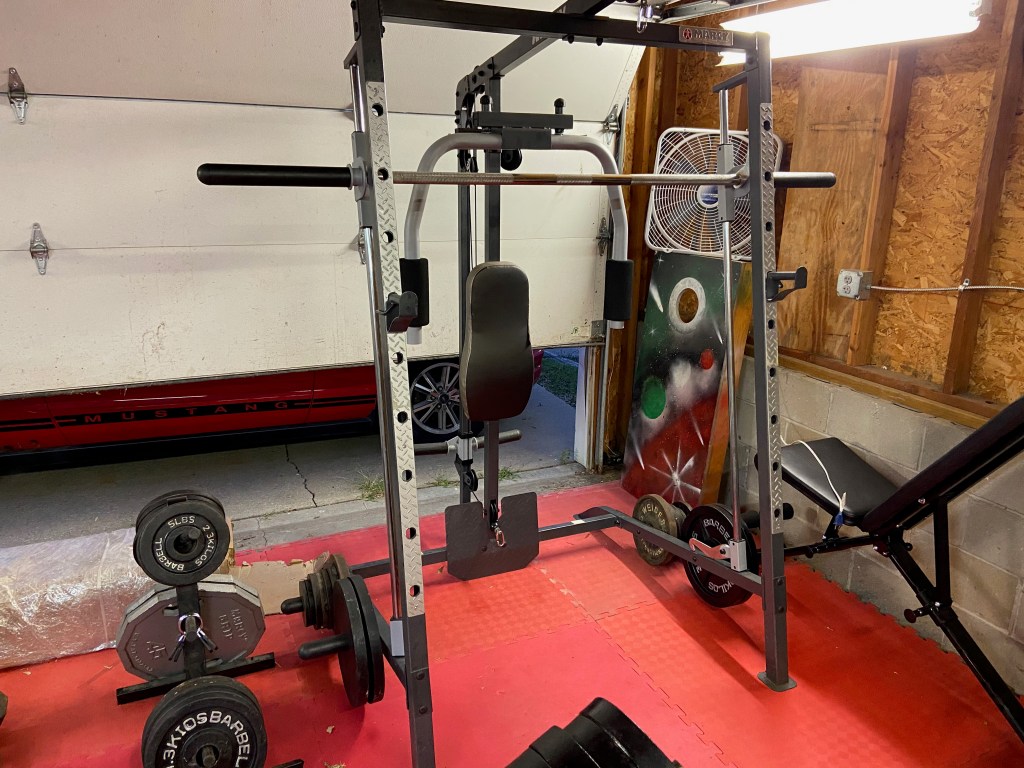
This lesson takes many shapes and sizes but revolves around 1 core concept: Trying to get too much done with one piece of equipment. I’ve seen some of this equipment in his garage when I first started lifting there in spring of 2020. There was a rack in the shape of an open cage that had j cups, smith machine, lat pulldown and a narrow pec deck. I will admit the last thing was nice to have around after we figured how to take advantage of it but the rest of it…garbage. Too light, cables too easy to pull off course, the smith machine non functional and a few other things that just didn’t work that should have. I don’t know how old thing was or the condition it was bought in, but it wasn’t what we needed for the lifting Pete and I were starting to do. I’d never seen that version of Frankenstein gym equipment before, nor do I ever want to see it again.

What I had seen before involved benches that had leg extensions/leg curl attachments on them. They are all over the place on Amazon and other sites that tailor more to home gyms than their commercial counterparts. The idea of being able to do those lifts at home is something worth looking into. The problem with these kinds of benches is that the attachment that makes them do legs gets in the way of positioning for the lifts that will be done using them the most, which will be presses and isolation tricep work. Pete’s initial bench when I started lifting in the garage was one of these and getting the feet positioned was a nightmare. Evidently these types of benches are popular on Amazon because they wouldn’t be all over the place if there wasn’t a market for them. They don’t even really deliver that well on the reason to buy them, either. Feet placement and being able to get into position on the bench freely without any awkwardness really does make a big difference when pressing.

One trend I have seen in the gym equipment market since I started looking 2 years ago has been to blend a power rack with cable based equipment. This particular brand of Frankenstein equipment is different from the open cage rack thing that I referenced above. The goal of this kind of rack/cable combination is to put a commercial gym in about a 12 square foot space. Instead of having just a lat pulldown/low row, there’s cables for crossovers and other chest movements. Cable based machines with weight stacks are some of the most used pieces of equipment in a commercial gym. Remember, most commercial gyms are aimed at people who put muscular development over strength. It makes sense why equipment makers would want to include it in with a good sturdy rack, especially if a lifter can squat inside it. The alternative is to just dedicate more space to a lat pulldown machine or one of the various cable pulley’s that are available. I am spoiled for space in Pete’s garage so I don’t particularly see the value of the cable/power rack combo for me. It just makes me ask “Why does this exist?”

The major issue with Frankenstein equipment is that it suffers from the same thing that multitasking does. By not focusing on doing one thing as well as it possibly can, it tends to make everything it does less effective. It’s not even a jack of all trades piece of equipment. It’s just not worth a damn. Design that openly favors one movement pattern will invariably be a detriment to another designed to be done on it or maybe outright ignore the best feature of it. The narrow pec deck on the already mentioned rack cage that no longer is in the gym is an example. The idea of having a pec deck in a home gym is really helpful because the movement really does help muscular development. Those standalone pec deck machines take up so much space because they are so wide. They are that way because the movement itself is designed to be done from the widest held position to the narrowest in an arc. This lift can be done with dumbbells, but the machine helps produce a consistent movement pattern. This is because the arc cannot exceed the limitations of the machine. There are limitations to how much the shoulder, elbow and even wrist joints can move when performing the lift but there is simply more room for imperfections in the arc of the movement.

What really makes the pec deck machine invaluable for any lifter is the ability to do the reverse movement, a rear deltoid fly. All lifters can get a benefit from this lift because the rear deltoids are one of the hardest muscles to actually isolate. That is for 2 major reasons. The location and size of the muscle makes it a very easy one to fail to isolate. The rear deltoid sits so close to the upper lats and traps, both much larger muscles, that failure to do a the lift perfectly means the lifter is doing more for the lat or trap than the intended muscle. It’s like how any elbow movement while doing a curl will bring the deltoid into the lift as well as put pressure on the joint and ligaments. Any lift that attempts to isolate the rear deltoid must be a precision movement to be effective. Dumbbells can perform this just like they can pec flies. The machine just helps really keep the arc backwards as perfect as possible. I bring this up because narrowness of the pec deck in the rack cage cut the range of motion by at least half and the didn’t even come close to allowing a rear deltoid fly. I got around this by doing super heavy pec flies and using dumbbells for rear deltoids. I did the best I could with what I had. Such a waste of potential all in the name of multitasking. Just like the monster Dr. Frankenstein created. One without a soul.

There is yet another trend that potentially involves Frankenstein. This one allows the lifter to build the monster themselves. A lot the power racks sold are marketed to potential home gym enthusiasts and commercial gym owners as the vehicle for being able to do every lift that involves a barbell without doing much moving. around That’s really enticing because the thing that commercial gyms are best at is derailing a lifting session. What makes the power rack attachment trend different from the rack cage is that the lifter is responsible for designing the potential monster. I have been tempted in the past to get attachments for the RML-390F I own but all desire to get beyond what I currently have evaporated awhile ago. The option is nice be able to keep the power rack as simple as possible or dial it up to 11 in an intelligent way. Don’t think this option isn’t expensive. I have about $1,600 invested in my RML-390F between the rack itself, safety straps, landmine, and spotter arms. There is a level beyond that with jammer arms, cable pulldown accessory, and dumbbell racks that I would love to have for it but none of it even remotely necessary now. I also know it’s at least $2,000 more. I don’t feel like becoming Dr. Frankenstein that much. I can see the attractiveness for someone who has the money but not the space. This isn’t the monster to avoid, but to be wary of creating.

Lesson 9: Mirrors are unnecessary.

Anyone with commercial gym experience should be able to get this one fairly easily. Since I went back to lifting at Genesis primarily a few weeks ago, I have seen so much posing in the mirrors. I mostly laugh at it. I do it every now and then and I shake my head at myself. There’s nothing to see! The vast majority of people in commercial gyms won’t see anything in the mirror. Lifters really need to have muscle stacked on top of muscle to see anything in it. What makes the posing even more ridiculous is that mirrors lie right to the face. I know when see my arms in the mirrors when I am doing curls that my arms anywhere near as big or getting isolated as they are showing me. I find them to be every bit as distracting for people in the gym as cell phones are.

The bigger reason for why mirrors are unnecessary is that they aren’t helpful to anyone lifting in the moment. Bodybuilders get a lot out of them because the body is the end product. For lifters focused on strength or power, the mirrors don’t help them with body position, squat depth or how forward they are before doing a deadlift. All of that is done by the lifter int he moment of lifting. For mirrors to be effective, they need to be directly in front of the lifter without distortion. That is a lot easier said than done. The mirrors at Genesis are all on the walls. The open racks in the CrossFit area line up perpendicularly from them. Therefore, any lift that employs the racks doesn’t get any benefits from them. Full plates block the view if I go to look for squat depth. I also know that that sideways head movement doesn’t help the movement at all. The same applies for the deadlift. Almost all lifts benefit the most from looking straight forward with a slight angle upward.

What is more effective than mirrors in a gym? Cell phones. They can take video that can be played back almost as soon as the lift is done, then analyzed on the spot for what can be done better on the next set or rep. Cell phones are distracting in general, but they do hold a very real specific use in a gym. Mirrors don’t, unless one is a bodybuilder. The only value they hold is in whatever vanity the gym owner seeks to have.

2023 Week 4 Training Log

January 23 – 29, 2023

Mark Brown

January 30, 2023

Monday
Scheduled rest day – recovery

Tuesday
Free squat, straight bar – 135 x 6, 225 x 6, 315 x 3, x 3; 345 x 3, x 3; 365 x 3, x 3; 385 x 3, x 2
Straight leg deadlifts, from floor – 275 x 3, x 3, x 3; 315 x 3, x 3
Barbell rows – 225 x 3, x 3, x 3, x 3, x 3, x 3
Adduction – 295 x 50, x 50
Abduction – 295 x 12, x 12, x 12
Leg Extensions – 115 x 12, 145 x 10, 175 x 10

Wednesday
Flat dumbbell press – 75 x 12, 100 x 12, 110 x 12, 115 x 6, 120 x 6, 125 x 4
Seated overhead press, dumbbells – 50 x 12, 55 x 12, 60 x 10, 65 x 7
Floor press, straight bar – 225 x 3, x 3, x 2, x 2, x 2, x 2
Side lateral raises, machine – 80 x 12, 95 x 12
Cable crossovers – 35 x 15, 50 x 15 (42.5 L), 57.7 x 12
Lat pulldowns, mag bar – 42.5 x 12, 50 x 12, 60 x 12, 70 x 12
Seated tricep extensions, machine – 90 x 12, 100 x 12, 110 x 12, 120 x 12, 130 x 12

Thursday
Tricep pushdowns, pronated grip shoulder width – 50 x 15, 57.5 x 15, 65 x 12, 72.5 x 12, 80 x 12, 87.5 x 12
Cable curls, narrow grip – 42.5 x 8, 50 x 8
Flat tricep press – 55 x 12, 65 x 12, 75 x 12, 85 x 8
Standing curls – 35 x 12
Preacher curls, dumbbells R then L – 35 x 12 (x 12), 40 x 12(x 12), 45 x 12(x 12), 50 x 8( x 8)

Friday
Scheduled rest day – recovery

Saturday
Unscheduled rest day – snow day

Sunday
Bench Press, from floor – 135 x 6, 225 x 6, 255 x 3, x 3, x 3; 275 x 3, x 3, x 3; 285 x 2, x 2
Incline press – 165 x 3, x 6; 185 x 6, 205 x 6, x 3, x 3
Standing overhead press, barbell – 135 x 3, x 3, x 3; 145 x 3, x 3, x 3; 155 x 3, x 3; 165 x 1
Tricep dips, machine – 105 x 12, x 12, 120 x 12, 135 x 12
Tricep pushdowns, v shape attachment – 50 x 15, 65 x 15, 72.5 x 15, 80 x 15, 87.5 x 15, 95 x 8
Lat pulldowns, mag grip – 42.5 x 12, 50 x 12, 60 x 12, 70 x 12
Seated bench press, negatives on machine – 285 for 5 seconds x 5, x 5

Steps/miles
Monday – 23,897 steps, 10.89 miles. Tuesday – 25,454 steps, 11.56 miles. Wednesday – 24,370 steps, 11.04 Thursday – 21,089 steps, 9.57 miles. Friday – 22,730 steps, 10.41 miles. Saturday – 2,340 steps, 1.10 miles. Sunday – 9,990 steps, 4.53 miles. Total – 129,870 steps, 59.1 miles.

Building a Better Home Gym, Part 3

Even MORE Lessons!

Mark Brown

January 25, 2022

Lesson 5: Specialty bars are luxuries.

The ultimate gym accessories are specialty bars. Yes, lat pulldown machines, t-bar rows and landmines are all very useful accessories but they don’t compare much to bars in the grand scheme of things. I use those 3 specific examples because they are all present in the garage gym at Pete’s house. They all see use, some more than others, but the speciality bars I bought over 2020/21 see far more of it. That is primarily because the various specialty bars give me a higher level of variance to my training than I can get anywhere else. This is especially true for pressing. Through no intention, Pete and I have built a gym that is made for making progress in pressing exercises. The 2 specialty squat bars I bought over the last 2 years have helped me make strides in that lift as well. Enough of them to allow me to firmly say that it is my best lift currently. The deadlift has benefited from a specialty bar as well. Being able to deadlift with both a stiff bar and more flexible deadlift bar has had a positive effect on me. My lack of progress at the top end isn’t because of the use or non-use of a deadlift bar.

What makes specialty bars particularly useful is how each individual bar impacts the movements that are done. That gives the lifter an opportunity to really work every part of the main lift that the bar is aiding as supplement. Some bars can do double duty. The cambered bar is both a good squat and pressing bar, for example. A benefit of variance is that it helps lifters mentally stay focused through doing something slightly different every few weeks. That concept doesn’t need specialty bars to be effective. I used it for most of the year using just the straight bar along with some other smaller accessories such as bands, chains and a shoulder saver pad. That makes specialty bars luxuries for any gym owner, public or private. The price range for most bars starts at about $300. Some specialty bars are close to that figure before shipping and some are closer to $500 when all is said and done. Very high end specialized bars can upwards of $700-800. This is no small chunk of change, especially when building a home gym is essentially a side project to everything else in life that needs paid for.

Getting specialty bars really does require a well thought out plan from both programming and financial angles. Even when the money is less of an issue, buying bars that need to be shipped to a house or gym isn’t like shopping for groceries. There is a lead time that needs to be understood when trying to implement them into a lifting plan. For me, that wasn’t much of an issue because I don’t compete. For others, it might be something to think about. Programming in specialty bars is something I have talked about in detail in other pieces, especially the equipment reviews I posted for each bar, so I will keep this part brief. They do take some time to learn. Shocking, I know. The thing that takes the longest to learn is how to use them in the program once the movements done on them are understood on a base level. What supplemental and accessory lifts go with them? Is more recovery required after using them over a straight bar? I could continue but those are just 2 of the questions someone wanting to bring in specialty bars needs to be prepared to have to come up with answers for after getting them. In that way, specialized bars force the lifter to learn how to program better so they can help it evolve in the most helpful way possible. I wouldn’t be where I am as a lifter without being forced to evolve as a result of buying so many specialized bars.

The cost of the bars means that they need to be used creatively once they are in the gym. This is the test of a home gym owner who strives to become better at programming. Ultimately, lifting programs come down to what equipment is available to use. High variance is still possible, as stated above, but there will be less of it when only using straight bars. Lifters, especially experienced ones, are fairly well known to the try figuring out everything that can be done given a particular piece of equipment. I’ve seen it at the gym many times. It has led to a lot of people looking like morons on Youtube or Facebook, but there are some things in the videos worth attempting. Barbells are best at multi-joint movements. As such, experiments with them that play off that will work best. Machines have specific movement patterns and ranges of motion so an experimentation will reflect that. That’s why the latter are so valuable for muscular development. Specialized bars have their own distinct movement patterns, effects and advantages.

Strongman presents the home gym owner with both an opportunity and a challenge. The sport itself has gained a bigger following, especially at the grassroots level, because it’s not as stringent as powerlifting is in some senses and is widely known to be creative with lifts done at competitions. Older World Strongest Man competitions were more varied than the ones of the last decade. They were very creative in the 1980s and 90s. The sport has seemed to settle on somewhat of a formula of events. The rule of equipment availability is more on display at a Strongman competition than anywhere else. Most competitions will have an overhead press with either an axel or log for reps or max. They will have a deadlift of some kind. There will be some conditioning medley possibly with a yoke and/or a farmer’s walk. There will also be some kind of atlas stone lift. Up to a pedestal, over a bar, up to the shoulder, or…something else. There could be a wildcard event like tire flipping, truck pulls, sandbag or keg tosses, etc. I have seen squats at competitions but that’s only relatively recently. These events focus lots of effort on different aspects of lifting. Farmer’s walks are a test of a lifter’s grip, first and foremost, as an example.

What this means for a home gym owner is that specific pieces of specialized bars/equipment are nigh mandatory to have. Yes, traditional lifting can be done to strengthen the body, but working with something close to what will be at the competitions will work best. Some of it is cheap, some of it isn’t. I can tell anyone from experience that logs are more expensive than nice powerlifting bars. Some pieces of equipment can be made if skilled enough at putting stuff together. Yokes can completed merely by welding pieces of pipe together. Farmer’s walk implements can be just about anything of heft with handles welded onto them. Atlas stones are made by pouring concrete into a mold and letting it harden. Concrete is a mixture that can go wrong for so many different reasons. My driveway at my house is proof of that. There is considerable skill in creating this nigh mandatory equipment. A home gym owner who decides to go into Strongman now is much better off than they were 10-15 years ago because logs, axels and such are much more commercially available. That doesn’t mean any of it is cheap. The big lesson here for Strongman focused home gyms is to prioritize equipment that will be at the vast majority of competitions. It still might be worth investing a membership at a Strongman focused gym as well.

Overall, the major takeaway I have had from the gym building experience over the last 2 years is that having a home gym is a luxury in general. Owning specialized bars is like the icing on top of the icing of the cake. They are useful to have around because they force mental development to speed up. They are necessary only in specific situations.

Lesson 6: Dumbbells are necessary but will probably be the most expensive item on the list all told.

Dumbbells are nigh universally useful in every kind of gym. Weightlifters would probably the only group of strength athletes that disagree with that statement for obvious reasons. However, there is also one undeniable truth about them: They are fucking expensive! Not freaking expensive. Not “Holy Jesus that’s a lot” expensive. Fucking expensive. The only other pieces of equipment in a home gym that rival a dumbbell set in price paid are power racks and machines with weight stacks. I’m going to go out on limb and say the vast majority of home gym owners don’t have a lot of the latter so buying a set of dumbbells is one of the 2 or 3 biggest commitments they will make. I remember buying hex shaped metal 35 pound dumbbells in somewhere around the middle of the 2010s very well. I bought it from Scheels and it cost me around $105 total. I believe they were about $1.29 per pound. That was my introduction into how expensive they can be. The bigger lesson came in the fall of 2020.

Dumbbells can be used in place of a barbell in any lift. The lifts change significantly because of the shapes of dumbbells when compared to barbells. They are valuable pieces of equipment for supplemental and accessory lifts. I benefited from Pete already having dumbbells from 25 up to 100 pounds, minus a pair of 90s. I added the few at the low end I had bought through the years to complete the set. Dumbbells were a major staple of my lifting routine before I started lifting in the garage with Pete. I did more with them than anything else. It is how I dealt with my lack of upper body strength from 2018 to early 2020. I’d have to change my entire thought process if he hadn’t put together his set. I can’t overstate how lucky I was to walk into this home gym situation.

Prior to the shutdowns in March and April of 2020, I was working up to the 125 pound dumbbells at Genesis for a set of 3-4 reps starting at about 95 pounds on pressing days regularly. Not lifting for 6 – 7 weeks is a long time. It doesn’t take much time off to lose those strength gains that have been made. When I first started back up in the garage, the 80 pounders were very heavy. I thought maybe it was the difference in the dumbbells themselves. Genesis has urethane Iron Grip dumbbells with thick handles up to 125 pounds in the location I use. Pete has mostly iron hex dumbbells. Some of the handles are thinner and have more rust or damaged knurling than others in the set. Turns out I was just weaker. It didn’t stop me looking into dumbbells above 100 pounds because I knew we would need them at some point.

I thought I would get back to using the 100s or above by the fall of 2020 so I ordered a pair of 110 and 115 pound rubber dumbbells from Rogue Fitness. They are fantastic. The size of the latter looks a bit intimidating. The heads of the 115s are the size of a smallish teenagers head. I ate the largest shipping cost I’ve ever paid for anything only to find out that I was still far from being able to use them. All told it was about $660 cost to get those 2 pairs of dumbbells. Around $160 of it was shipping, probably because they could only get to me by freight. If that number is shocking, then consider the prices on the various secondary markets at the time were even dumber. I swear people thought their stuff was made out of gold in 2020. I knew it wasn’t going to be cheap to get and it was well worth the investment. Pete added a pair 120 pound dumbbells to really round out the set after that. The 120s have a thinner handle. They are much harder to lift than the Iron Grip ones at the gym are. It’s not even really that close. The gap at 105 pounds is more significant than the one at 90, but I don’t think I’ll have the chance to fill it anytime soon.

I am willing to detail the cost of the 110 and 115 pound dumbbells because I want people to really understand the financial commitment being made here. Prefab dumbbells are a great tool for lifting and making strength, power and muscular development but will probably be the most expensive and perhaps longest part of the gym building process. There are alternatives. I’ve seen ads for dozens of companies that offer up adjustable dumbbells. Some from 5-50. Others from 5-80. These are all viable solutions to building a full prefab set, especially for lifters who aren’t regularly pressing heavy. That could mean gen pop lifters as well as bodybuilders, who value volume over intensity. I have yet to see any ad for adjustable dumbbells up into the ranges that I dumbbell press (105-125). Doesn’t mean there aren’t any out there but they have less visibility. Therefore, there is an impediment to growth if a lifter only has adjustable dumbbells at their convenience. The thought of spending $660 on 2 pairs of heavy dumbbells might be sobering for some home gym builders but it is reality. Keep in mind the adjustable dumbbells will run anywhere from $400-700, regardless.

There are still other alternatives. Fatbells are a fairly unique piece of equipment. They are a mix of a dumbbell and a kettlebell. I have never used them personally. I’d love to try them but my resources these days are needed elsewhere in my life. The handle in the middle of a hollowed out kettlebell gives a different feeling for the lifter. I’ve seen some videos on Youtube with lifters using them, notably Brian Shaw. Note that these are also quite expensive and do not come as pairs, at least on Rogue Fitness’ website. Plate loadable dumbbells have always been an alternative. I’ve never been a big fan of them because the plates always get in the way. I’ve stated many times on other essays that the American cambered bar by EliteFTS feels like an offset dumbbell press. The offset feel makes it quite a different lift but the concept of pressing with the hands in a neutral or near position is really similar to a dumbbell press. Having lifted with the bar for near 2 years now, I can say very firmly that there is a big difference between holding the weight physically in the hands. That’s why I so firmly believe dumbbells need to be in every gym in some form.

The one lift where the American cambered bar is much better for strength development than dumbbells is seated overhead press. A lot of this comes from the ability to get the weight into position is much easier using the bar than dumbbells. I use the safety straps on the power rack to put the bar at shoulder height and essentially pin press with it. I find it incredibly hard to get 75 pound dumbbells to my shoulder, even doing that seated clean-cheater curl thing that looks ugly as hell. I can press that weight for 5-6 reps, but I find energy isn’t worth wasting merely getting it up to position at the base of the shoulder. It really does suck that much. Therefore, I use seated dumbbell press for hypertrophy and the American cambered bar for strength work. The American cambered bar isn’t the only multigrain bar on the marketplace, but it the one I have the most experience with.

I honestly don’t know what I would do if I hadn’t walked into my current home gym situation. Inevitably I’ll have to find out one day but I’m glad it isn’t now. One thing I do know is it will be ridiculously expensive. A bit of a side lesson steams involving dumbbells stems from looking around on Rogue Fitnesses’ website for other specific terminology on lessons I’ve written about. I found the rubber dumbbells I purchased in late September 2020 were now $400 and $420 for the 110 and 115s respectively. Throw in shipping cost and that’s $1,159.03. The lesson should be fairly obvious: Don’t wait to get what is needed for the gym in special cases, even if it can’t be used immediately.

2023 Week 3 Training Log

January 16 – 22

Mark Brown

January 23, 2023

Monday
Scheduled rest day – recovery

Tuesday
Free squat, straight bar – 135 x 6, 225 x 6, 315 x 3, x 3, x 3, x 3; 345 x 3, x 3, x 3, x 3
Leg press, outside low position – 388 x 15, 478 x 15, 568 x 15, 658 x 15
Leg press, narrow low position – 388 x 15, 478 x 15, 568 x 15, 658 x 15
Preacher curls, dumbbells R then L – 35 x 12(x 12), 45 x 12(x 12), x 12(x 12), 50 x 8(x 8)
Calf raises, seated leg press machine – 140kgs x 50, 150kg x 30, 160kg x 25, 170kg x 25
Adduction, machine – 295 x 50, x 50
Abduction, machine – 295 x 10, x 10, x 10, x 10

Wednesday
Flat dumbbell press – 75 x 12, 105 x 12, 110 x 7, 115 x 7, 120 x 5, 125 x 3
Seated overhead press, dumbbells – 50 x 12, 55 x 12, 60 x 10, 65 x 8
Tricep pushdowns 50 x 10, 60 x 10
Floor press, straight bar – 225 x 3, x 3, x 3, x 3, x 3, x 3
Chest press, wide machine unilateral simultaneous – 90 x 10, 115 x 8, 90 x 8, x 8
Side lateral raises, machine – 80 x 12, 95 x 12, 105 x 10
Seated tricep extensions – 90 x 12, 100 x 12, 110 x 12, 120 x 10, 130 x 10

Thursday
Scheduled rest day – recovery

Friday
Scheduled rest day – recovery

Saturday
Deadlift, from floor – 135 x 6, 225 x 6, 315 x 3, x 3, x 3, x 3, x 1; 345 x 2, x 2, x 2, x 2, x 1
Barbell rows – 225 x 3, x 3, x 3, x 3, x 3, x 3, x 3, x 3

Sunday
Bench press, chains 45 lb added at top – 135 x 6, 225 x 6, 225 w/ chain x 6, 235 w/chain x 3, 245 w/chain x 3, x 3; 255 w/chain x 2
Incline press, inside grip – 225 x 3, x 3, x 3, x 3
Seated overhead press, American cambered bar – 128 x 6, 138 x 6, 148 x 3, x 3; 158 x 3, x 3
Muscle mace, giant set – 50 x 10(x 8)(x 8), 55 x 10( x 8)(x 8), 60 x 10(x 8)(x 8)
Straight arm lat pulldowns – 70 x 10, x 10; 80 x 8, x 8

Steps/Miles
Monday – 19,691 steps, 8.93 miles. Tuesday – 22,409 steps, 10.16 miles. Wednesday – 19,392 steps, 8.71 miles. Thursday – 19,685 steps, 8.94 miles. Friday – 28,743 steps, 13.13 miles. Saturday – 8,936 steps, 4.6 miles. Sunday – 10,149 steps, 5.56 miles. Total – 129,005 steps, 60.03 miles.

Building a Better Home Gym, Part 2

More Lessons Experienced Over the Last 2 Years

Mark Brown

January 19, 2023

Lesson 3: Take inventory of the resources that can be thrown at the project before buying anything.

The word budget tends to call money to the mind, but it applies to everything that can be called a limited resource. It will determine almost everything that goes into the planned home gym and what kind of lifting gets done in that space. Money and space are the two limited resources that will probably be most on the mind of the person developing a home gym. They are the 2 biggest and most important limiting factors when it comes to equipment. There are a few specific lessons I have learned in helping put together the garage gym I do my lifting in regarding resource management.

First, the amount of space one has and what kind of space it is will determine what kind of equipment can fit in it. Larger and taller spaces will allow for more equipment to be put in it. The latter can be just as important as the former. A lot of power and squat racks are 90” inches in height and they are a challenge to put inside a house with typical room dimensions. Garage spaces are ideal for them. It just depends on if someone doesn’t mind parking outside for the entirety of the year or not. Many makers and sellers of high quality dedicated bench press and combo racks offer variations of them that include spotter arms, which makes them safer all around. Those will fit just about anywhere.

Floors are just as important as ceiling heights. Someone designing a home gym has to take into account if the floor will be table to take the strain from both the live weight and dead weight of a potential home gym set up. Dropping loaded barbells and dumbbells is largely the safest way to deal with loads that are too heavy, failed lifts or weightlifting. Proper lifting platforms are heavy duty pieces of equipment that are designed to survive weight dropped from at least 5 feet. I’d like to think the floors in homes could do the same but I’m not sure I’d like to find out in mine. Concrete with padding of some kind is as close to most home gym owners will get to having a proper lifting platform. Don’t assume concrete will hold though. It is one of those materials that can be brittle if not mixed properly. The floor of the commercial gym I have a membership at has had repeated damage over the last few years to the floor 4-5 feet in front of rack with the heaviest dumbbells. It’s not a coincidence.

Narrow rooms make for spaces best used for cardio work, bodyweight exercises and function strength work. Barbell work requires quite a bit of space to pull off comfortably. This situation is like when people put pool tables into rooms that are a bit too small. It’s definitely possible to get good at playing pool in that room, but it’s more of a case adapting to the environment than anything else. Yes, a lot of people have put power racks in small-ish rooms and made it work but it takes a high amount of organization to make everything needed for it to fit or not caring about anything else in it. Just make it easy.

Monetary limitations are probably a bigger impediment than space for a lot of people. Space is a bit a more adaptable than a lack of monetary resources. Working around limited space is easier to do when money doesn’t become a brick wall because the market for small space lifting equipment has exploded over the last couple years. It has been especially done so for people who are best described as “gen pop” lifters. That is short for “general population,” a distinction used for lifters whose primary goal is better health. That tends to mean a bigger emphasis on what Samuel Brown, formerly of the EliteFTS TableTalk podcast, called “looking better naked.” I have seen numerous companies come out with lifting products that are best described as computers with cable attachments. They offer subscription services like Peloton does. They are really expensive pieces of equipment but they do offer an alternative for someone with the money and a lack of space. There’s also never been more gadget type lifting devices or apparatuses that mimic traditional barbell work using resistance bands on the market than now. Once again, not my cup of tea but better than nothing. All of this works very well in small and/or narrow rooms.

When the space budget isn’t a big issue and a lifting plan has been established, money will be the deciding factor of what makes its way to the home gym. If someone is building a home gym in the vein of a commercial gym, they will be targeting barbells and standard 2 inch plates along with a lat pulldown machine and maybe some more specific equipment. Gym equipment is expensive. Don’t let anyone say otherwise. There are companies out there that sell standard straight barbells for lower prices, but it’s still a heavy up front investment for anything. It is especially so when shipping gets calculated into the overall price. Barbells come in varieties of finishes. They tend to bring the price of the bars up regardless of seller. Bare steel bars are cheaper but are more maintenance for the home gym owner. A good power bar will cost somewhere between $300 and $400 before the shipping cost comes into play. Specialty bars are often more expensive than that. The secondary market can be useful to find equipment but that’s far from guaranteed. Some local markets can be quite dry, especially in seller’s markets.

Lesson 4: Start with the basics before filling out the gym with accessories!

Social media is very good at promoting all kinds of gym equipment. It’s enough to to make someone go down a rabbit hole that just ends up creating a room full of stuff that never gets used after the initial phase of gym building. Some of it is gimmicky pieces of plastic that serve very, very isolated purposes. Some are alternative pieces of equipment designed to mimic the effect of isolation based machines that are the staples of commercial gyms. Still others are alternatives to very standard traditional gym equipment. They are meant to deliver a different yet similar effect for the lifter. It’s really easy to look at all of these alternatives to straight bars, benches, racks, dumbbells etc with a level of excitement but that feeling needs to be restrained in the beginning.

Straight barbells, regardless of being the power or olympic variety, are the primary means to push, squat or pull a load for lifters. They have been for a very long time. The only established strength sport that doesn’t really employ them is Strongman. That is a very large reason why it is growing in many strength athlete circles. The sheer amount of equipment possible to be used at a Strongman competition is limited merely by resources and imagination. Straight barbells are still used in Strongman training, but I haven’t seen a lot of standard straight barbells as events at competitions.

Not all straight bars are made for the same thing so choose wisely. Power bars have more aggressive knurling than olympic bars. The former are meant to be held very firmly in place. That’s why the grip pattern on the barbell digs in a bit more into the hands. Bench press and deadlifts are 2 lifts that really benefit from a hard grip on the barbell. The middle knurling helps anchor the bar to the body on a squat. Everything in a power bar is designed to keep the bar in place in the hands during a lift. Olympic bars feature less knurling because the primary lifts done with them (snatch, clean and jerk, half jerk) requires some movement of the bar in the hands. Aggressive knurling wouldn’t aid those lifts and would damage the palms in both the short and long terms. Combo bars are good for both styles of lifting and will help save hands in the long run. I’ve felt my hands remind me to start looking for either an olympic or combo bar many times after length pressing sessions. Aggressive knurling is no joke.

Bars don’t last forever. The bushings on the inside of the sleeves and knurling will wear out over time. Old power bars still remain useful as pressing and pulling bars, especially when using pins as aids. Metal pins can be quite damaging to bars. especially the knurling. Pete has had one forever. My first year lifting in his garage, 2020, one of the ends became loose when deadlifting. We got it put back on but I knew I would have to get a straight bar of my own at some point to ensure we had one should it fall apart and not come back together. Finding anyone with a stock of bars when I began looking for one in the fall of 2020 was very difficult. The bars started coming back in the fall of that year. It was definitely worth waiting to get the one I did end up buying, a stainless steel Ohio Power Bar from Rogue Fitness.

Lift specific straight bars are available but hardly necessary for beginners or even intermediate lifters. Squat, bench press and deadlift bar variants have been around a long time and feature differences that make them more useful to the specific lift they are designed to do. Deadlift bars have more whip than either bench press or squat bars because they are designed to help the lifter break the floor when pulling. It accomplishes this by releasing the plates added to the sleeves gradually instead of all of them at once. “Gradually” here means less than a second but that can be the difference between a good pull or a no rep. Also, the effect of the high whip won’t really be felt until someone is pulling a bar with 3 full plates on it. In my experience, 2 full plates come off the floor at the same time so a deadlift bar isn’t going to helpful until they can deadlift 315 pounds. They also lack middle knurling because the only reason to have it on a bar is so that is can be back squatted with. Squat and bench press bars are designed to resist as much deformation as possible because they are made with super heavy loads in mind, so they have very low whip. Only lifters training for competitions really need to even think about them. It definitely falls into the specialty bar category.

Having lifted only in a commercial gym and not really watching any fitness media on Youtube, I had no experience with power racks prior to 2020. The commercial gym I am a member of, Genesis Health Clubs, has lift specific racks at the location I primarily use. When it came time to look for a better solution to a rack that could pull triple duty for pulls, squats and bench press, I didn’t really know what I was looking for. Budget was also something I had to really think about. The initial squat rack I got from Rogue sufficed for a couple of months before I found I needed a bit more safety for the lifting I was doing. I converted the squat rack to a full on power rack and have never looked back. After having one for 2+ years, I don’t understand why commercial gyms don’t invest in power racks. They are incredibly versatile and provide a lot more safety than traditional bench press and squat racks. If someone is going to start a home gym, a power rack should be at the top of the list. It doesn’t need to be super premium or come with a lot of attachments and such. It just needs to be sturdy enough for the lifting being done in it. It will also likely be the most expensive singular piece of equipment in the gym unless machines are also on the plans.

The singular hardest piece of equipment to find outside of bars in 2020 was a good bench. When a lifter has a power rack, a bench that is independent of it is necessary. That kind of goes without saying. There are a lot of options out there, especially for those who shop on Amazon, and they aren’t particularly clear on how they will do when gotten. All benches have a maximum total weight it can handle but the dimensions of the bench can have a heavy influence on how a lift can be done. This is where my previous gym experience really helped when trying to aid Pete when he was looking. In my experience, Amazon and bigger online stores will have more of a variety brands to choose from but that choicer has a cost. Buying from Rogue Fitness, EliteFTS or one of the one premium brands will result in a bigger hit to the budget but their equipment is designed for frequent, heavy loads because they outfit public or commercial gyms and athletic facilities for universities and professional sports teams.

The first bench Pete got for the garage in 2020 was interesting. I didn’t know that there were higher, narrower independent benches out there. I’d only really experienced lower, broader benches prior to it. It was rated for about 600 pounds and both me and Pete were flirting with it so a new option had to be considered. Adjustable benches make the most sense to get for a home gym because it allows for greater variety of lifts can be done with 1 singular piece of equipment. The tradeoff is that that they tend to be more expensive than flat benches and the mechanism that is responsible for keeping the inclined bench in position may be less than great. An adjustable bench will only deliver more bang for the buck if it’s worthwhile using in the flat position. Most of my pressing I work is done in that position so it has to hold up there. It sounds a bit too obvious to point out but I have experienced using quite a few adjustable benches where the hinge on them were not in the right spot or awkward placed. Is it worth having both a flat and adjustable bench? I think so, but the latter is more important if can only afford one.

Plates being necessary goes without saying but the sheer variety of them does deserve a discussion. Iron plates are a great place to start. They generally are nice and round, which is helpful for deadlifting. They also get very cold in winter so be aware of that if training in cold weather. Cold steel saps dexterity in your fingers and causes major freezer burn on the palms. I felt that a couple weeks ago in the garage. I had insulated gloves from work with me so I was able to work through the sets. Fortunately it was a cambered bar squat. Pressing would have complicated matters. I really like iron plates. Rubber coated are nice because the freezer burn effect isn’t as pronounced. Some have handles worked into the place for easy of carry but tend to be more expensive than iron plates. Round plates beat ones that have straight edges, especially if a lot of deadlifting and other pulls are done. Bumper plates are very popular because they can function where iron plates would while allowing for proper Weightlifting lifts to be done. In that way, they can pull double duty. I got a pair of 45 pound plates and 25 pound plates in 2020 with the intention of getting more. I found that was enough to do the lifting I was doing in the garage. They are very bulky and take up a lot of space on the bar. For more pronounced strength improvement, lifters should shy away from bumpers. Skinnier plates allow more weight to be lifted ultimately. That said, any lifter just starting a home gym doesn’t need the calibrated plates used in powerlifting gyms and competitions unless training for it. They are very expensive. Most lifters in the United States also don’t need to be using plates in which the measurement of weight is kilograms unless prepping for competition.

A few more things are useful to know when going about getting plates. The most useless thing in most gyms are 35 pound plates. On the surface they don’t seem to be useless but they through the bar math off and causes a lot more shifting of plates around than anything else. That may not seem like much but there are certain days where every bit of energy needs to be focused on the lifting. Pulling plates off for every set just slows the lifting down and saps energy. Pete has some in his collection of plates. Their sole purpose is to provide counterweight for the power rack on the storage pins. They are just expensive paper weights and I don’t think I’m being harsh. When in the form of bumper plates, 35 pound plates carry some more value because plates are added to the bar more than they are taken off it. All the same, if I needed to do 105 pounds for something I’d probably just skip it unless that weight was a true 1RM or a heavy working set. The smallest plates, 2.5 pounds or micro plates, have far more use than 35 pound ones because progress at the top end heavy single, double or triple sets will be made in small jumps. This is especially true in weightlifting.

2023 Week 2 Training Log

January 9 – 15, 2023

Mark Brown

January 16, 2023

Monday
Scheduled rest day – Recovery

Tuesday
Free squat, straight bar – 135 x 6, 225 x 6, 315 x 3, x 3; 345 x 3, x 3; 365 x 3, x 3; 385 x 3, x 3; 405 x 2
Straight leg deadlift, from floor pronated grip – 225 x 3, x 3; 275 x 3, x 3, x 3, x 3
Preacher curls, dumbbells R then L – 30 x 12( x 12), 35 x 12(x 12), 40 x12(x 12), 45 x 12(x 12)
Calf raises, seated leg press machine – 140kg x 40, 150kg x 25, 160kg x 25, 170kg x 25
Adduction, machine – 295 x 10, x 10, x 10
Leg extensions – 115 x 12, 145 x 10, 160 x 10, 175 x 10, 190 x 8
Abduction, machine – 295 x 20, x 20, x 20, x 20, x 20

Wednesday
Flat dumbbell press – 65 x 10, 105 x 10, 110 x 9, 115 x 7, 120 x 5, 125 x 4
Seated overhead press, dumbbells – 50 x 12, 55 x 12, 60 x 10, 65 x 8
Floor press – 225 x 3, x 3, x 3, x 3, x 3, x 3
Flat tricep press, long dumbbells – 65 x 10, 75 x 10
Chest press, hammer press machine unilateral – 90 x 8, 115 x 6, 135 x 3
Seated lat pulldown, neutral grip – 42.5 x 10, 50 x 10, 60 x 10
Seated lat pulldown, the mag – 60 x 10, 70 x 8
Rear delt flies – 100 x 10, 115 x 10

Thursday
Tricep pushdowns, prorated grip – 50 x 15, 65 x 15, 72.5 x 15, 80 x 15, 87.5 x 12
Cable curls, narrow grip – 42.5 x 12, 50 x 12, 57.5 x 12, 65 x 12
Rolling tricep press, dumbbells unilateral – 25 x 12, 30 x 10, 35 x 8
Standing curls, dumbbells unilateral – 35 x 8, 40 x 8, 45 x 8
Preacher curls, plate loaded machine single arm R then L – 45 x 10(x 10), 25 x 10(x 10), 35 x 10(x 10)
Weights tricep dips, 75 x 10, 90 x 10
Seated tricep extensions, machine – 90 x 12, 100 x 12, 110 x 12, 120 x 12

Friday
Scheduled rest day – recovery

Saturday
Unscheduled rest day – mental reset

Sunday
Bench press, Chains 45 lbs at top – 135 x 12, 225 x 6, 225 w/chain x 6, 235 w/chain x 3, x 3; 245 w/chain x 3 x 3, 255 w/chain x 3, 265 w/chain x 2
Incline press, narrow grip – 225 x 3, x 3, x 3, x 3
Seated overhead press, American cambered bar – 128 x 6, 138 x 6, 148 x 6, 158 x 3, x 3; 168 x 1, x 1, x 1
Muscle mace giant set – 50 x 10(x 8)(x 8), x 10(x 8)(x 8); 55 x 10(x 8)(x 8), x 10(x 8)(x 8)
Rack pushups – bodyweight x 10, x 10, x 10, x 10
Dumbbell flies – 20 x 12, 30 x 12

Steps/Miles
Monday – 21,578 steps, 9.89 miles. Tuesday – 23,634 steps, 10.76 miles. Wednesday – 24,765 steps, 11.26 miles. Thursday – 22,831 steps, 10.27 miles. Friday – 23,275 steps, 10.64 miles. Saturday – 1,613 steps, .76 miles. Sunday – 5,585 steps, 2.54 miles. Total – 123,281 steps, 56.12 miles.

Building a Better Home Gym

Lessons Experienced Over The Past 2 Years

Mark Brown

January 12, 2023

I started lifting in high school for baseball in my senior year of high school then stopped for reasons that I there is no real explanation for. When I started doing it again in 2013, I worked out through a commercial gym chain called Aspen Athletic Clubs. They are still around but many of them in the Des Moines area were purchased by Genesis Health Clubs a few years ago. The gym where I did my lifting was one of such locations. I learned a lot of lessons training in the first location and the second, which was literally just down the street.The gym closed down, like everything else public related through March and April here in Iowa, and I was forced to move in a different direction with my lifting. Strength training is a serious hobby for me. I don’t ever see myself competing in any powerlifting or strongman but I would never say it’s an impossibility. Thus, I need to keep my grind going if that ever becomes a reality in any meaningful way.

The movement away from a commercial gym atmosphere led me to lift with a buddy, whose name is Pete, from work who had put together enough equipment to really get a solid lifting session in. He’s older than I am by 12 years and has been at it for far longer than me. We get on well because we’re both certified gym bros who actually take it seriously. The lessons I learned from lifting in the garage he rents have come in different forms. My ability to plan a program, how to physically lift, and how to structure my life around what needs done has improved greatly from working in the garage compared to what I had at Genesis. I would never diss Genesis so don’t take this statement that way. I am still a member of the chain because I do need it as a secondary and it is a good place to get lifting done. This essay, executed over several blog entries, will focus in on what I learned in building the garage into the home gym that it is. These are not listed by rank of importance, by the way.

Lesson 1: Is it necessary?

This is the first question anyone thinking of creating a home gym should ask themselves. Yes, not owning one’s own equipment means that any lifter is effectively renting it from the company who owns the gym. This is not a terrible arrangement for most people who lift. Memberships can seem and be expensive but buying the amount of equipment necessary to really build a multifaceted home gym is in the thousands of dollars. It is a serious upfront monetary cost. Some items can be gotten for nothing, close to it or quite cheap but it may require driving long ways to get the equipment or specific vehicles to pick it up. Old tractor tires or larger construction vehicle tires are great pieces of equipment for a strongman focused gym, for example. The tire may be free or cheap but there will be a cost to picking it up and bringing it home. More on the expenses later.

A second factor involves the lifter’s discipline, strategy and goals. New lifters don’t need to be building home gyms for any reason other than there’s no other options available. The biggest challenge new lifters face is the getting into a regular rhythm and develop that discipline that is necessary to make progress. Public strength training and commercial gyms are made to help people get those 2 challenges started and begin the learning process that comes with lifting. That knowledge is what will be the primary aid the developing lifter uses when deciding what equipment is necessary should it reach that point.

Home gyms are attractive to experienced lifters because the base of knowledge has been built at a gym somewhere. It comes in many forms. They have learned what equipment they need to accomplish the goals they are after. That kind of information is only learned by years of strength training. They know the kind of grind it takes to get there and the distractions that inherently exist when a lot of other people are trying to the same thing in the same area. Having lifted primarily in a commercial gym from 2013 to 2020, I can confirm getting stuff done can be quite difficult. A public gym isn’t just a place to get stronger but functions the same way a local bar does. It can be very annoying but doesn’t become necessary grounds for spending money to create a home gym oasis until it starts to actually interfere with hitting the goals. Being really committed to the goal is necessary because there’s a lot of good gym equipment sitting around in homes bought in 2020 that barely gets used now. The equipment is only worth getting if it is going to be used for its intended purpose primarily.

Commercial gyms have the worst reputations as far as the behavior of other lifters goes. They see the greatest mix of new/experienced, young/old, committed/uncommitted, etc lifters when compared to public gyms that focus on strength and power development. Strongman centric gyms would also fall under the latter’s wing. I haven’t ever stepped in a CrossFit gym because I have never been particularly interested in that style of training so I will not speak to the culture of them. Home gyms speak to lifters who don’t see the value of being part of a public gym culture. I still see value to there because I can watch other people lift and maybe see something I haven’t before. Of course, I have the garage gym available to me and do the vast majority of my training in it but I do consider it very much a luxury.

I know there are non-training reasons for developing a private space to get to work needed done. I’m not the person to tell that a 30-45 minute drive is too long to go to get to the gym because it takes about 25 minutes to get to either the garage or the Merle Hay Genesis from my house. I can understand the desire to build a home gym in a person who actively needs to stay at home more often. Covid has freaked out a lot of people. Just the idea of being around other people in a confined space has taken on a difference level of risk since March of 2020. Some people feel safer lifting at home. While I don’t freak out over such concerns, I can completely understand them.

Lesson 2: Lifting plans determine equipment.

As loyal readers will have no doubt noticed quite a bit of time of this blog has been devoted to programming. That wasn’t intentional, but it shows how valuable planning has become to me. This year’s training has showed me how important planning really is when it comes to making physical and mental progress in the gym. This lesson comes in 2 different parts regarding planning. First, there is the plan for the lifting that aimed to be done in the home gym then there is the planning involved in the equipment inside said gym. Knowing what the goal of the strength training to be done in the gym really helps when determining what equipment the lifters needs in it. This is’t exactly a major revelation. It is much more striking in the moment when a lifter realizes what they really want or need to do but they don’t have the equipment to actually do it. Equipment, or the lack thereof, provides a limiting factor for any plan. There are always roundabout methods of getting something accomplished, but they may not be as effective or efficient as desired.

It isn’t absolutely necessary to have a specific program in mind when putting together plans for the equipment needed for a home gym but it does really help. Just understanding the general direction the boat is going is enough to at least get started. Unless a person has a big up front budget, it will take time to assemble the whole vision in their head. Each strength sport has equipment for it that is essential and/or mandatory. That needs to be accounted for if the goal is actually competing seriously. Some equipment will cross over, but sport specific stuff with determine what kind of gym it is. Strongman is a strength sport that requires competitors improve with equipment that will be at shows and sees benefits from traditional strength training and powerlifting. Weightlifting just requires an olympic or combo bar, bumper plates and a very sturdy floor. The last thing cannot be overlooked. The safest way for a lifter to deal with weight overhead after a press, jerk, or snatch has been completed is to drop the bar in front on a flat, dead surface at least a foot in front of them. One can bring the bar back down to the front rack position then reversing the clean process but it is less safe and more taxing on the body. It is also far less noisy than dropping the barbell in front, so there it is that for those who care. Bodybuilding involves more specific movements because individual muscles or muscle groups, big or small, are the actual targets of the lifting not the equipment. It’s a big ask for a home gym.

What’s most important to understand is that shifts in goals will lead to a shift in programming. That means there’s a good possibility that there will become a need for new or different equipment for the gym. Improving it with new pieces of equipment is to be expected. However, having a program or lifting plan in place will help create a disciplined structure to the purchases made for the home gym. There are a lot of companies out there that sell a lot of really good equipment out there. The problem is that not all of it is particularly useful to every lifter. Knowing what will best work in the next phase of development requires research so as to not waste financial resources on a piece of equipment. With that said, what is a “waste of resources” at the moment will not always stay that way. The Safety Squat Yoke Bar from EliteFTS is a great example of that. I wasn’t able to use the bar regularly until about a year after I got it because I wasn’t strong enough. It has since become an invaluable part of my lifting program. The other thing to remember is that boredom is the great enemy of every lifter. New equipment scratches an itch that seduces anyone with any sense of curiosity. A lifter also has to do their due diligence to find out how best that something works, as well.

Having a plan or program prior to putting together a home gym with help drive the monetary resources to where they need to go the most. This is true even for people for whom budget isn’t an issue. Distractions are a dime a dozen in the world of gym equipment. Having a disciplined structure in place helps minimize the effect of those distractions.

2023 Week 1 Training Log

January 2 – 8, 2023

Mark Brown

January 9, 2023

Monday
Scheduled Rest Day – Keeping on schedule

Tuesday
Free Squat, Straight Bar – 135 x 6, 225 x 6. 315 x 3, x 3; 345 x 3, x 3; 345 x 3, x 3; 365 x 3, x 3; 385 x 3, x 3
Stiff Leg Deadlift – 225 x 3, x 3; 275 x 3, x 3
Leg Press, low outside foot position then low narrow foot position superset – 388 x 20(x 12), 478 x 15(x 15), 568 x 15(x 15), 658 x 15(x 15)
Standing Leg Curls, R then L – 35 x 8(x 8), 60 x 8(x 8)
Leg Extensions – 115 x 10, 145 x 10, 175 x 10
Calf Raises, Seated Leg Press – 230 x 20, 270 x 15, 310 x 15
Abduction, Machine – 295 x 20, x 20, x 20, x 20, x 20
Adduction, Machine – 295 x 10, x 10, x 10, x 10, x 10

Wednesday
Flat Dumbbell Press – 75 x 10, 105 x 10, 110 x 8, 115 x 8, 120 x 6,125 x 3
Seated Overhead Dumbbell Press – 50 x 12, 60 x 8, 65 x 6
Tricep Pushdowns, V shape attachment – 70 x 12, x 12, x 12
Flat Tricep Press, EZ Curl Bar – 45 x 8, 65 x 10, 75 x 10
Straight Arm Lat Pulldown – 72.5 x 10, x 10; 80 x 8, x 8
Chest Press, Hammer Strength Wide Press Machine Unilateral – 90 x 8, 135 x 5, x 5; 145 x 4
Tricep Extensions, Machine – 90 x 12, 100 x 12, 110 x 12, 120 x 12

Thursday
Scheduled Rest Day – Recovery

Friday
Scheduled Rest Day – Recovery

Saturday
Deadlifts, stiff bar from floor – 135 x 6, 225 x 6, 315 x 3, x 3; 365 x 1, x 1, x 1; 385 x 1, x 1, x 1; 405 x 1, x 1, x 1; 415 x 1
Barbell Rows, stiff bar – 225 x 3, x 3, x 3, x 3, x 3, x 3, x 3, x 3
Hip Thrusts, barbell – 245 x 8, 275 x 12, 295 x 10, 315 x 12
Leg curls, single leg R then L – 53 x 8(x 8), 78 x 8(x 8), 93 x 8(x 8)
Preacher Curls, dumbbells R then L – 35 x 12(x 12), 40 x 12(x 12), 45 x 12(x 12)
Back Row Machine, unilateral R and L – 90 x 10, 100 x 8, 115 x 8, x 8
Abduction – 295 x 20, x 20, x 20, x 20, x 20
Adduction – 295 x 10, x 5
Calf Raises, seated leg press machine – 140kg x 25, 150kg x 25, 160kg x 25, 170kg x 25

Sunday
Bench Press, Chains weight +45 lbs at bottom, 60 lbs at top – 135 x 6, 225 x 6, 225 w/chains x 6, 235 w/chains x 3, x 3; 245 w/chains x 3, x 3
Incline Press, inside grip – 225 x 2, x 3, x 3, x 3
Seated Overhead Press, american cambered bar – 128 x 6, 138 x 3, x 3; 148 x 3, x 3; 158 x 3, x 3
Muscle Mace, giant set – 50 x 10(x 8)(x 8), x 10(x 8)(x 8), 55 x 10(x 8)(x 8), x 10(x 8)(x 8)
Straight Arm Lat Pulldown – 70 x 10, x 10; 80 x 8, x 8
Rack push ups – bodyweight x 10, x 10, x 10, x 10, x 10

Steps/Miles
Monday – 20,658 steps, 9.38 miles. Tuesday – 21,584 steps, 9.77 miles. Wednesday – 18,502 steps, 8.28 miles. Thursday – 16,448 steps, 7.42 miles. Friday – 20,959 steps, 9.6 miles. Saturday – 8,049 steps, 3.73 miles. Sunday – 8,781 4.26 miles. Total – 114,981 steps, 52.44 miles.

Notes

I returned to the gym this week for 3 of my 4 lifting days. The weather has been consistently cold enough for me to choose to put more effort into muscular development than I have been in 2022. I am primarily working on squat or deadlift, not a full leg/back day when I am lifting in the garage.

2022 Week 52 Training Log

December 26, 2022 – January 1, 2023

Mark Brown

January 2, 2022

Monday
Scheduled Day Off – Getting Back on Schedule

Tuesday
Free Box Squat, Cambered Bar – 175 x 6, 265 x 6, 355 x 3, x 3, x 3; 375 x 3, x 3; 395 x 3, x 3
Good Mornings, Cambered Bar – 265 x 3, x 3, x 3, x 3
Leg Extensions – 110 x 12, 130 x 10, 150 x 10, 170 x 10
Calf Raises, Cambered Bar No Assistance – 265 x 20, x 20, x 20, x 20

Wednesday
Bench Press, Cambered Bar – 175 x 6, 225 x 3, x 3; 245 x 3, x 3; 255 x 3, x 3
Holds, Cambered Bar – 255 x 1:00, x 1:00, x 1:00, x 1:00
Tricep Pushdowns, V Shape Attachment – 45 x 12, x 12, x 12, x 12
Floor Press – 245 x 3, x 3, x 3, x 3
Straight Arm Lat Pulldowns – 70 x 10, x 10; 80 x 8, x 8

Thursday
Scheduled Day Off – Recovery

Friday
Scheduled Day Off – Recovery

Saturday
Deadlift, From Floor – 135 x 6, 225 x 6, 315 x 3, x 3; 365 x 1, x 1, x 1; 385 x 1, x 1, x 1
Barbell Rows – 225 x 3, x 3, x 3, x 3
Front Squat, Straight Bar – 135 x 3, x 3, x 3, x 3
Hip Thrusts, Barbell – 135 x 12, 245 x 8, x 8, x 8
Calf Raises, Seated Leg Press Machine – 160 kg x 30, x 25, x 25, x 15

Sunday
Unscheduled Day Off – Relaxed

Steps/Miles
Monday – 24,172 steps, 10.95 miles. Tuesday – 21,834 steps, 9.94 miles. Wednesday – 20,768 steps, 9.36 miles. Thursday – 22,310 steps, 10.10 miles. Friday – 15,985 steps, 7.44 miles. Saturday – 6,102 steps, 2.88 miles. Sunday – 7,893 steps, 4.48 miles. Total – 119,064 steps, 55.15 miles.

2022 Year In Review Part 4

Bench Press Development

Mark Brown

December 29, 2022

Squat might be the lift that improved the most in 2022, but bench press is the one that got the most stable in terms of raw, repeatable strength. I thought going into this year that getting to 315 pounds with the lifting structure I finished 2021 with was possible if I kept with it. I got to June after I successfully finally got to 305 pounds, which is a 10 pound increase from the end of November 2021, and felt pretty good about that. Sufficed to say, I didn’t end up pressing 315 pounds. I made some dents towards it but I know what I need to be doing prior to 315 in order to finally get to it. I knew it had to start in January because I learned how much I screwed myself over in 2021 by not bench pressing for basically 6 months. However, instead of getting that top end single rep strength I got a larger base of raw strength from which I can build on in 2023. I did it by rotating lifts and equipment in the 3 week waves I keep going on about. The main difference between the waves for squat or deadlift and bench press is the sheer amount of equipment I have to flat or incline press with in the garage. In many ways, it is the defining characteristic of the garage gym Pete and I have put together. It is a presser’s dream space, but is somewhat limited on leg (don’t confuse this with squat or deadlift) development.

Since there is a more technical element to bench pressing than muscular development, the program rounded into better shape in late spring when I started to do bench press sessions with Pete again. I had been bench pressing all year but having a spotter really helped because I could start doing those higher intensity reps more often. Safety was never an issue because the pins in the power rack allowed me to get to failure without cutting my head off. The importance of the spotter was to help get those last truly max effort reps up with just a scant boost. I knew going into 2022 I needed to keep working on bench press so I used a flat press or an incline barbell press as a supplemental lift in the gym during January and February. Flat or incline dumbbell press was my main lift during winter. I didn’t want to make the same mistake in 2022 that I had in 2021. During this time, I experimented with a barbell floor press for the first time. I had heard about it on Dave Tate’s podcast Tabletalk before but never employed it until then. I will get into that specifically more in a bit. As I got back to the garage for lifting in general, the bench press became more the main pressing movement because of the power rack. I don’t tend to lift max intensity at the gym with barbells because the safety factor.

A major reason why the bench press became my most stable lift this past year was because I did so, so much pressing in general. When I started to press with Pete again on Sundays, that allowed me to work on bench press itself on that day and use the specialized bars on the other. Pete didn’t tend to press on that day, though sometimes would be doing something else to be be able to give a spot. The impact on bench press development in 2022 was that I was able to work on some of the technical aspects of the lift and identify weak points in it while still building strength and muscular development. The gym I go to just doesn’t have the bars I do so I just made straight barbell work do during winter, which can be quite a lot. The lift itself is probably one of the major reasons behind my beginning to understand programming a bit more. I began to be able to work in different supplemental lifts to support all the various main lifts I was doing week to week. Even something as simple as changing grips on a straight barbell while doing a regular press down to the chest requires some thinking of what the best supplemental lift for that is. Pete always did incline press right after a flat press, and I never challenged because it’s still a good supplemental lift but after that our lifting for the day diverged. My plan is more pressing focused than his is.

With Sundays always covered by a straight bar press, Wednesdays became the day I pressed with my American cambered bar or my cambered bar. I got the American cambered bar in 2020 and Pete and I pressed with it then. I’ve known for 2 years now how different a pressing implement it is. This year I used it differently than I have the last 2. I started doing giant sets with it, pressing with all 4 sets of handles in succession. That made it both ruthlessly hard and even more effective than the way I was using it before. The 2 inner most handles had been too heavy to lift with efficiently with the outer 2 handles prior to this past year. It was just more effective and time efficient to superset the outer 2 handles then superset the inner 2 handles after. By summer, I was able to just go from the inner most handle to the outer most without removing plates. I simply would stop pressing with the each specific handle when the weight got too much to handle, which for the inner most handle is about 218 pounds. I can get some reps at it but it’s not a big deal if I can’t do 2 sets of 3 reps at that weight during a particular session. This tactic with the American cambered bar produced about 100 pressing reps every time it was used, most of which were done at about 85% 1RM for the bar. The bar feels like I am lifting an offset dumbbell so it is a super effective muscular development bar, even at lower weights. I can feel it really making the pecs work at 128 pounds. The last time Pete and I used it we came to a conclusion that we will have to explore in 2023 when we get back in the garage. He hadn’t used the bar since 2020 to my knowledge so he was stepping into the weights I had been pressing with for the last 6 months on the bar. I always thought of the 6 reps on each handle in succession at 128 pounds as a warm up, but I came to realize that it wasn’t and it might be holding back higher weight pressing at the end. I don’t know quite yet if that is true, but I know I have done a relatively insane amount of working sets on this bar in 2022 and it has really helped with raw strength development.

I started to rotate the cambered bar with the American cambered bar much like I it with the safety squat yoke bar on squats. The cambered bar has a 14 inch camber on it but is otherwise a straight bar. The weight that goes on the bar is offset by 14 inches. This produces a lot of instability that causes both wobbling and swaying when held or moved. On a squat, this is a bit more manageable because the quads and lower back are bigger muscles. On a bench press, that swaying requires much more effort to tame. That makes it an ideal bar to find physical weaknesses on and work on the stabilizers most people use dumbbells to work on. I experimented with a cambered bar press in 2021 but held back on it then because I wasn’t ready to fully run with it. This year put it in and forced myself to get stronger at it. What I discovered is the lift really is made far more difficult because of that 14 inch camber. It did that by really forcing me to press the bar off my chest at the lowest point with my lats more emphatically. It felt like I was using the pec deck machine with my hands starting way behind me, which is interesting because the straight bar has never felt like that. The hardest part of the bench press is the bottom 2-3 inches, both in terms of the lift and physical toll on the body. With the cambered bar, the weight never gets above the bottom part of the lift. It has helped gain more strength over 2022.

The backbone of the bench press work was working with the straight bar on Sundays with Pete. Not just because I had a spotter for the first time in a year and a half, but also I had so many variations I could use to find out more information about what I needed to improve. Each grip or physical accessory helped me understand a little bit more where strength was lacking or technique was off during a press. The grip changes every 3 weeks forced me to get locked in because I didn’t have long stretches to really get married to any particular set of circumstances or accessories. I had experience with a more narrow grip press because it was what I did naturally for years thanks to always using dumbbells. I almost never press wide on dumbbells. I trained my preferred grip width on the bar out to my ringer finger resting on the gap between the knurling over the space of 2020-2022. Floor press was particularly helpful in doing so. Moving from my preferred grip to a narrow then one as wide as possible, which is also the furthest any lifter can legally grip in competition, showed me I needed to develop more lat strength. There is about a 10 pound difference between my top reps of narrow and wide grip press. The wide grip really is quite hard, but also works more of the pecs it feels like. Working in these waves made the year fly by in terms of training because moving within just the 3 grips I mentioned is 9 weeks of bench pressing, or just over 2 months. I can see why powerlifters work like this.

The other variations of bench press that I did on Sundays involved accessories added to the bar as weight, added resistance or changed some aspect of the lift. The first to discuss is bands. I hadn’t done banded press since 2020 because a spotter verges on necessary. I should do them more often even when I don’t have a spotter. Bands are designed to help the lifter train explosive movement to increase force production. The bands increase tension all the way up to the top of the lift so the lifter feels the greatest stretch and tension at the top of the lift and the least at the bottom. This keeps the bare weight on the bar down. It was fascinating to see how much progress I had made on this in the last 2 years. I remember being only able to lift made 205 pounds with the 70 pound Monster bands back in 2020. Now it’s mostly the starting point. I went up to 225 and 235 pounds with 100 pound bands a few different times. That’s when the bands started to slow me down a bit too much. If I do more of it in 2023, I’ll get the hang of it better. There’s something there.

The last 2 have been pretty good indications of where my top end strength on this lift actually are. The shoulder saver pad is 2 board press. As I stated above with the cambered bar, the last 2-3 inches are the hardest part of the bench press. It’s the spot where I fail the lift when I am not able to complete it most of the time. I can do 305 pounds, which is my 1RM for bench press, more often with the shoulder saver pad. It also makes my normal working sets at 285 and 295 pounds easier. I’m able to get more reps while using it. That is helpful all around. Pressing with chains adds resistance and weight, which makes it slightly different than bands. Bands de-loads the resistance at the bottom but the weight remains the same. With chains, only some of the weight gets de-loaded along with all of the live resistance. I don’t have enough chain to change the lift a ton but I can definitely feel the effect. Dave Tate says you need at least 50 pounds of chain to de-load at the bottom to get the full effect. They are there to help train explosive movement, after all. I have a chain for each side that weights just short of 30 pounds, and the calculations I did indicate that about 7 pounds per side gets de-loaded. Generally speaking, I don’t add the chains until the after the first working set at 225 pounds of bare weight. Yes, that means there’s a big jump up to 270ish pounds at the bottom and 285 at the top for the first working set of bare weight and chains but I can feel the difference between pressing with chains and just with plates. I will work up to 255 pounds with chain for a couple sets of 2 or 3 reps. I can do 265 with chains on some days, not all of them. That makes sense with a 305 bare plate press being my 1RM best. I’m on the verge of pushing to 315. The chain press is a really valuable lift to me. Just to throw the cherry on top for this thought, I spent 3 weeks each doing these variations. When I add those 9 weeks to the 9 weeks mentioned for pressing with varied grips, that’s 4.5 months of straight bar pressing with barely any repeat.

There were a number of supplemental lifts that stuck throughout the year and helped improvement in both technical and strength development. Dumbbell press almost goes without saying. I pressed dumbbells flat or inclined at least once a week throughout the year. I got more familiar with the idea that supplemental lifts help the main lift throughout 2022. That meant that dumbbell pressing was best served for days I used the American cambered bar, which I already stated what that lift feels like, and for the Sundays that were opposite me working with the cambered bar on Wednesday. The dumbbell press surprised me at quite a few points because it acted as a barometer of strength development. Being able to dumbbell press for any kind of decent number after the barbell pressing I was doing showed me strength development. I used pin press sparingly this year. I did it mostly when I was pressing by myself. There’s a lot of different names for it, but the concept remains the same. Pushing from the bottom of the bench press without any of the eccentric loading. Hence “push press,” for those wondering. It does help force power development by not allowing me to load the triceps and puts more emphasis on making the lats do more work.

Floor press was the other main supplemental lift I did. I started them back in January having listened to Tabletalk and figuring how I could what Tate and Sam Brown called “commercial gym” conjugate.” This exercise was one of the mainstays of it. I started at about 225 and worked up to 265 pounds by the end of the year. What I find most fascinating about the lift is that is lat dominant in a different way than the pin press was. There’s more eccentric loading in the floor press than pin press, but there’s not really a lot. In that way, I find it to be a bit more useful as supplemental lifts go. Starting around October, I found the lift really complemented the cambered bar press, especially after doing holds with that that bar. All 3 movements are lat dominant. When I added a straight arm lat pulldown to this mix of lifts as primary accessory, the light bulb went off in my head and helped me become more cognizant of lift pairings. I’d already been aware of them, but to really feel it this way was quite eye opening.

There are a couple of accessory type lifts that are worth mentioning here because they became mainstays in the program either throughout the year or by the fall. The first is a timed hold I did with the cambered bar after completing my sets or press with the bar. Holds aren’t new to me. I did them in early in the fall at the gym on a leg/back day with kettlebells for some extra work on biceps but found my back got killed in the process. The bench helps stabilize the back during this particular hold. Doing holds with the cambered bar held fully out while in the flat position allowed me to exaggerate a negative rep, which is used to help lifters get used to heavier loads by forcing the body to resist the load over a period of time. The cambered bar is ideal for this “movement” because it sways and wobbles, forcing the stabilizer muscles in the arms to keep working for a set amount of time. In my case, 1:30 for a wider press and 1:00 for a narrow grip press. I noticed it also really made me focus effort by pushing my lats into the bench to keep the bar’s sway down. That is what made it ideal for doing after the press and before floor press. The lift is also mentally taxing, so the suck factor on it is high.

The other is another one I have known about for a long time and done intermittently without fully understanding the value. Straight arm lat pulldowns have much greater effect than standard seated lat pulldowns do for me. I can feel them a lot more. They are good on straight bar pressing days in general but I found they really belonged on the days I pressed with the cambered bar. I was already hammering my lats with a multiple lat dominant presses and a heavy flat hold. The way those lifts made the straight arm lat pulldown harder helped me more fully understand how to integrate accessory movements into the program on pressing days. The physical effect is nice but the impact on my thought process has been more useful. The concept of using the main and supplemental lifts to tire out muscle groups then hammer them with muscle building accessory sets isn’t new, but sometimes it takes that “whoa” reaction to something familiar to really get the lesson to sink in. Well, lesson learned. The combination of cambered bar press+cambered bar hold+floor press+straight arm lat pulldown exercise is very powerful. Add in some tricep work and I found a formidable midweek lifting session. Learning to how to better answer “why” I’m doing specific lifts is becoming easier.