Finding the Starting Line

Mark Brown
February 2, 2022
Cues in the gym aren’t just meant to alert a lifter to straining in the muscle or when to end a set. They also tell the lifter when to start the lifting and/straining process. I gave one of them as an example in the introduction of last week’s entry. Deadlifting with a deadlift bar is not like lifting with a regular power bar. The increased whip of the deadlift bar means that the load will come off the ground, mat, box, etc in stages rather than all at once. That has the effect of the loaded plates not moving when the lifter makes his initial movement upward. The physical cue to begin the pull is when the slack of the bar has been pulled out of it. The bar will make a tick sound when the slack has been pulled from it. Deadlift bars make deadlifting easier and the pull feels smoother in my experience when the equipment is used as it is intended. If one is deadlifting for competition, then it might be necessary to train with both a deadlift bar and a stiffer power bar. Bar position on this lift is extremely important to the leverage a person can get when lifting the bar off the ground. For the easiest possible pull, the bar should be right up against the lifter’s shin. The further out the bar is, the more back will be required to do right off the bat. Remember, most of the work of a deadlift is done with the legs. Making sure the bar is where it needs to be at the starting position is easiest thing to do, but can get overlooked if one isn’t paying attention.
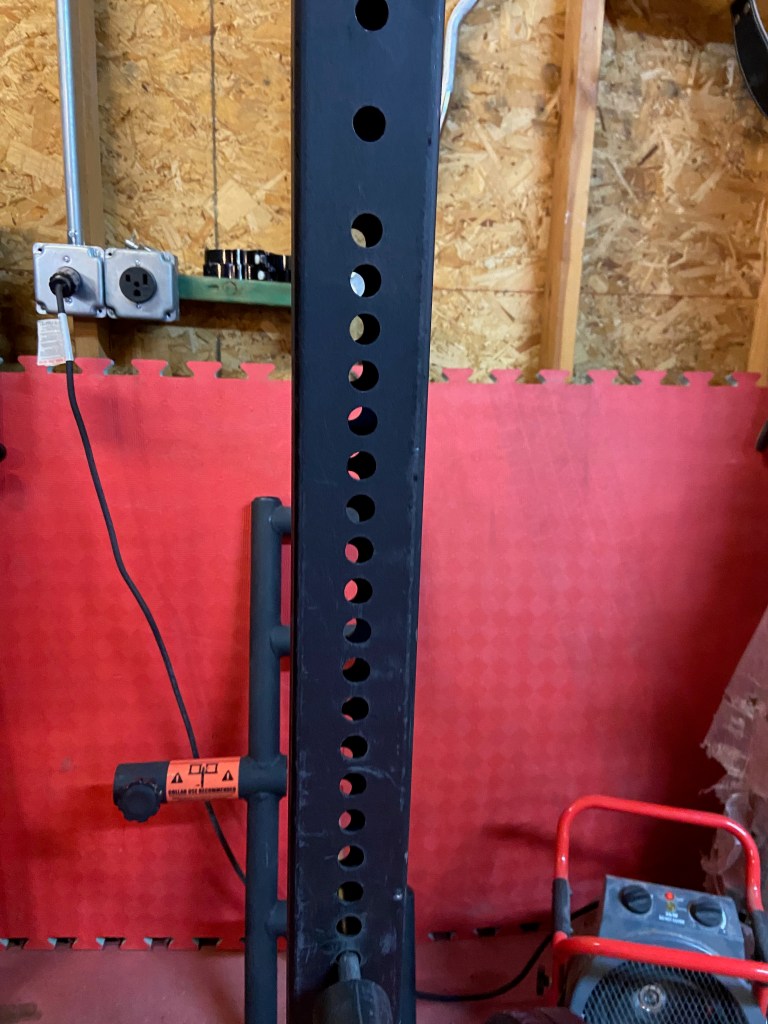
Cues on the squat are interesting to explore because I’m not entirely qualified break down all of them. I’m just going to talk about the ones I am most familiar with. The lift starts with the loaded bar on the shoulders in the rack. There is no real physical cue out of the rack other than getting your breathing and bracing in order. Take a good hard breath from the stomach and brace the core for the weight it is about to be responsible for holding up after un-racking. As a lifter starts the eccentric part of the lift on the way down to the bottom position, also known as “the hole,” the strain on the legs begins to increase the further one goes down. How far a lifter goes down into the hole before returning back to a standing position determines how much they are going to get out of the lift. The deeper one goes in the squat the more hamstring and glute development they will get. Squats are good general physical preparedness, or GPP for short, for any athlete because it helps with explosive movements like jumps or sprints and throwing motions by allowing one to better use their leverage. I start the concentric part of the lift when I feel the strain the greatest on my legs. If I am lifting in the garage I am more likely to push my squat depth lower because I am lifting inside a full power rack unless I am using the cambered bar, which doesn’t fit inside said rack.
The cue for coming back up from the hole largely comes from the lifter’s estimation of how much strain their legs and back can take before they need to push their body plus the load on the bar back to the starting position. Failure to get that estimation correct can result in either a mediocre squat session or severe injury. We’ve all seen the videos of blow quads in Youtube videos. It’s both a mental and physical cue that only improves with training. If a lifter wants to learn how to squat down to parallel a good way of doing that is box squatting. Placing the box at exactly parallel, when the knee and hips joints line up parallel to the ground, will help a lifter understand exactly where that is through telling them the how strained their leg muscles are at that point of the lift. Training squat depth is hard to do by oneself without training aids like boxes or safety pins (or straps) in racks primarily because it’s done almost completely done by feel. I have used those pieces of equipment as external physical cues to tell me when begin standing up. I find them very helpful. Understand that a box squat is not the same as a free squat done with safety pins in place to remind one where parallel is.
The big point I want to get across here is that staying mentally clear while the strain on the central nervous system and the muscles only increases is imperative. I remember a squat I did last year where I was so focused on trying to get to parallel on a straight bar free squat that I lost the bar on my left shoulder. It only fell a few inches so I was able to keep the bar on my upper back because it was a low bar squat and I tried so, so hard to save it before giving up and going down to the safety straps. It would have easily been in one of those gym fail videos on Youtube if it had been recorded and uploaded. I can easily imagine someone yelling “Just go down! You’re in a power rack! Just go down!” at their screen in part because that’s what I was telling myself to do as I was fighting 365 pounds unevenly balanced on my upper back for about 20-30 seconds. It was a very instructive lift to me because I remember being very intent on squatting to parallel on that day so I set the safety straps lower to account for it. My mind wandered midway down wondering where the bottom of the lift was because I kept lowering and the strain on my leg wasn’t adding up mentally. I missed every single physical and mental cue I had on that lift because I wasn’t focused on the lift itself. The end result could have been much worse than it was. I got lucky it was only a missed lift.
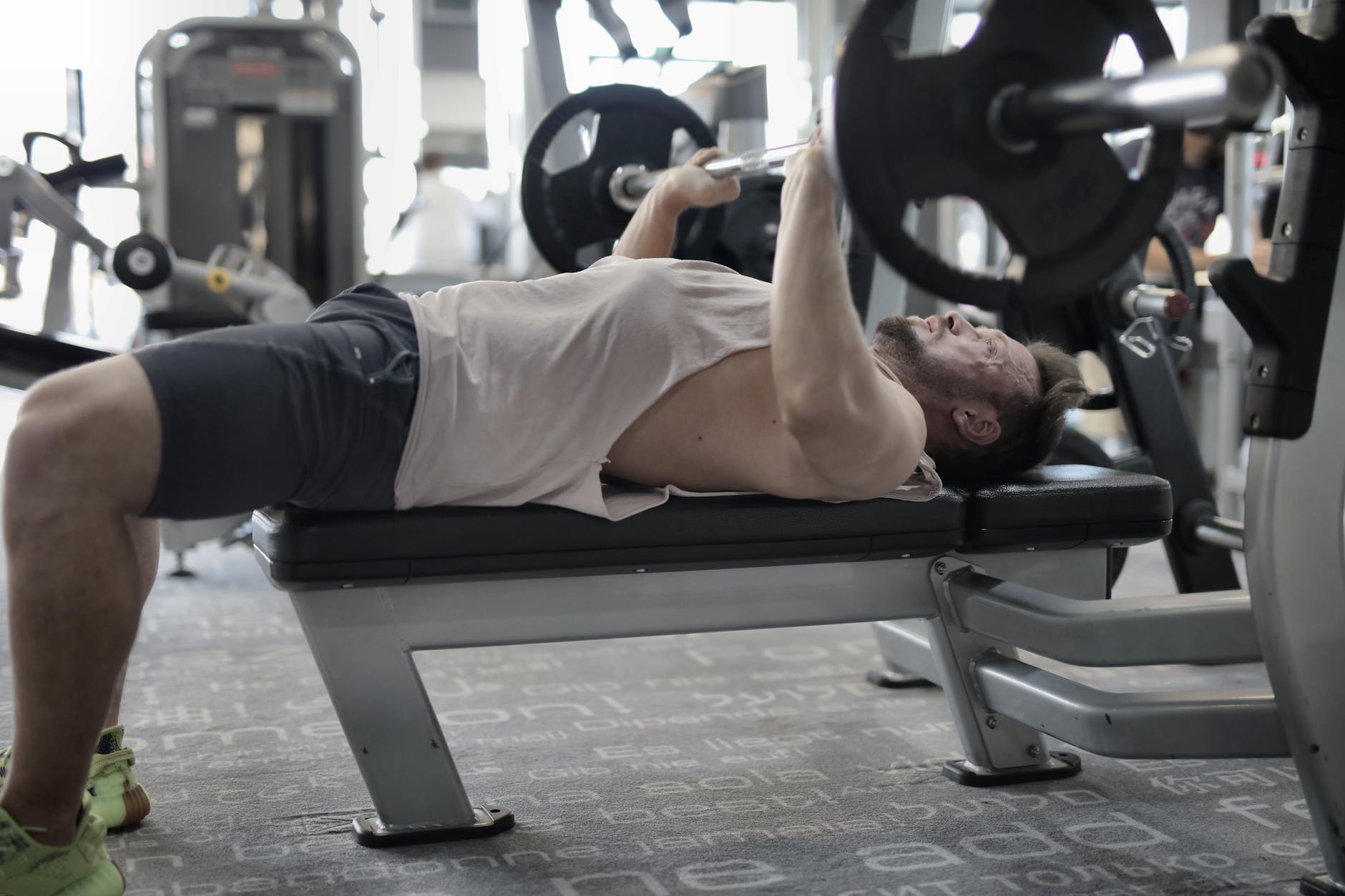
In my experience, upper body lifts with dumbbells require just getting myself mentally ready to get the lift done then getting my body back into position to do them. I just give myself a backwards countdown from 5 to 1 and get on with the set. That’s a lot easier said than done with dumbbell shoulder press is the lift. Getting those 75 pound dumbbells up into position is the hardest thing about the lift. Cues on a bench press are different if one has a spotter or not. The liftoff a spotter gives keeps the lats pressed back into the bench tight and ready to go quicker. Doing it solo means kind of doing that with the barbell in hand at the top of the lift then performing the reps. That’s what I usually end up doing. I did have to adjust the J cups on my power rack down an inch or so because it was too hard to un-rack and re-rack solo. The only cue for bench press that I really think about as I am doing it is if I can feel lats contracting the way they should be. I prefer a lift that descends slowly down to my chest followed by a brief pause at the bottom and finished with a pause at the top to reset for the next rep. This is true if I am dumbbell or barbell pressing. One interesting part of an incline press, barbell or dumbbell, is that I can really feel my lats working. Feeling those muscles go is why I prefer a bench that is shorter and wider than taller and narrower.
Starting cues in my experience are mostly about clearing one’s mind so they can concentrate on the lift they are doing. If a lift fails or requires help to get back to the racked position because the muscle was worked correctly but just worked beyond it’s capabilities then the lifter can feel good about it. However, if a lift fails because the mind wasn’t clear leading to a lack of concentration then that’s a major problem that needs to be addressed. Yes, there are physical cues like bar/dumbbell position, breathing, bracing, muscle readiness, etc that need to be addressed at the start but I do firmly believe that a lifter must have a clear mind to be able to listen to their body as the lift is being performed. The results of not having it can be catastrophic.
 Life Through Lifting